
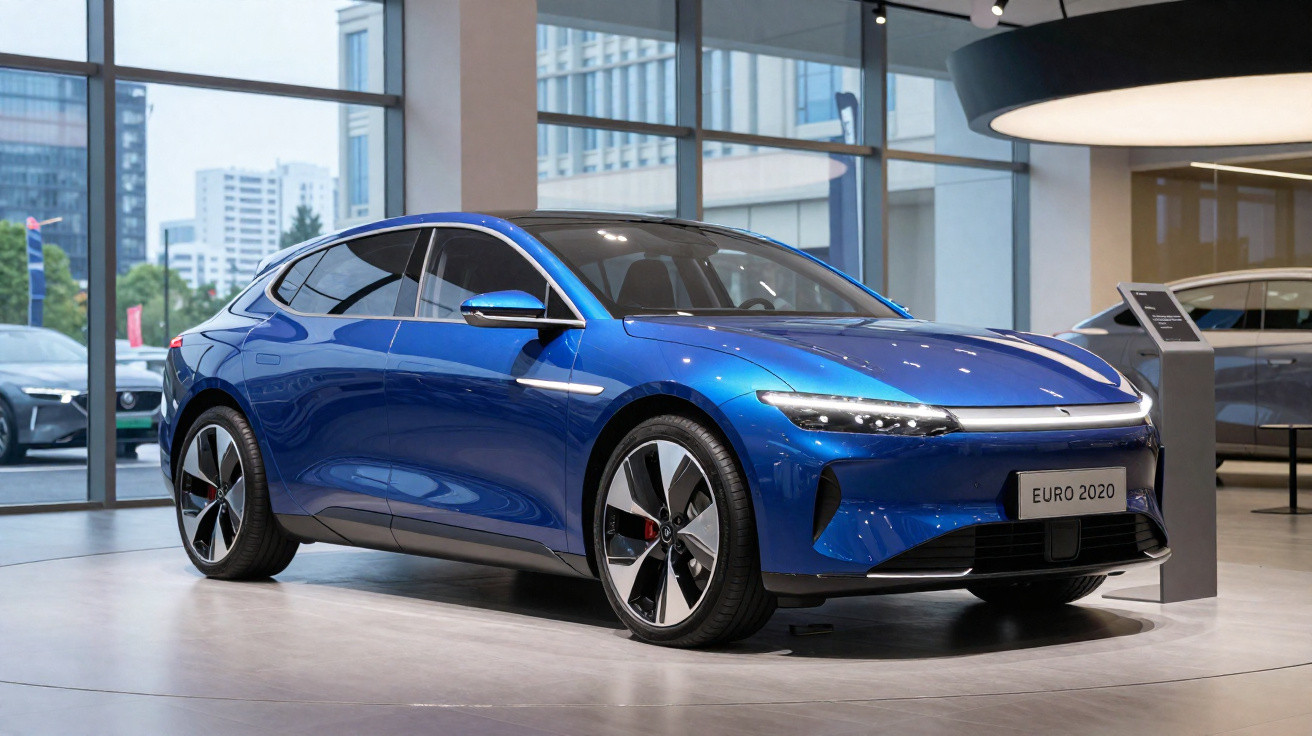
The average price of new cars in Europe has risen steadily throughout this century, so it is hardly surprising that the subject has become one of the most read and most discussed topics in recent times.
Reinforcing what many people already suspected, the German publication Automobilwoche set out the picture using figures compiled by JATO Dynamics. The comparison looks at the average prices of small family cars and superminis in 2002 versus 2020 across the “old continent”.
Average prices of new cars in Europe: Segment C and Segment B
Using the Segment C class as an example-home to small family cars such as the Volkswagen Golf, Ford Focus and the SEAT Leon-the average price in 2002 stood at 18 400 euros. By 2020 it was almost 30 000 euros, representing an increase of 63%.
In Segment B, the supermini category that includes models like the Toyota Yaris, Renault Clio and the Opel Corsa, the rise over the same period is slightly lower at 59%. That equates to an average of 13 000 euros in 2002 and almost 21 000 euros in 2020.
Now, with inflation
Those significant increases, however, do not account for inflation. Yet even after adjusting the reported figures for inflation, the average price of new cars has still moved in only one direction this century: upwards.
On that basis, an average of 18 400 euros for a small family car in 2002 would correspond to a little over 24 750 euros in 2020-still below the almost 30 000 euros observed in 2020. That gap amounts to a 21% increase.
Applying inflation to the 13 000 euros average price for superminis in 2002 produces roughly 17 500 euros in 2020. This is also below the 21 000 euros recorded in 2020, equivalent to a 20% rise.
Why are new car prices so high?
There are several reasons the average price of new cars keeps climbing, and this upward trend is expected to continue over the decade.
Emissions rules and electrification
Unsurprisingly, one major driver has been the push to reduce emissions. Not only are internal combustion engines now more sophisticated and fitted with more complex exhaust after-treatment systems, but the electrification of powertrains (mild-hybrid, hybrid and plug-in hybrid) seen in recent years has also made a decisive contribution to higher prices.
In addition, the rapid growth in the range of 100% electric vehicles-whose purchase prices remain at a significantly higher level than comparable combustion models-has also influenced the results.
As an interesting aside, if electrification were removed from the equation and we focused only on average new-car prices in Segment C fitted solely with combustion engines, the increase would be 56% rather than 63%, according to JATO Dynamics.
The handover from the combustion car to the electric car will continue to be one of the key factors pushing up the average price of new cars in these more popular segments over the coming years.
Safety technology and ADAS requirements
Another point to consider is the rise in safety standards, particularly active safety. The rollout of advanced driver assistance systems (which already enable semi-autonomous driving) requires vehicles to be equipped with sensors, cameras and radars that add cost. Many of these features will be mandatory for new models launched from the second half of 2022, and compulsory for all new cars on sale from the second half of 2024.
Buyer behaviour, specifications and leasing
A more surprising factor relates to customer behaviour. Even though cheaper trims remain available in both segments, more and more buyers are choosing higher-priced versions that deliver not only more equipment, but also more powerful engines.
According to JATO Dynamics, this last factor-which became particularly pronounced in 2020-may be linked to the growth of alternative ways of buying a car, such as renting or leasing, which have become increasingly popular even among private customers.
In other words, the difference in the monthly payment between two versions of the same model-for instance, one costing 20 000 euros and another costing 25 000 euros-may not be large enough to deter a buyer in the same way as the 5 000 euros gap in total list price.

Comments
No comments yet. Be the first to comment!
Leave a Comment