
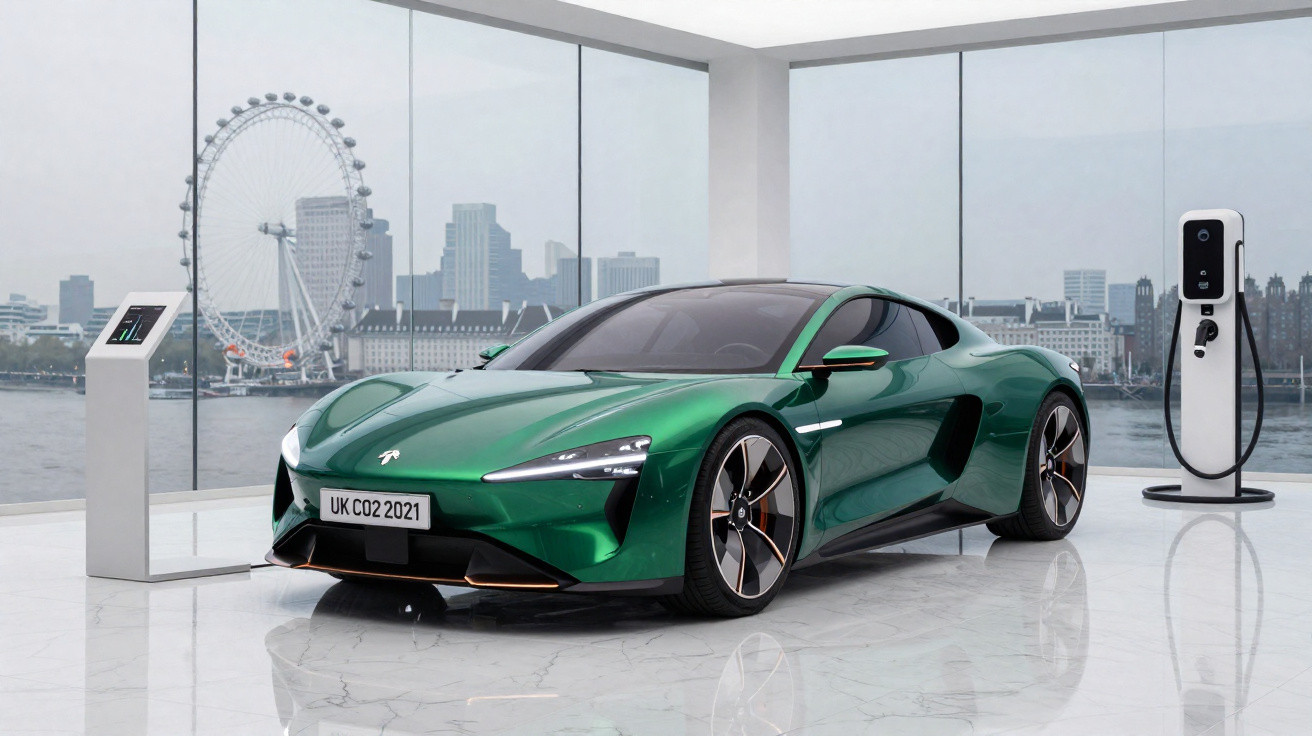
New car registrations in the United Kingdom during the third quarter showed that average CO₂ emissions rose compared with the same period in 2016, moving from 120.5 to 121.3 g/km. It is a shift that is likely to be mirrored not only in the UK but also across other European markets.
Why UK average CO₂ emissions are rising
The main driver is this year’s decline in Diesel car sales. That drop stems not just from Dieselgate, but also from the continuing pressure on Diesel more generally-ranging from announced restrictions on access to city centres, to tax disincentives and, in London’s case, an additional charge within the congestion charge of £10 for entering the city if you drive a pre-Euro4 Diesel.
Across Europe, car makers have relied heavily on Diesel powertrains to meet the EU’s CO₂ reduction targets. As Diesel sales fall and petrol car sales grow, manufacturers’ ability to stay on track with those targets is put at risk.
Diesel sales and EU CO₂ targets for manufacturers
Because Diesel engines are typically more efficient than petrol engines-and therefore achieve lower CO₂ figures-it made sense that Diesel would form a cornerstone of manufacturers’ plans to reach the demanding 95 g/km target.
However, following the “bad reputation” Diesel has acquired over the last two years, its contribution to that goal is shrinking, with forecasts pointing to a continued decline in sales over the coming years. As its market share drops, its influence on fleet-average emissions calculations weakens-precisely at the point when it would be most valuable.
Continuous fall
Since 2000, average CO₂ emissions across Europe have steadily decreased. They were 180 g/km at the turn of the century and fell to 118.1 g/km in 2016-well below the 130 g/km requirement for 2015. Even though coordinated efforts by manufacturers delivered faster progress than required, the move to 95 g/km in 2021 demands a much greater effort than has been needed so far.
What about hybrids and electric cars?
The strict emissions-reduction targets were designed to speed up the market uptake of low-emission vehicles, such as plug-in hybrids and electric cars. While sales of these models have risen sharply-particularly this year-they still account for only a very small share of the overall market, expected to be around 2% this year. That is not enough to offset the fall in Diesel sales.
Electrification plans and the cost of missing the target
Nearly all manufacturers have already set out their electrification strategies, with some beginning as early as 2018. Even so, the impact on the numbers is only likely to become noticeable towards the end of the decade, when the anticipated wave of electric vehicles arrives. In other words, average CO₂ emissions from new car sales are expected to keep rising over the next year, pushing manufacturers further away from the mandatory 95 g/km for 2021.
It is worth remembering that the penalties for manufacturers that fail to meet the requirement will be substantial-95 euros per gram above the stipulated value, per car.
Comments
No comments yet. Be the first to comment!
Leave a Comment