
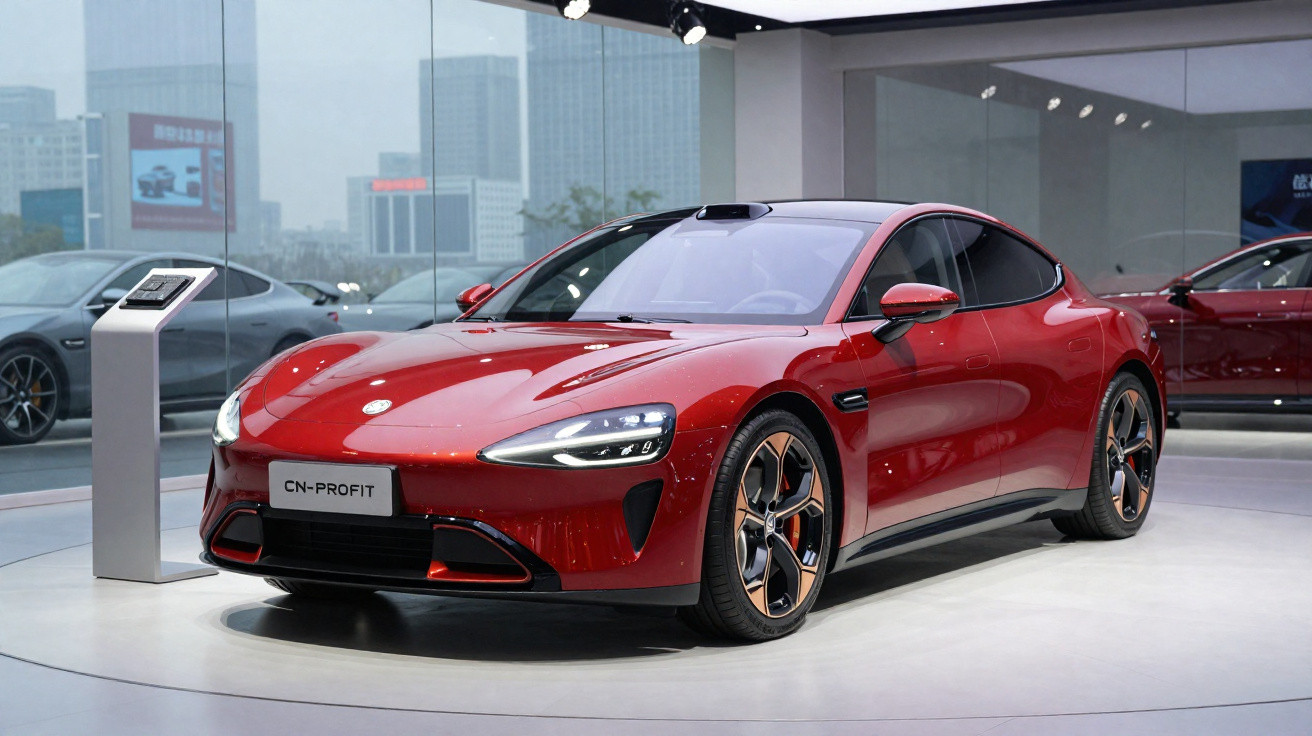
Across the first-half financial updates from several Chinese carmakers, one theme keeps repeating: profits are being squeezed by higher raw-material and component costs, compounded by factors such as a price war, weaker demand and heavier investment.
First-half results for Chinese carmakers
Some of the starkest figures come from GAC Group, which is forecasting a loss of between 4.06 and 4.57 billion yuan (around €524–590 million at the current exchange rate). Seres is also expecting to post losses of between 1.5 and 1.8 billion yuan (€193–232 million), while BAIC Bluepark and JAC Motors likewise anticipate ending the half-year in the red.
Even manufacturers still reporting positive results have not avoided the strain. Changan Automobile is projecting a drop in profits of between 57.7% and 67.7%, and Great Wall Motor is also forecasting lower profits.
Chips intensify the pressure
Beyond rising prices for raw materials such as lithium, copper and aluminium, carmakers are now facing another headwind: more expensive chips. As demand for semiconductors used in artificial intelligence and data centres has increased, many suppliers have prioritised those segments, leaving fewer components available for the automotive sector and pushing prices sharply higher.
TrendForce data, cited by Car News China, indicates that the prices of some of the most commonly used automotive chips doubled in the first half and could climb by a further 60% to 70% by the end of the year.
Unlike other raw materials, these components do not have financial instruments that allow manufacturers to hedge against price swings. As a result, several carmakers have been forced to negotiate long-term supply agreements simply to secure access to parts.
Rising materials and components costs per vehicle
Modern vehicles rely on dozens - and in some cases hundreds - of semiconductors to manage functions ranging from safety and engine efficiency to infotainment systems and autonomous driving.
According to figures released by the industry, the increase in raw-material and component costs could add between 4,000 and 7,000 yuan (around €516–904) to production costs per vehicle, and may exceed 10,000 yuan (around €1,291) on more expensive models.
Demand slows
These cost increases are arriving as China’s car market is experiencing weaker demand - passenger-car sales fell 20.2% in the first half - while an aggressive price war is forcing many manufacturers to sell vehicles on extremely thin margins.
Adding to this is the rapid pace of new model launches. Over the first six months of the year, roughly 180 new cars entered the Chinese market - the equivalent of one launch per day - requiring manufacturers to sustain high levels of spending on research, development and marketing, even as margins continue to tighten.

Comments
No comments yet. Be the first to comment!
Leave a Comment