
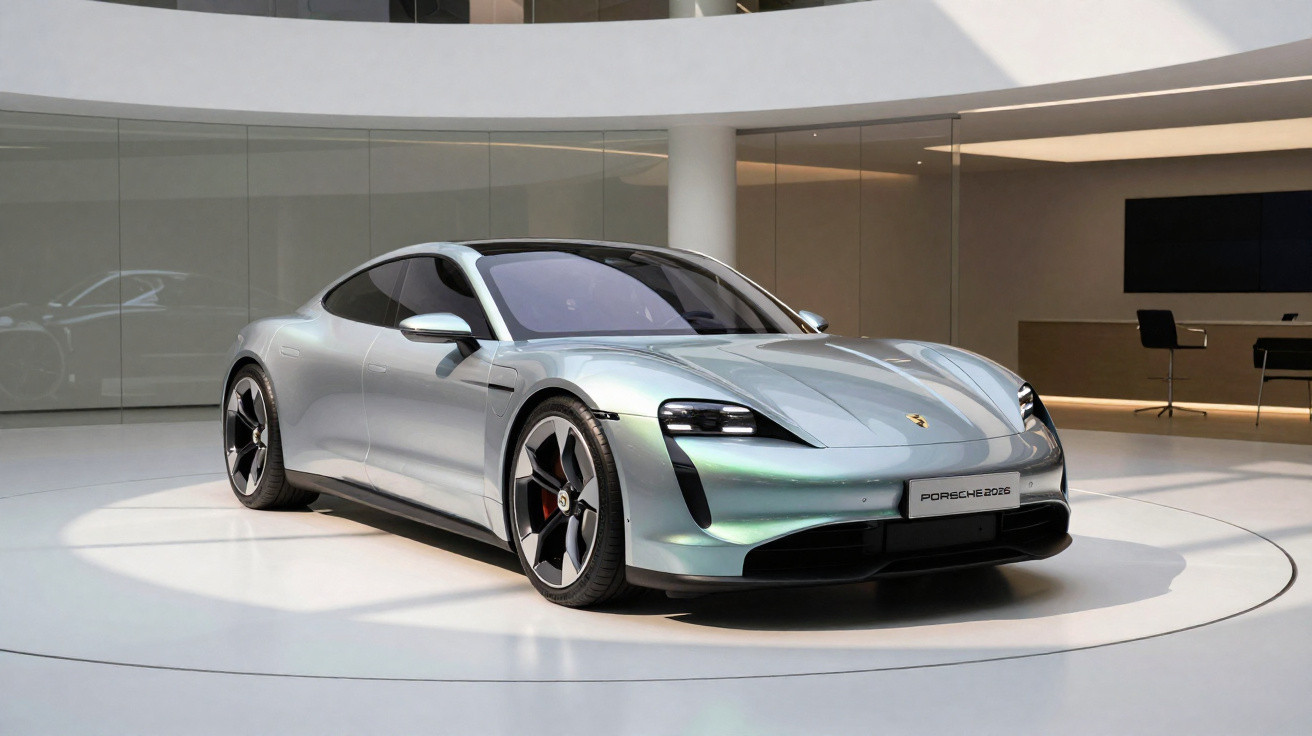
Porsche entered 2026 in an unusually fragile position for the brand in recent years. After a long run of records, the Stuttgart manufacturer saw deliveries decline, margins collapse and its electric roadmap stop matching what the market was actually doing.
In 2025, it delivered 279 449 cars, 10% fewer than the year before. Revenue slipped by 9.5%, but the biggest red flag was profitability: operating profit dropped from €5.6 billion to €413 million, and the operating margin fell from 14.1% to just 1.1%.
Porsche says much of that deterioration was driven by around €3.9 billion in exceptional charges, linked to a rethink of its product strategy, battery-related activities and US tariffs.
The ambition of more than 300,000 units is now behind it
China, which for years was Porsche’s largest market, has stopped underpinning growth. Local competition has intensified and deliveries have continued to fall. In the first half of 2026, the brand sold 14 501 cars there, down 32%.
The decline was not limited to China. Between January and June, global deliveries fell 16% to 122 306 units. The end of production for the combustion-engined 718, an electric Macan that no longer had the initial launch boost, and the removal of tax incentives in the United States also weighed on results.
There are, however, early signs of a financial rebound. In the first half, revenue dropped 5.1%, yet operating profit rose to €1.35 billion and the margin recovered to 7.8%. Porsche is maintaining its 2026 guidance of €35 to €36 billion in revenue and an operating margin of 5.5% to 7.5%.
Selling less, but selling better
The response centres on cutting costs and stepping away from volume targets-particularly the goal of staying above 300 000 units per year. The restructuring includes difficult steps, among them the reduction of around 8900 jobs. With the aim of raising profit per car sold, Porsche wants to put greater emphasis on higher-margin GTS, Turbo and GT versions, as well as expanded personalisation. The 911 remains the clearest illustration of that approach.
The “electric at any cost” mindset has also been dropped. Combustion and hybrid versions of the Cayenne and Panamera will remain on sale beyond 2030. The future SUV above the Cayenne (project K9), first planned as EV-only, will launch initially with a combustion engine and a plug-in hybrid system.
What to expect
While the biggest new arrival of the year is the Cayenne Electric-whose European deliveries began at the end of June-Porsche has also updated the Taycan with the introduction of E-Shift. This system simulates gear changes to make the driving experience more engaging, alongside upgrades to the infotainment system.
In the 911 range, the new Turbo S T-Hybrid-which we have already driven-and the GT3 S/C strengthen precisely the higher-margin versions. The return of the 718 Boxster and Cayman, meanwhile, is now expected to move to 2027. Their electric successors remain in development, but Porsche has also confirmed that future flagship variants will once again use combustion engines.
Later on, from 2028, two pivotal SUVs for this strategy are due: a hybrid and combustion model designed to fill the gap left by the previous combustion-engined Macan, and the K9, positioned above the Cayenne.
The direction is set: lower volume, more special versions, and an electric line-up that must win customers without forcing Porsche to abandon the engines that still generate profit.
Comments
No comments yet. Be the first to comment!
Leave a Comment