
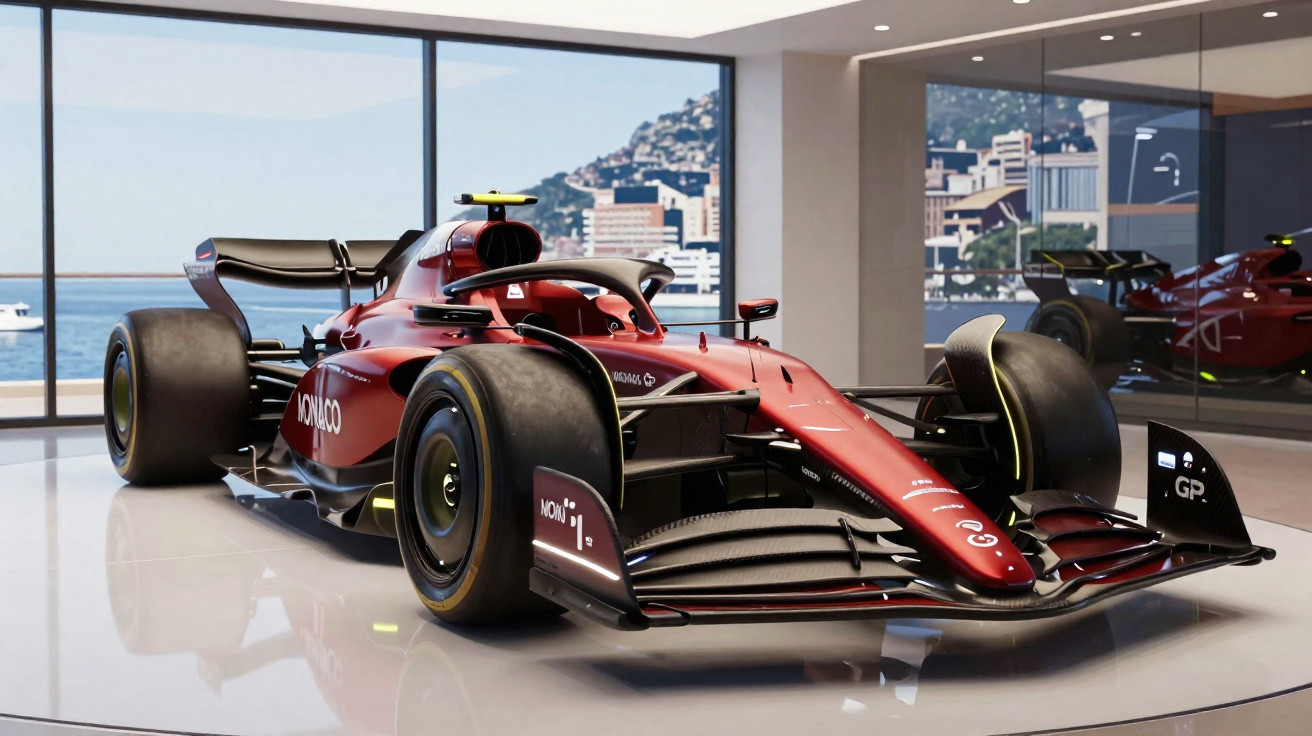
Monaco Grand Prix: turning the Principality of Monaco into an FIA-ready Formula 1 circuit
Organising the Monaco Grand Prix in Formula 1 is uniquely difficult because of where it takes place: right in the heart of the Principality of Monaco. In practice, that means converting a densely built-up area into a racing circuit that still meets every FIA requirement.
Preparations for the Monaco Grand Prix - including the build of all the necessary facilities - begin many weeks before race weekend, with the aim of minimising disruption for the roughly 38,000 residents. During the Grand Prix weekend itself, Monaco’s population swells by a factor of five, as the principality is “invaded” by 200,000 people(!).
The YouTube channel The B1M shows the scale of Monaco’s transformation to host the Grand Prix: an event that demands intricate planning and, above all, a great deal of patience.
The 3.3 km street circuit and annual resurfacing work
It is a logistical and engineering challenge that also requires extensive temporary construction. It starts with the circuit itself: 3.3 km laid out on public roads, taking over several of Monaco’s key routes.
Every year, one third of the track has to be resurfaced to remove any imperfections that could affect the single-seaters. This work begins three weeks before the Monaco Grand Prix. To keep everyday inconvenience as low as possible, teams carry it out at night and in carefully managed sections.
Temporary structures, grandstands and the high-tech pit complex
Temporary structures start going up six weeks before the race. And there is no shortage of them: in total, 600 lorries are required to transport every kind of installation, from grandstands to pedestrian bridges, so that day-to-day movement is not blocked.
As you would expect, almost everything is prefabricated - including the pit garages. These are three-storey high-tech buildings (one floor per team), made up of 130 sections, and they take 14 days to complete with the help of multiple cranes.
The grandstands, also prefabricated, are set in prime locations. They offer the lowest seated capacity anywhere on the Formula 1 calendar: around 37,000 people. Even so, thanks to the landscape and the fact that it is a built-up area, about 100,000 spectators can still watch the race live - filling balconies in buildings next to the circuit, standing on bridges, and even viewing from boats in the marina.
Safety measures for drivers and spectators
To ensure everyone is protected on race day - from the drivers to the spectators - organisers also install the equivalent of 20,000 m² of safety netting and 21 km of barriers.
The Monaco Grand Prix is unlike any other event in the Formula 1 World Championship. Even today, it remains one of the sport’s most iconic, charismatic and historic rounds, having featured since Formula 1 began in 1950, with very few exceptions - the most recent being last year, when the pandemic forced the race to be cancelled.




Comments
No comments yet. Be the first to comment!
Leave a Comment