
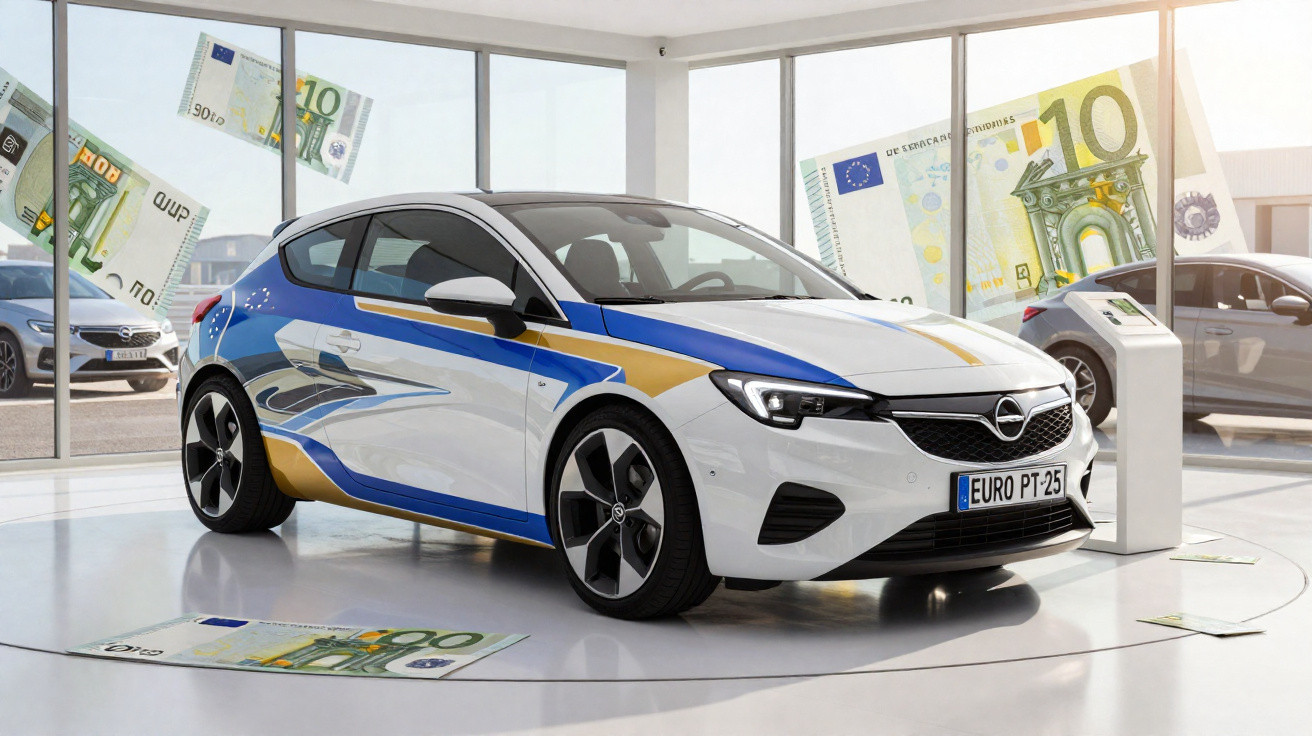
A new look for euro banknotes, as the ECB plans a redesign
It’s official: euro banknotes are set to get a new look - a sort of automotive facelift, if you like. The European Central Bank (ECB) has invited a range of artists to submit proposals, and there’s now an online vote under way.
I still remember the changeover to the euro and the countrywide excitement around a brand-new currency - and even now I sometimes find myself mentally converting euros back into the old escudo totals. So I decided to lean into that nostalgia and picture the next generation of euro banknotes through the lens of cars and distinctly Portuguese tastes.
Imagine a Citroën Saxo Cup on the front of a €20 note. That’s the kind of thing I mean. But it makes sense to start at the bottom - with a humble €5 Opel Corsa.
Imagining euro banknotes with Portuguese motoring icons (from €5 to €200)
€5 - Opel Corsa (and the era of affordable cars)
For decades it was one of Portugal’s best-selling cars. It was also the model many of us learned to drive in. Above all, for the generations who came of age in the 1990s and 2000s, it stood for low-cost mobility. That’s more than enough reason for it to take pride of place on the most modest note of the lot.
On the reverse, I’d put lots of different cars, to symbolise the sheer variety of affordable models we used to be able to buy - and largely can’t anymore. For context: up to 2020, more than one million cars a year were sold in Europe for under €15,000; in 2024, fewer than 100,000 were sold at that price point. Cheap new cars have all but vanished; what’s left is the used market.
€10 - Estoril Circuit and a priceless slice of history
For the €10 note, I’m going with a deliberate provocation. A working group appointed by the Ministry of Finance concluded, according to information reported by Jornal de Negócios, that the Estoril Circuit is worth somewhere around seven million euros.
With Portuguese property prices the way they are, that figure looks like a bargain - I ran the numbers last week. So putting the country’s most historic circuit on the front of a €10 note felt fitting. On the back, I’d nod to one of the most beautiful chapters in the track’s story: Ayrton Senna, and Formula 1’s time on Portuguese tarmac.
€20 - Citroën Saxo Cup and the fuel-money reality check
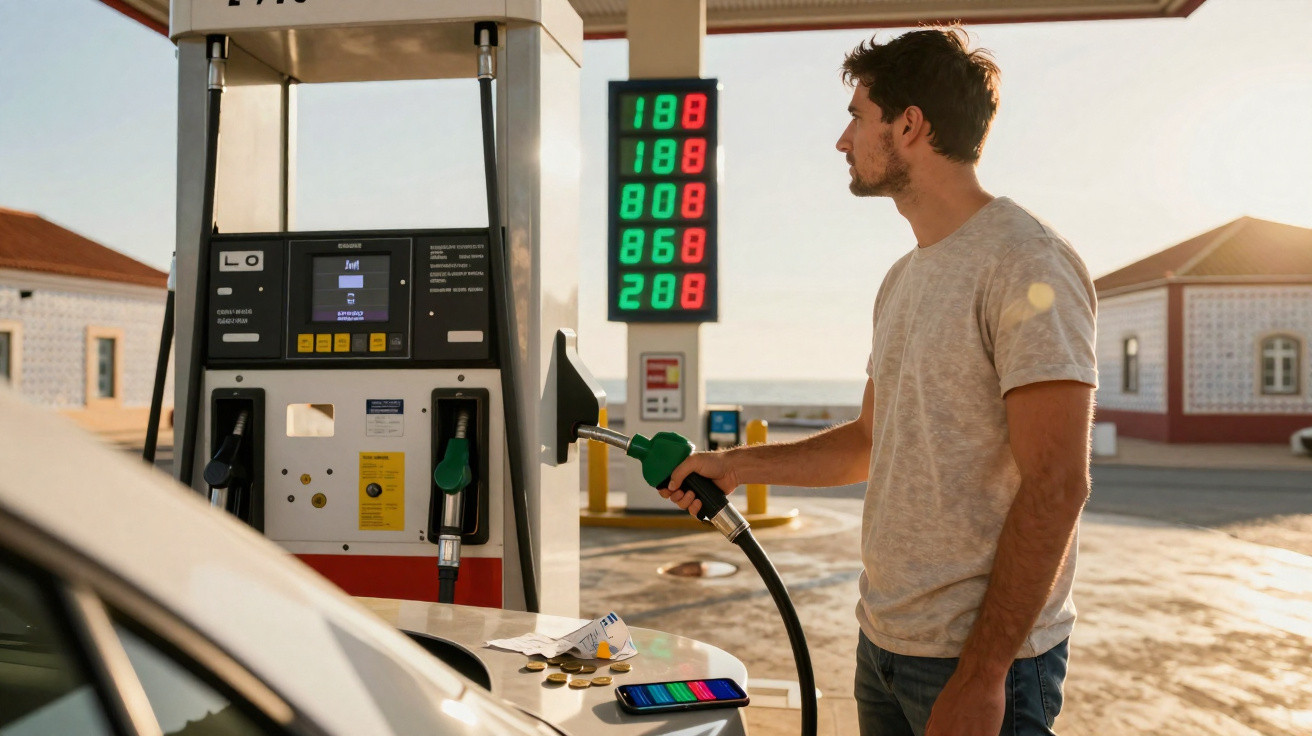
For the €20 note, my pick is the Citroën Saxo Cup. In the 1990s, that car - and the equivalent of €20 worth of fuel (back when the currency was still the escudo) - was enough to make a proper night of it. Today, the same €20 barely gets you away from the warning light.
Times have changed. In some ways, for the better: the young asphalt wolves no longer treat the Vasco da Gama Bridge as an improvised racetrack. What remains is memory - much of it tied to this French model which, in Portugal, carried a special badge: “Cup”.
€50 - National Road 2 (N2), the road that stitches Portugal together
For the €50 note, still a meaningful amount of money, I’d choose National Road 2 (N2). It’s one of the most beautiful roads in the country - and one of the most Portuguese. It crosses Portugal from end to end, connecting landscapes, habits and people, creating a blend we simply call Portugal. Proudly, of course.
Doing the N2 should be compulsory at least once in your life. We’ve done it already - and we should do it again. The country deserves it, and so do we.
€100 - Autoeuropa as a national guarantee (and the Volkswagen Sharan)
With €100 in your pocket, you’re covered. Whatever the circumstances, that’s a sum that tends not to leave anyone flustered. In other words, it’s a guarantee. And that’s exactly what Autoeuropa has been for the Portuguese economy: a guarantee.
It accounts for 2% of national GDP and places Portugal in the small group of countries with a car manufacturing industry.
On the front of this €100 note, I’d put the first-generation Volkswagen Sharan - a model that no longer exists and was replaced by the successful T-Roc. Unlike that home-built MPV, let’s hope Autoeuropa never reaches an end. On the reverse, I’d show the factory’s production line, one of the strongest faces of Portuguese industry.
€200 - the Portuguese Parliament, and the cost of driving
Finally, the €200 note would feature the Portuguese Parliament. It is, unquestionably, the home of democracy - but also a place where the car, and Portuguese drivers, have simultaneously been pilloried. Taxes, taxes and more taxes.
It’s worth remembering that the car has been a kind of “hen that lays the golden eggs” for the public purse, and today it represents almost 20% of the Portuguese state’s tax revenue. That alone earns it a mention on the €200 note - especially because it has cost us dearly. Annual road tax (IUC), vehicle tax (ISV) and fuel duty (ISP) are acronyms we know all too well.
The missing €500 note and the speed-camera stories
Unfortunately, there are no longer €500 notes - although there’s always someone who insists, hand on heart, that they saw one at least once. I’m not going to feed that myth. Still, if they did exist, I’ll admit I’m not sure what I’d put on the front.
Maybe a speed camera. After all, like €500 notes, speed cameras also seem to exist mainly through the accounts of people who claim to have seen them.
They say it’s about road safety, but when they’re unannounced and hidden from motorists, I can’t help suspecting it’s to line someone’s pockets. They aren’t ours.
Those are my picks. What would yours be? Needless to say, using these banknotes in an editorial sense was only meant to put the past, the present and the future of our country into perspective - and, of course, to bring up a few shared memories too. But it would be funny to see a €5 note with an Opel Corsa on it…

Comments
No comments yet. Be the first to comment!
Leave a Comment