
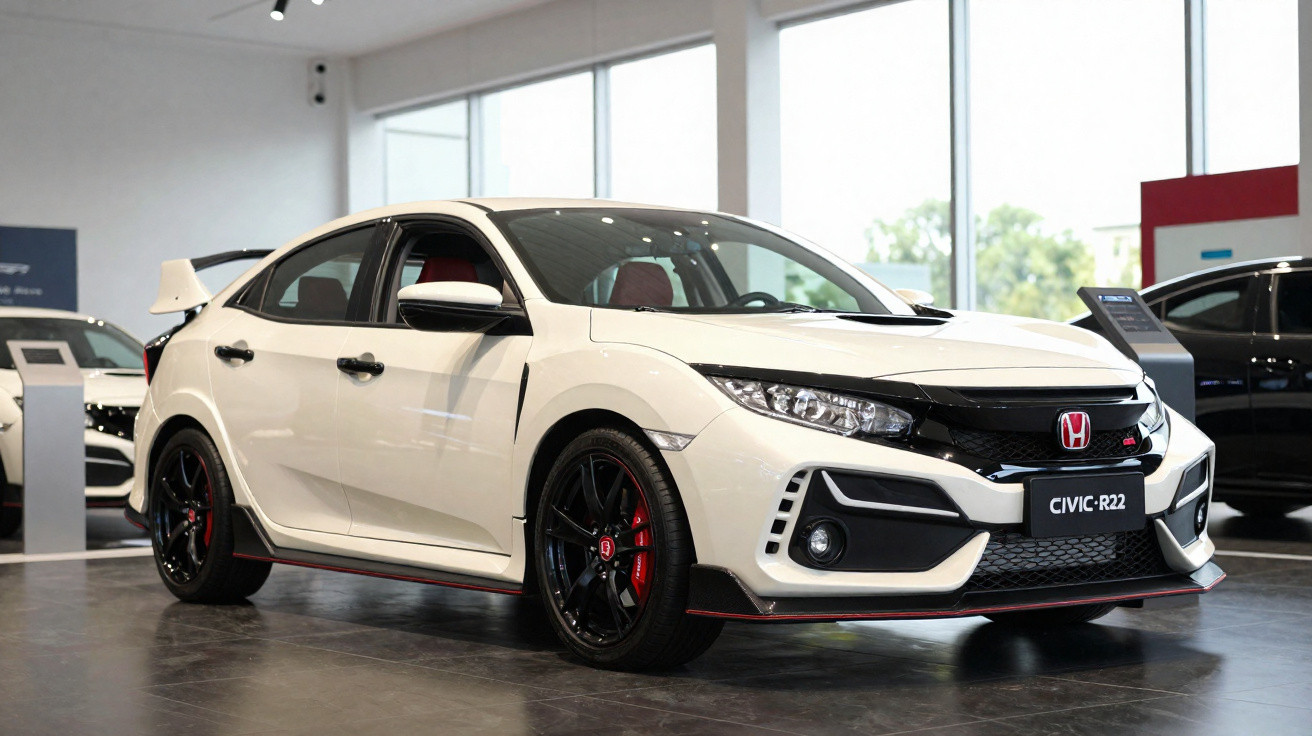
Rumours that the next Honda Civic Type R might take a hybrid route - with an electrified rear axle turning the hot hatch into a four-wheel-drive “monster” - can now be filed away for good. The Civic Type R due in 2022 will stay resolutely, and exclusively, combustion-powered.
That makes it the exception to the rule - or, more specifically, to the roadmap Honda set out in 2019, when it said its entire range would be electrified by 2022, whether through hybridisation (CR-V and Jazz) or by adding battery-electric models (Honda e).
By contrast, the 11th-generation Honda Civic, previewed by the Civic Prototype last November, is expected to follow the same electrification direction in its regular versions, adopting hybrid powertrains as we’ve already seen across other models in the brand’s line-up.
What’s next
Now that it’s clear the future Civic Type R won’t be electrified, what should we expect from the latest generation of this combustion-only hot hatch?
Engine and gearbox: K20C1 and a six-speed manual
Even as an all-new generation, the next Civic Type R isn’t expected to abandon the familiar formula. In other words: front-engine, front-wheel drive, a six-speed manual gearbox, and the K20C1 - a turbocharged 2.0-litre inline four.
Some chatter suggests a few extra horsepower beyond the current 320 cv, but Honda’s engineers are said to be concentrating less on peak output and more on improved efficiency and sharper engine response.
Front-wheel-drive performance and chassis hardware
It’s not as if the Civic Type R looks short of power: it remains the most powerful car in its segment when we’re talking about front-wheel-drive hot hatches. To make sure the engine’s punch is translated cleanly to the road, the new model is expected to carry over the same key chassis solutions from the current car - a big part of what gives it its effectiveness and agility.
Up front, it should retain the dual-axis front suspension, a development of the well-known MacPherson layout that separates steering from damping/drive forces - reducing torque steer. At the rear, the multi-link arrangement is set to remain. Adaptive damping should continue, and a limited-slip differential will again be on hand to maximise traction in every situation.
Styling, Sport Line option, and tech upgrades
Judging by the camouflaged test mules already out on the road, the look will stay more extrovert than understated - even allowing for the 11th-generation Civic’s generally cleaner, more restrained styling - with the huge rear wing still very much present.
On the latest update to the outgoing model we saw a more visually “shy” Sport Line variant arrive, doing without the rear wing; it’s likely the new car will offer a similar option.
So the biggest changes won’t be focused on the powertrain or chassis - which are still at the top of the segment - but, as with the rest of the Civic range, on exterior and interior design, digitalisation, connectivity, and active safety (driver-assistance systems).
Comments
No comments yet. Be the first to comment!
Leave a Comment