
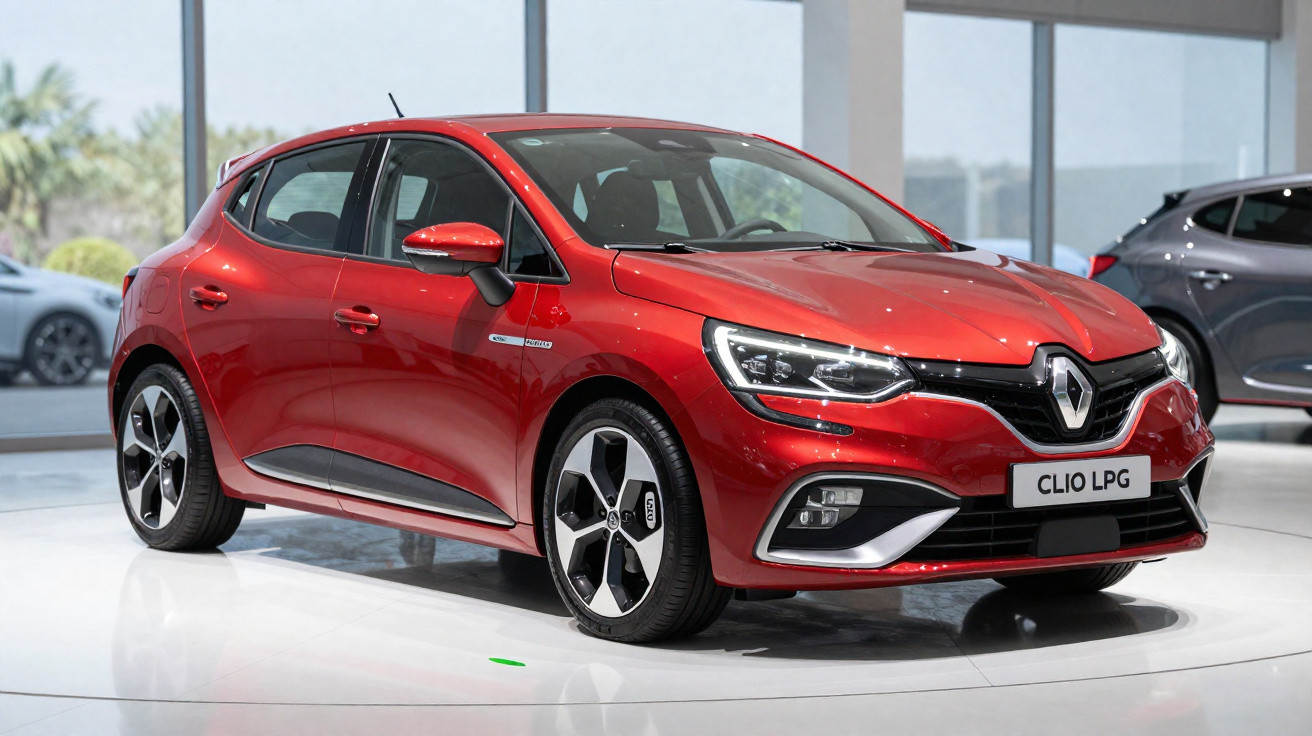
A prospective Renault Clio buyer is hardly short of options. From petrol and Diesel versions to a hybrid, there’s a bit of everything - including the LPG variant we’re looking at here.
So, after we’d already put the French supermini through its paces in its most luxurious guise, the Initiale Paris, and its sportiest, the R.S. Line, this time we “came back down to earth” and tested the LPG-engined Clio in the mid-range Intens trim.
The aim? Straightforward: to find out how strong a proposition the Renault Clio on LPG really is within the French supermini’s line-up - and whether it can genuinely make the case to be the pick of the range.
Simply Renault Clio
From the outside and inside, this Renault Clio on LPG is effectively indistinguishable from any other Clio. The only giveaways are the LPG filler next to the petrol one and, in the cabin, the switch that lets you choose which fuel you want to use.
Interestingly, the bigger differences versus its “range siblings” actually come from the Intens equipment level. The Clio we drove felt much closer to the version most people will likely end up buying.
Equipment in the right measure
With that in mind, it’s a simpler, more understated specification than the Renault Clios we usually test. For instance, this car didn’t have alloy wheels; inside, the large 9.3" display was replaced by a more modest 7" unit, and the fully digital instrument cluster made way for analogue dials with a 4.2" TFT screen rather than 7".
Even so, it never once felt like anything important was missing. The Clio Intens delivers what you typically need from a supermini. In many ways it reminds me of something I said when I tested the Dacia Duster: you get only what’s necessary (and there’s nothing wrong with that).
Take the basics: rear parking sensors? Yes. Air conditioning? Yes. Electric rear windows? Check. And the rest of the safety and driver-assistance kit was present too, including cruise control (even if it wasn’t adaptive) and traffic-sign recognition.
Elsewhere, instead of alloys, this Clio uses wheel trims that do a decent job of disguising their humble roots. And, if we’re being honest, once the inevitable scuffs arrive - as wheels so often suffer - trims are far cheaper to replace.
As for the core Clio strengths that show up regardless of trim, they’re all still here: solid build quality (a strong showing that underlines Renault’s progress in this area) and good cabin space. It even manages to retain the excellent 391 litres of boot capacity - more than several C-segment cars - despite the LPG tank sitting where the spare wheel would normally live.
At the wheel in the Renault Clio LPG: what changes?
In the driver’s seat of the LPG Renault Clio, you’re met with the familiar traits of a good supermini. It’s easy to drive and, in this configuration, the controls felt a touch lighter than in the R.S. Line I drove previously - though not in a way that makes it any less pleasant over long distances. If anything, the little French car comes across as a capable motorway companion.
From a dynamic point of view, the well-judged chassis remains a highlight: cornering loads are handled by the chassis/suspension set-up rather than leaning on the tyres. That matters here because this version runs more modestly sized rubber that’s also kinder on the environment and your wallet when replacement time comes (195/55 R16).
Overall, the Clio continues to set a high bar for comfort and blends it neatly with tidy handling - although in this trim everything encourages you to adopt a calmer pace.
That’s because, while it’s responsive and willing, the 100 hp and 160 Nm engine is happiest at mid-range speeds, where it rewards you with smooth operation and strong economy (on both petrol and LPG). Unfortunately, those figures are difficult to verify properly thanks to the lack of an on-board computer and trip meter.
The five-speed manual gearbox has a short throw and, despite gearing that leans towards the long side (all in the name of consumption and emissions), it doesn’t blunt the engine too much. The same is true of the “Eco” driving mode - the only one available - which can’t be accused of strangling performance either.
Is it the right car for me?
After a week and plenty of kilometres at the wheel of the Renault Clio LPG in Intens trim, I have to admit that it’s not only a good choice - it might even be the best option in the French supermini’s range.
All the Clio’s well-known strengths, such as its polished road manners and practical interior, are still present. With the LPG engine, you gain running costs on a par with Diesel while keeping the pleasant character of a petrol motor - and without paying the extra price premium usually associated with this powertrain.
As for equipment, it’s true it doesn’t give the Clio the chic or sporty look of some other versions, but for a little over €20,000 you get a practical, economical supermini that’s easy to drive and already comes with a notable level of kit. At the end of the day, isn’t that exactly what people look for in this segment?
With that said, if you want a supermini that truly lives up to its name, the Renault Clio LPG could very well be the answer to your “prayers”.
Comments
No comments yet. Be the first to comment!
Leave a Comment