
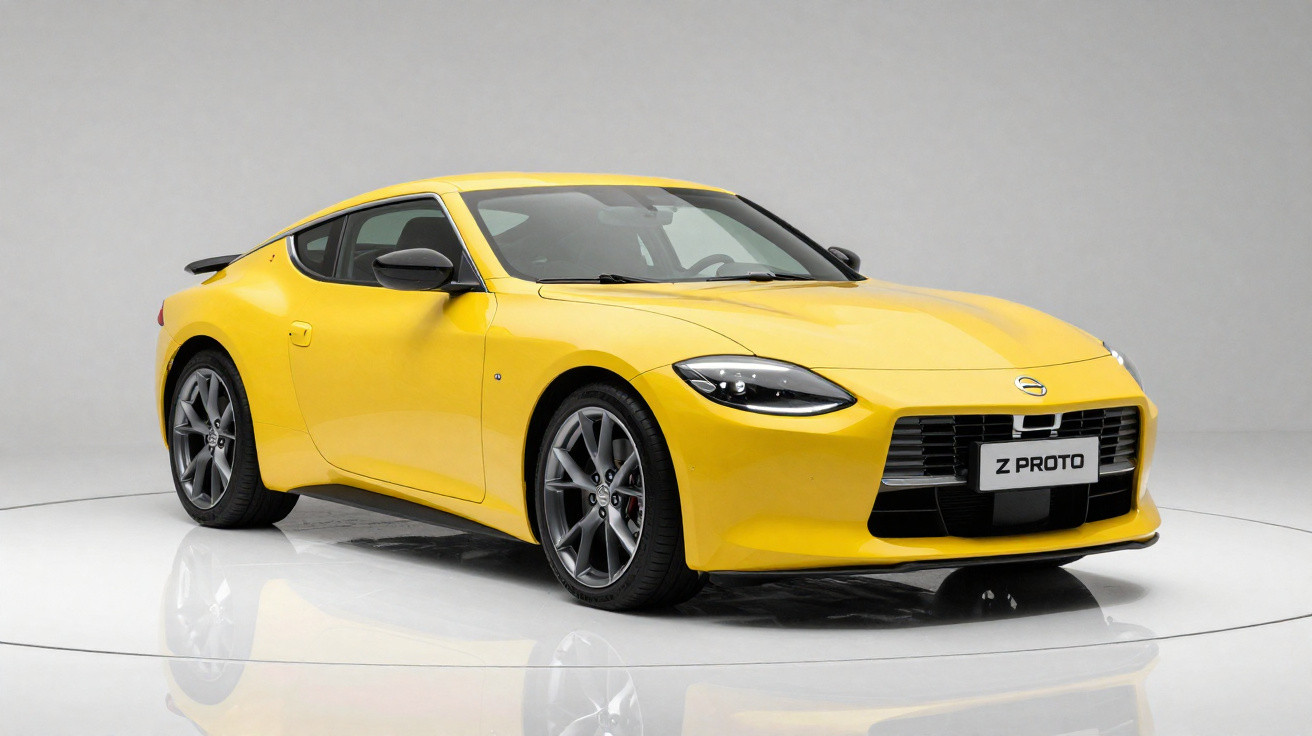
Europe will, regrettably, not get the production version of the Nissan Z Proto. After the initial excitement of seeing another proper, back-to-basics sports car-one many of us have been eager to drive-the news quickly takes the wind out of your sails. The culprit, it seems, is Europe’s tricky emissions arithmetic.
Even so, credit where it’s due: Nissan has pushed ahead with a genuine sports coupé project at a time when much of the industry’s noise is about yet more crossovers and “pseudo-coupé” SUVs, presented as if they were worthy stand-ins.
Why the 370Z went 12 years without a replacement
The question still hangs in the air: why did Nissan take so long to replace the 370Z, which is approaching its 12th anniversary? Typically, a car’s life cycle is around 6-7 years.
According to Hiroshi Tamura, Nissan’s specialist for the Z models, GT-R and Nismo, the delay largely came down to waiting for the right moment-and making sure the numbers added up. In his own words: “if customers say or are saying “no, thanks”, then we have to stop. (It was also about) how we can create a story… or a product… using the right business model”.
The “right moment”: decisions in 2017, and the world in 2020
That “right moment” was effectively chosen a few years ago. In 2017, Tamura presented a proposal to Nissan executives for a 370Z successor, and it received the green light for development. Few could have predicted that, in 2020, the world would be turned upside down by a pandemic that still doesn’t seem to have an end in sight.
Well… stepping further back, the 370Z itself arguably arrived at the worst possible time: late 2008, right in the middle of the global financial meltdown. For a niche product like the 370Z, that is never ideal. Even so, the model endured through the subsequent global economic recovery-and it has brought us to the point where a successor is now finally on the horizon.
What’s more, it remains 100% Nissan:
Tamura doubles down on the point: “it’s 50 years of a historic car, so it has to reflect our heritage”. As a reminder, the first car in the Z bloodline-the 240Z, or Fairlady-arrived in 1969.
To us, Hiroshi Tamura’s remarks sound like they have a particular person-or rather, a particular model-in mind, and most people can probably guess which one.
Rivals and heritage: Nissan Z Proto vs Toyota GR Supra
The Toyota GR Supra will be one of the key rivals for the future Nissan Z Proto (its final official name has not yet been announced). Supra is also a storied Toyota badge, which helps explain the controversy around the Japanese sports car-because it shares virtually everything with the BMW Z4, the German roadster. From the platform right through to the turbocharged inline six.
We still don’t have the Nissan Z Proto’s final specifications, but it looks very likely it will (still) use the 370Z’s platform-FM in Nissan terminology, with roots going back to the start of the century and also underpinning the 350Z. However, it should replace the naturally aspirated 3.7 l V6 with a more modern 3.0 l twin-turbo V6, with an estimated output of around 400 cv, borrowed from the higher-performance versions of the Infiniti Q50 and Q60.
The message is clear, yet it remains to be seen which of the two will deliver the better sports car-regardless of where their components come from.
Source: Cars Guide.
Comments
No comments yet. Be the first to comment!
Leave a Comment