
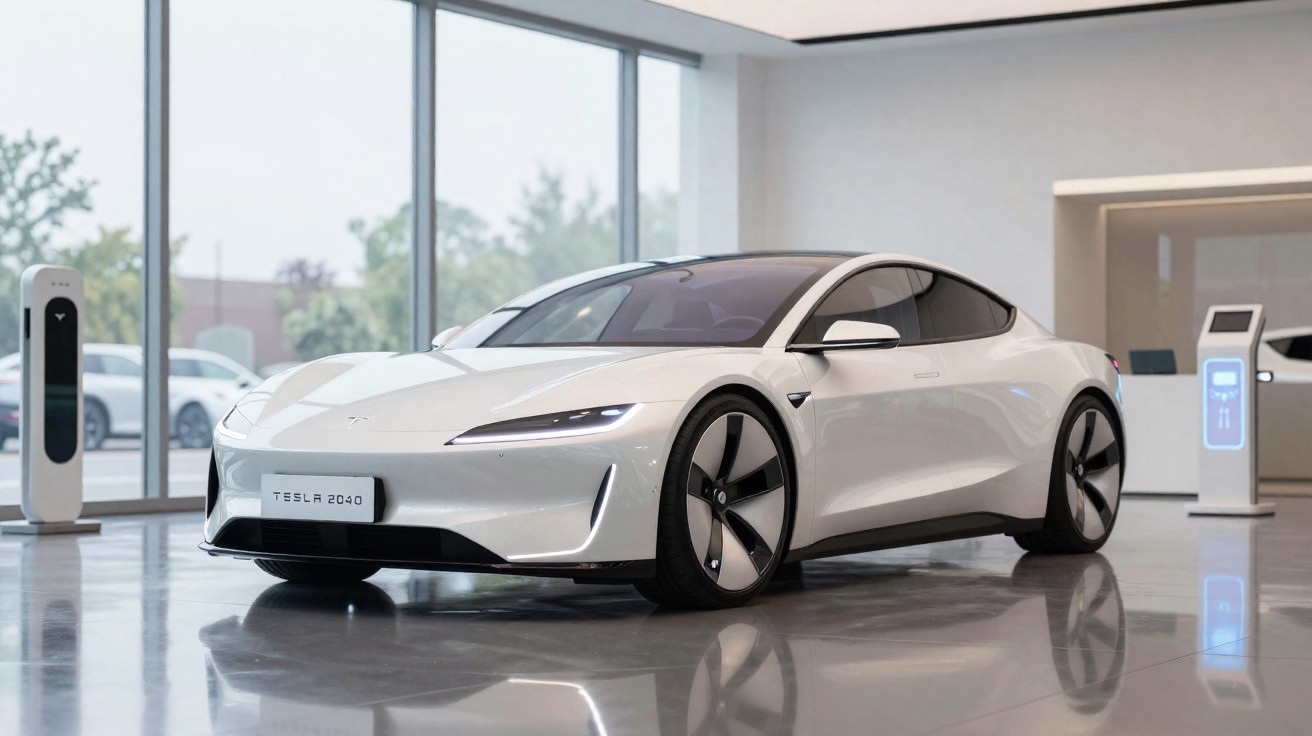
Although Tesla began life as an electric car company, that does not mean electric vehicles are its end goal. In Master Plan Part IV, shared by chief executive Elon Musk on the social network X, the company lays out an ambition that stretches well beyond EV mobility.
According to the plan, the manufacturer wants to reset its direction around artificial intelligence (AI) and robotics, with the ultimate aim of delivering “sustainable abundance”.
“As the tools we build help us create the world we’ve always dreamed of - a world of sustainable abundance - we will redefine the fundamental building blocks of work, mobility and energy at scale for everyone,” the document says.
Master Plan Part IV: Tesla’s path beyond electric cars
In this framing, electric cars become simply “a means to an end”. Master Plan Part IV notes that while vehicles were the starting point of this journey - from the Roadster to the Model 3 and Y - Tesla now intends to broaden its influence beyond individual transport.
The company argues that bringing together hardware, software and AI will enable products and services that change how we live, work and relate to energy and technology. Examples include clean, affordable energy production, safer and cheaper autonomous vehicles, and the Optimus robot, designed to take on monotonous or hazardous tasks so people have more time for activities that are creative or enjoyable.
AI and robotics at Tesla: autonomy and Optimus
Another message Tesla pushes is that these products must be accessible not only in terms of availability, but also in price, so as many people as possible can benefit from the technology.
“Everyone deserves access to these opportunities, and technological growth can help ensure each of us maximises our most limited resource: time,” Tesla argues.
In the company’s view, this is only the opening move in a technological shift that could reshape entire sectors, from transport to human labour, and move the world towards one where scarcity becomes less and less of a constraint.
“Today we stand on the threshold of a revolutionary period primed for unprecedented growth. And this time we won’t just take a single step, but a leap forward, for Tesla and humanity as a whole”.
Challenges
For all the ambition, Tesla openly acknowledges the obstacles: “This will be an extremely hard effort to accomplish. Eliminating scarcity will require relentless and rigorous execution. Some may think it’s impossible. But when we succeed, the critics will realise that what seemed impossible is, in fact, possible”.
As an example, the company points to batteries: “The idea that batteries could be produced affordably and at sufficient scale to move the transport industry away from fossil fuels seemed impossible - until Tesla did it”.
“Through continuous innovation, we have overcome the greatest technological hurdles in battery development and created an industry powered by renewable sources”.
The end goal remains unchanged: to build a sustainable, truly abundant future for the generations to come. You can read the plan in full at the link provided.
Comments
No comments yet. Be the first to comment!
Leave a Comment