
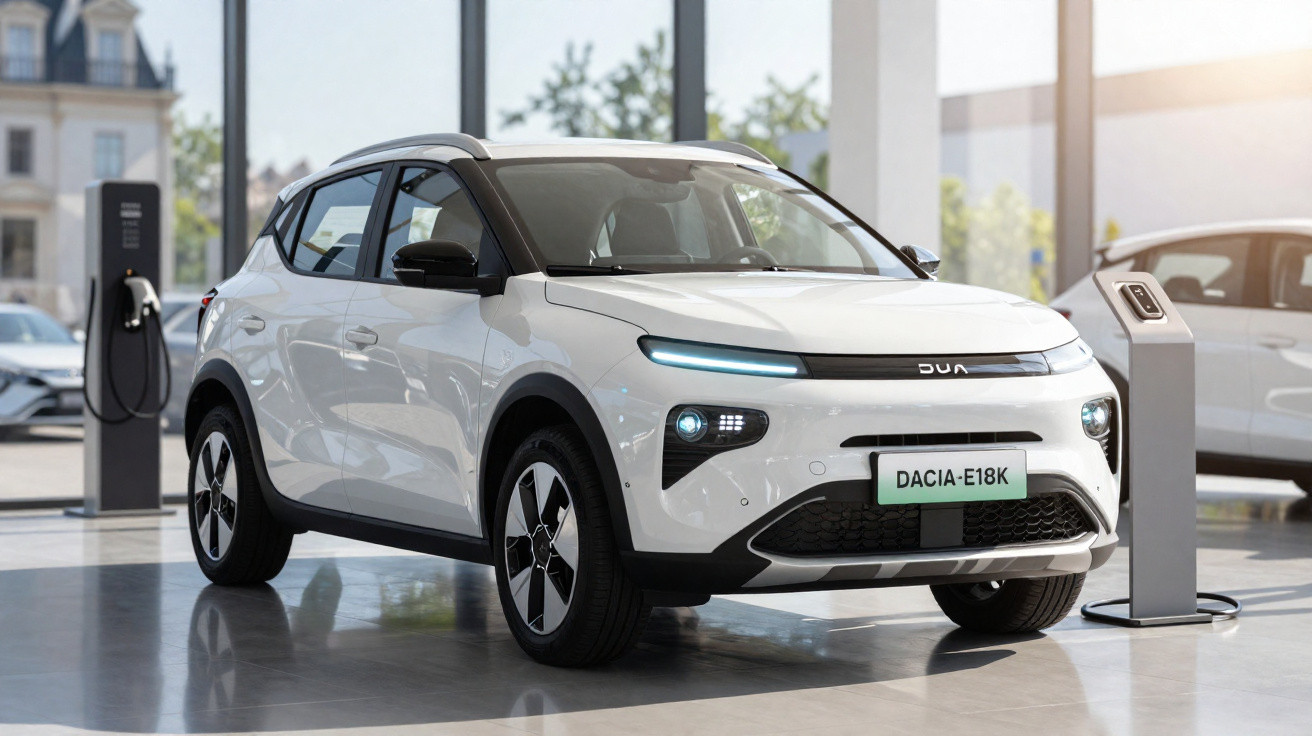
Romania’s best-known value brand is lining up several new electric cars - and aiming to bring the entry price down sharply.
For years, Dacia was often dismissed as a “budget brand”, but it is now tightening up its approach for the electric era. The Renault Group marque intends to launch four new battery-electric models, with a very clear focus: electric mobility for people who have traditionally had to prioritise price above all else. At the heart of the plan is a new small-electric-car family with a starting price well below €18,000.
Dacia backs electric power - without abandoning its price DNA
Until now, Dacia’s name in EVs has largely meant one car: the tiny Spring. It is inexpensive, straightforward to drive, and mainly exists to get you from A to B on electricity as cheaply as possible. Now the brand is taking the next step, growing its EV line-up from one model today to four by 2030.
“The group is aiming for around two thirds of all Dacia models sold by 2030 to have an electric drivetrain.”
With that, Dacia is deliberately moving into the gap between pricey premium EVs and basic petrol cars. While many rivals are pushing prices upwards, Dacia wants to stick to its familiar promise: as much car as possible for as little money as possible.
New small-electric-car family with a price target below €18,000
The first model in the next generation of Dacia EVs will be closely related, technically, to the next Renault Twingo. In styling and concept, however, it is meant to look and feel unmistakably Dacia - rugged, no-nonsense, and free of costly gimmicks.
The key detail is the price. Dacia is signalling a starting point below €18,000. For a proper small EV built in Europe, that is a direct challenge to Volkswagen, Stellantis and others.
“With European production, state incentives should apply - which could bring the real purchase price in some countries down towards €15,000.”
For plenty of buyers on tighter budgets, that could make a new electric car achievable for the first time - without taking on years of heavy debt or resorting to a stripped-back import.
Why production is moving to Europe
Today’s Spring is built in Chinese plants. That helps keep manufacturing costs down, but in some markets it creates a real disadvantage: no national purchase incentive, because the car is not produced in Europe.
Dacia is taking a different route for the Twingo-derived model. Production is planned for European factories, which brings several benefits:
- better chances of qualifying for national environmental bonuses
- shorter shipping distances and lower logistics costs
- less political exposure in debates about low-cost Chinese imports
- a marketing advantage with customers who value European manufacturing
For Dacia, this creates room to price the car tightly on the list price while incentives can reduce the effective transaction price further.
Four electric models by 2030 - what we can already see
Dacia is not sharing every detail yet, but the overall direction is clear. By 2030, the brand plans to have four pure battery-electric cars in its range. At present, only the Spring is officially on sale. The Twingo-based model will be the first of the next wave.
After that, the most interesting developments are likely to involve the higher-volume nameplates. The Sandero line, in particular, is in the spotlight - a genuine best-seller in many countries.
An electric Sandero is widely expected
An all-electric Sandero is considered highly likely within the company. It would sit in the mainstream compact class: enough space for family life, shopping and holidays, while still being manageable in town.
To keep costs down, industry sources suggest the engineers are planning to use LFP batteries (lithium iron phosphate). These packs store slightly less energy per kilogram, but they are significantly cheaper and are regarded as robust.
That fits Dacia’s positioning: headline range figures are not the objective. What matters is day-to-day usability, a sensible real-world radius, and a price that does not overwhelm household finances.
Duster stays (for now) with petrol and hybrid
One big question concerns the Duster, the brand’s hit SUV. Here, Dacia is currently keeping its cards close to its chest. A pure electric Duster is not officially planned. Hybrid or mild-hybrid versions appear more likely.
There are practical reasons for this: a larger SUV needs considerably more battery capacity to deliver usable range. Battery costs would risk breaking the brand’s affordability promise. For that reason, Dacia is initially focusing its fully electric push on smaller, lighter vehicles.
How Dacia carries its budget strategy into the electric era
At its core, Dacia is sticking to its established playbook. Development teams draw on existing Renault Group technology, remove expensive extras, and keep the range of versions limited. That reduces supplier costs, inventory complexity and manufacturing effort.
“Dacia wants to deliver ‘the most competitive solution in price, cost and customer benefit’ - in other words: no luxury, but solid technology at an entry-level tariff.”
In practice, that means simpler cabins, hard-wearing plastics and infotainment that is capable rather than cutting-edge. Instead of oversized displays embedded in designer dashboards, Dacia is more likely to lean on smartphone integration and functional controls.
This approach also lowers the risk of expensive repairs. For many buyers who keep their cars for a long time - and are not bothered by the odd scratch - that is part of the appeal.
What Dacia’s plan could mean for UK buyers
In the UK, Dacia’s EV roadmap would open up more realistic choices at the lower end of the market. Until now, many small electric cars have started well above €20,000 even after incentives in some countries.
With a list price under €18,000 and the potential for support in eligible markets, these new Dacia EVs would land in territory currently dominated by petrol and LPG models. Commuters, city drivers and younger families are likely to take notice.
| Model / plan | Status | Planned entry price | Place of manufacture | Notable point |
|---|---|---|---|---|
| Small electric car based on Twingo | announced | under €18,000 | Europe | expected to be incentive-eligible |
| Dacia Spring | already on sale | currently varies | China | not incentive-eligible in some countries |
| Electric Sandero | in planning | not yet confirmed | not yet confirmed | LFP battery highly likely |
Opportunities and risks of bargain-priced EVs
Low-priced EVs are not purely upside. Buyers should keep several factors in mind. Battery capacity is likely to be moderate in order to save money. If you regularly drive long motorway distances, you should expect more frequent charging stops and the need to manage speeds.
Charging performance is another point: cheaper models typically offer sensible, but not class-leading, charging rates. For everyday use with home or workplace charging, that can be perfectly adequate. If you rely on rapid chargers often, it is worth checking the specifications carefully.
On the plus side, simpler technology can benefit owners. Less equipment also means fewer things that can go wrong. It is a pragmatic approach that matches the brand’s customer base - people who treat a car as a tool rather than a status symbol.
What terms like “bonus” and “LFP battery” really mean
Across many European countries, governments support EV purchases through grants or tax advantages. Eligibility is often tied to conditions such as a maximum list price or European manufacturing. That is exactly why Dacia’s production shift matters: combining a low list price with these bonus schemes can reduce the effective purchase price significantly.
LFP batteries, which are being discussed for future Dacia EVs, use a different chemistry from many current lithium-ion packs. They tend to be less sensitive to high temperatures, are considered very durable, and avoid expensive materials such as cobalt or nickel. That helps keep costs down, even if the range per kilowatt-hour is slightly lower.
For typical Dacia customers, that blend may be the point: usable real-world range, tough hardware, simple operation - and a price tag that signals practicality rather than premium.
Comments
No comments yet. Be the first to comment!
Leave a Comment