
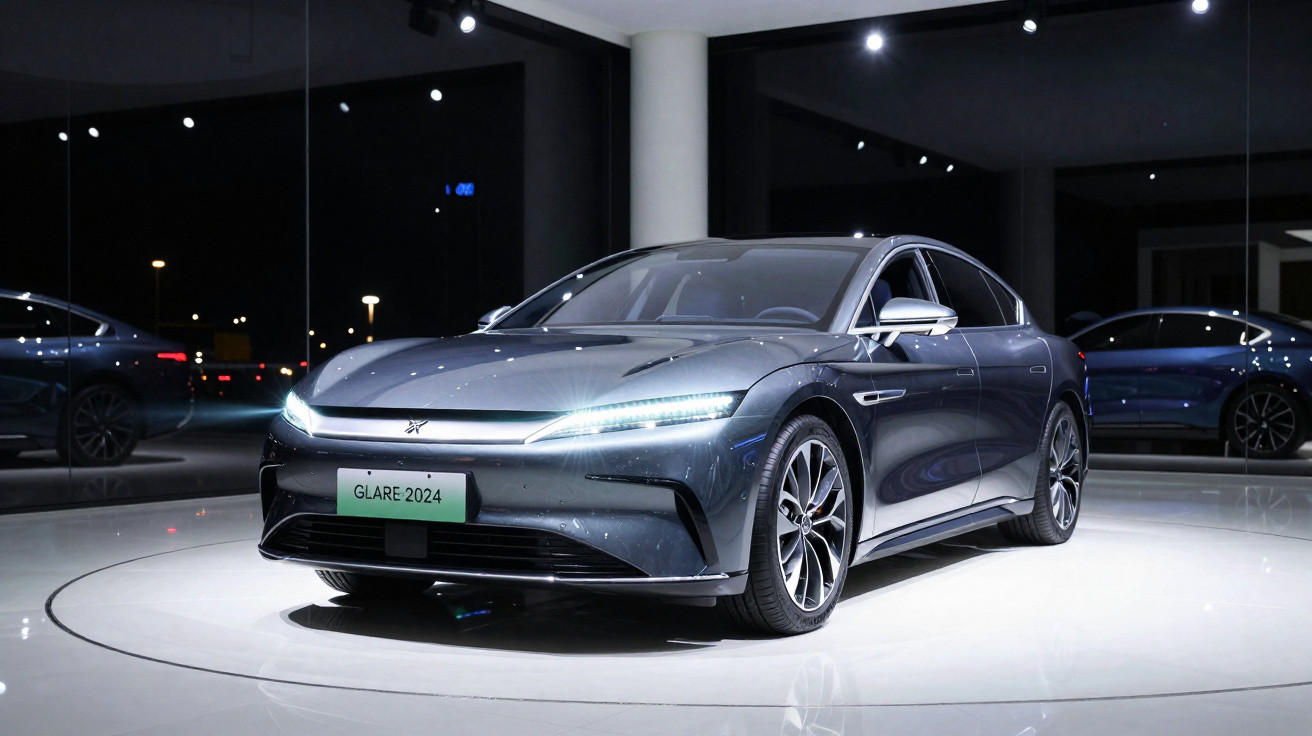
The light isn’t merely bright - it’s bleached and glaring, as if a studio lamp has been aimed straight at your face. For a brief beat your grip tightens on the steering wheel. You blink, the lane edges blur, and then the glare drops away. Night returns, with a ribbon of red brake lights further ahead.
Headlights on newer cars are meant to make driving after dark safer: stronger output, whiter colour temperature, and sensors that automatically do some of the thinking. But speak to anyone who regularly drives at night and you’ll hear a familiar complaint: “I’m being dazzled out there.” It comes up in traffic forums, in GP and optician waiting rooms, and in everyday neighbourhood conversations.
Some specialists argue the worry is overstated - a mix of ageing eyesight and busier roads. Others counter that, in pursuing safety, we’ve introduced a fresh hazard. Uncomfortably, both positions can be true at the same time.
Are modern headlights getting too bright for human eyes?
If you watch traffic from the pavement after dark, one change is hard to miss. Instead of a softer, warm, yellowish cone, many cars now project a sharper, bluish-white cut of light, with bright hotspots that seem to drive through the night. When the road is wet, that light reflects and spreads, turning the tarmac into something like a flickering mirror.
For people walking and for drivers coming the other way, the effect can feel less like guidance and more like an oncoming blast. Drivers often describe needing a second or two to “recover” after a particularly bright SUV goes past. Those seconds are exactly when errors slip in: edging towards the verge, reading a bend wrongly, or failing to spot a cyclist.
Officials often point out that the legal limits on brightness have not shifted dramatically; the headline maximum is broadly similar to years ago. What has changed is the way the light is delivered. LED and high-intensity discharge (HID) units concentrate more light into tighter, whiter beams. Even when the measured figures meet the rules, the eye can interpret that whiteness and focus as more aggressive. It can be great for spotting deer further down the road - and far less helpful for the person facing you who suddenly can’t pick out lane markings.
In the United States, reports about glare sent to the National Highway Traffic Safety Administration have risen over the last decade. An insurance-industry study found that about two thirds of drivers say headlight glare regularly bothers them at night. For plenty of people it goes beyond irritation; they say they plan journeys around better-lit routes, or skip night driving altogether.
Researchers also spoke to a 47-year-old delivery driver in Ohio who said he now schedules shifts to avoid peak glare periods - roughly 6pm to 9pm on busy suburban roads. Certain lorries, he said, are “like a camera flash that doesn’t end,” leaving him blinking as he crosses junctions he knows by heart. On rural roads the problem felt worse to him, because the surroundings are so dark that the contrast is higher.
Most drivers recognise the reflex: a car tops a hill and you automatically glance towards the verge to get away from the beam. That instinct can help, but it carries its own danger. The moment your attention slides away from the lane, small but important details are easier to miss - a sign, a pothole, a cyclist’s reflector that arrives a second too late.
Lighting engineers will tell you the fundamentals are unchanged: dipped beams and main beams still follow defined patterns and limits. Yet what the light feels like in real life varies with age, speed, weather and the mismatch in height between vehicles. A legal headlamp on a taller SUV sits higher and can throw more light directly into the eyes of someone in a lower saloon. Rain, fog and a grimy windscreen increase scattering. Add tired eyes at the end of a long day and glare stops being a nuisance and starts becoming a real-world risk factor.
Some research associates heavy glare with brief “blackout” episodes, when the view is washed out and contrast collapses. Even if that lasts only half a second, at motorway speeds you travel roughly the length of a large room while effectively half-blind. Regulators and manufacturers argue the compromise is justified because brighter light improves visibility further ahead. Critics respond that we’ve optimised for the driver behind the brighter lamps, not the person meeting them head-on.
What drivers and experts say we can actually do about it
One unexciting theme keeps coming up among people who study glare: alignment. The angle of the headlamps, not only the raw brightness, determines how punishing the beam feels to others. A tiny change can lift the hotspot into oncoming drivers’ eyes - or place it back on the road where it belongs. The remedy is often straightforward: a level surface, a marked board, a handful of measurements, and a screwdriver.
In a perfect world, headlamp alignment would be checked routinely, like tyre pressures or oil levels. In practice, it’s easy to ignore. Many people fit a replacement bulb and never revisit the aim. Others install an aftermarket LED kit and assume the resulting pattern is fine, even when it’s badly out. Yet when technicians do properly re-aim lights, drivers commonly report they can see just as well - sometimes better - while everyone else experiences less dazzle.
Many optometrists now discuss “glare management” with patients in the same practical tone once reserved for seatbelts. Their advice is simple: keep the inside of the windscreen clean, change wiper blades more often, and think about anti-reflective coatings on prescription glasses. Grime and microscopic scratches behave like a diffuser, turning bright points into painful halos. In daylight you may barely notice it; at 10pm behind a line of pickups, you certainly will.
One UK optometrist spoke of a patient who came close to giving up night driving because of modern lights. Tests showed mild cataracts alongside a stubborn film of dirt on the windscreen. After surgery and a thorough clean of the glass, she said night driving shifted from “white chaos” to “manageable, if still bright.” It was, in essence, science meeting Windex.
Road-safety researchers also suggest a few practical tactics. Instead of staring into oncoming headlamps, glance slightly to the right towards the white edge line. Leave more space when a tall vehicle behind you floods your mirrors with light. Dim digital displays or use night mode to lower overall eye strain.
Let’s be realistic: almost nobody keeps up with all of that every day. Most of us get in, put a podcast on, and rely on our eyes to cope.
Some experts think the way we frame the issue matters as much as the technology itself. For a long time, glare was treated like complaints about loud music - irritating but not serious. With whiter LEDs and more SUVs on the road, the tone has shifted. The question is moving from “this is annoying” to “could this be dangerous?”
“Glare is not just about comfort,” says one transport researcher. “It changes what people choose to do. If drivers avoid night trips, that reshapes work, social life, even who feels free to move around after dark.”
Among policymakers, there is growing interest in adaptive headlights that automatically reshape and dim the beam around other road users. These systems are already common across Europe and parts of Asia. The US has only recently permitted them, and adoption is expected to be gradual. In the meantime, many campaigners want stronger public education and clearer enforcement on aftermarket bulbs and lifted trucks.
- Ask for your headlights to be checked and aimed at your next service, particularly after changing bulbs or suspension.
- Clean both sides of your windscreen frequently; that invisible film matters far more at night than most people realise.
- If night glare suddenly gets worse, speak to an eye specialist; it may indicate a change in your vision.
Balancing brighter roads with calmer eyes
This debate contains a built-in contradiction. Brighter headlights can genuinely help drivers identify hazards earlier - a deer near the treeline, a broken-down vehicle in an unlit lane, a pedestrian wearing dark clothes. That extra second of warning can save lives. But the same intensity that reaches further into the darkness can push other road users past their comfort threshold.
Some campaigners describe it as an arms race. One driver upgrades to brighter lights to feel safer. The next driver is dazzled and follows suit. Manufacturers then raise the bar again with even more powerful systems, marketed as advanced safety. Quietly, night-time roads become more hostile for anyone with sensitive eyes, older vision, or no car at all.
In a wider sense, the headlight issue echoes a familiar technology question: at what point does “more” stop improving safety and start creating harm? So far, research has not produced a neat, single answer. Glare is hard to capture in simple metrics, while stress, fear and fatigue appear in anecdotes and subtle changes in behaviour. What does seem clear is that oncoming light no longer feels neutral. It influences where we drive, when we drive, and how comfortable we feel once daylight fades.
| Key point | Detail | Why it matters to the reader |
|---|---|---|
| Modern headlights feel harsher | LED and HID beams are whiter and more tightly focused, which the eye interprets as more dazzling | Helps explain why night driving may feel more stressful than a decade ago |
| Glare has real-world effects | Drivers report avoiding night trips and experiencing short “blackout” moments after bright lights | Encourages readers to consider their own habits and less obvious risks |
| Small actions can reduce discomfort | Correct headlight aim, clean glass and simple visual tactics reduce perceived glare | Provides practical steps to feel safer and less anxious behind the wheel |
FAQ:
- Are modern LED headlights actually more dangerous than old halogen ones? Not necessarily more dangerous overall, but they can feel harsher and cause more discomfort or temporary glare, especially for oncoming drivers or people with sensitive or ageing eyes.
- Can headlight glare permanently damage my vision? Normal on-road glare from legal headlights isn’t known to cause permanent eye damage, though it can create short-term blindness and strain that raise the risk of mistakes while driving.
- Why do some cars seem way brighter than others if the rules haven’t changed? Vehicle height, headlight aim and beam pattern all matter. A tall SUV or truck with slightly misaligned LEDs can feel far brighter than a correctly aimed saloon, even with similar power.
- Is there anything I can ask my mechanic to do about glare? You can request a headlight alignment check, verify that your bulbs match the car’s original specifications, and ask them to inspect the headlight lenses and your windscreen for haze or damage.
- Will adaptive headlights actually fix the problem of glare? Adaptive systems can reduce glare by shaping light away from other road users, yet they’re not perfect and won’t erase issues linked to dirty glass, eye health or extreme weather conditions.



Comments
No comments yet. Be the first to comment!
Leave a Comment