
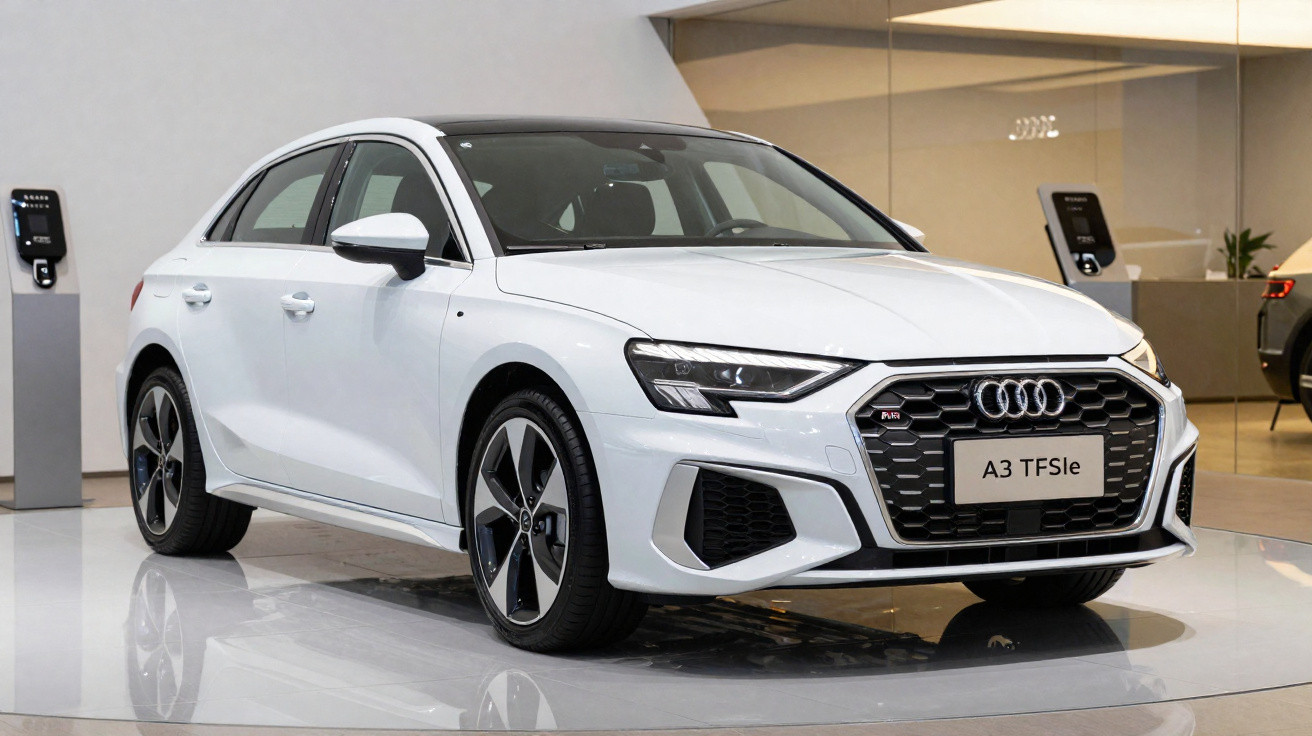
The Audi A3 is a genuine success story and, since its launch in 1996, it has already sold more than five million units.
In Portugal alone, more than 50,000 have been registered, with a naturally strong bias towards diesel versions. That means that, in the current (fourth) generation, the biggest burden of expectation sits with the 30 TDI and 35 TDI variants, both powered by a 2.0-litre turbo diesel producing 116 cv and 150 cv respectively.
Even so, the A3 line-up is more complete than ever. When it comes to choosing one, the Ingolstadt brand offers four distinct powertrains (diesel, petrol, plug-in hybrid and CNG), spread across two body styles: hatchback (two-box) and saloon.
All told, it’s fair to say there’s an Audi A3 for every taste. The most recent arrival, however, is the A3 Sportback 40 TFSIe: the first plug-in hybrid in the latest generation of the German compact family car.
We drove this A3 Sportback 40 TFSIe mainly in town-where, on paper, it should be at its most efficient-but we also set it a tougher task: a trip of more than 600 km on motorways and dual carriageways. Did it deliver?
Hybrid system impresses
Because this is a plug-in hybrid, under the bonnet you’ll find a 1.4 TFSI petrol engine with 150 cv-different from the unit used in the A3 Sportback 35 TFSI which, despite matching the power output, has 1.5 litres of capacity-paired with a 109 cv electric motor. Combined output is 204 cv, with peak torque of 350 Nm.
With those figures, the A3 Sportback 40 TFSIe can reach 227 km/h and needs only 7.6s to complete the familiar 0–100 km/h sprint.
They’re strong numbers, but set against the Mercedes-Benz A 250 e-slightly more powerful at 218 cv-the A3 matches it for top speed yet takes roughly one second longer from 0–100 km/h. If the benchmark is the SEAT Leon 1.4 e-Hybrid-sharing the same drivetrain-the German model has the advantage on maximum speed (227 km/h versus the Spanish car’s 220 km/h) and is just a tenth behind in the 0–100 km/h run (7.6s versus 7.5s).
The electric motor is integrated into the six-speed dual-clutch DSG gearbox-there’s no sign of the Volkswagen Group’s newer seven-speed dual-clutch unit, though we certainly didn’t feel short-changed-and that arrangement ensures the car always pulls away in electric mode. There’s no manual transmission option and no four-wheel drive either, with power always sent to the front axle.
The entire electric set-up is supplied by a 13 kWh battery, almost a 50% increase in capacity compared with its predecessor. And it’s precisely this jump in capacity that explains the near-20 km gain in electric range versus the previous plug-in hybrid A3, taking it to 67 km (WLTP).
As is so often the case, real-world range lands a little below the official claim and, during this test, the best we managed was around 50 km of “electric-only” driving.
That may be short of the 67 km stated by the German brand, but it’s still a compelling figure-especially for anyone choosing a plug-in hybrid primarily for urban use.
In fully electric mode, top speed is limited to 140 km/h, yet the drivetrain remains consistently smooth, both in operation and in how it delivers its power. Regenerative braking is strong and demands a “properly firm stamp” on the pedal, a trait I genuinely like.
It’s 204 cv, but feels like more
As long as there’s charge left in the battery, gentler acceleration is handled mainly by the electric motor. Only when you press the accelerator more decisively does the powertrain invite the petrol engine to “join the party”; and when it does-either under heavy throttle or once the battery is depleted-the combustion engine comes “into play” in a very seamless way.
On paper you have 204 cv under your right foot, but this plug-in hybrid A3 gives the impression there’s actually more “firepower” tucked away under the bonnet. Consumption was also a pleasant surprise: after the 657 km I covered, the overall result came out at 5.3 l/100 km.
A motorway favourite
This Audi A3 Sportback 40 TFSIe has plenty going for it, but what stands out most is how well it balances comfort with handling. The S line specification and 17-inch wheels might suggest firmer damping and less compliance, yet the reality is that this A3 is a superb long-distance companion.
With a dynamic character that catches you out (in a good way), the A3 is defined by the stability it shows on the road-something that seems to improve as speeds rise. That’s true on long, relaxed motorway stretches, and it’s equally evident on secondary roads, where a sequence of bends tempts you to probe the available grip.
And here, this plug-in hybrid A3 Sportback-despite being 280 kg heavier than the 35 TFSI-remains highly capable, predictable and secure, with grip levels that are difficult to unsettle even with the driver assistance systems switched off.
Benchmark cabin
Compared with its predecessor, the interior of the new Audi A3-regardless of version-is slightly busier and less elegant. A clear example is the driver-side air vents positioned next to the steering wheel: it’s a solution I like, but one that’s far from universally popular. What does earn widespread praise is the overall quality, widely recognised as being among the very best in the segment.
The cabin’s insulation and the notably solid build quality live up to the brand’s reputation and heighten the sense of comfort. Even on the motorway at higher speeds, wind noise and tyre roar never become intrusive.
In the video review of the Audi A3 35 TFSI-also in S line trim-Diogo Teixeira walked us through every detail of the new-generation A3 interior. Watch it, or watch again:
The plug-in hybrid hardware Audi has “given” the A3 also makes itself felt in the boot. It loses 100 litres of capacity (dropping from 380 litres to 280) compared with conventional versions powered solely by an internal combustion engine. The 13 kWh battery sits beneath the rear seat, which forces the fuel tank further back, leaving it positioned under the boot floor.
Is it the right car for you?
The Audi A3 is in better shape than ever. Its exterior styling looks aggressive and appeals to the senses, while the interior feels premium and delivers the high standards the Ingolstadt brand has consistently offered in recent years.
On top of that, this plug-in hybrid version not only adds another option to the already broad A3 range, it also delivers an almost seamless integration between the combustion engine and the complete electric system.
The long-distance strengths we’ve already praised in other versions remain fully intact, but the extra shove provided by the hybrid set-up enhances the driving experience of a model that, in my view, offers a more engaging dynamic feel than the more powerful Volkswagen Golf GTE (245 cv), recently tested by Fernando Gomes.
Comments
No comments yet. Be the first to comment!
Leave a Comment