
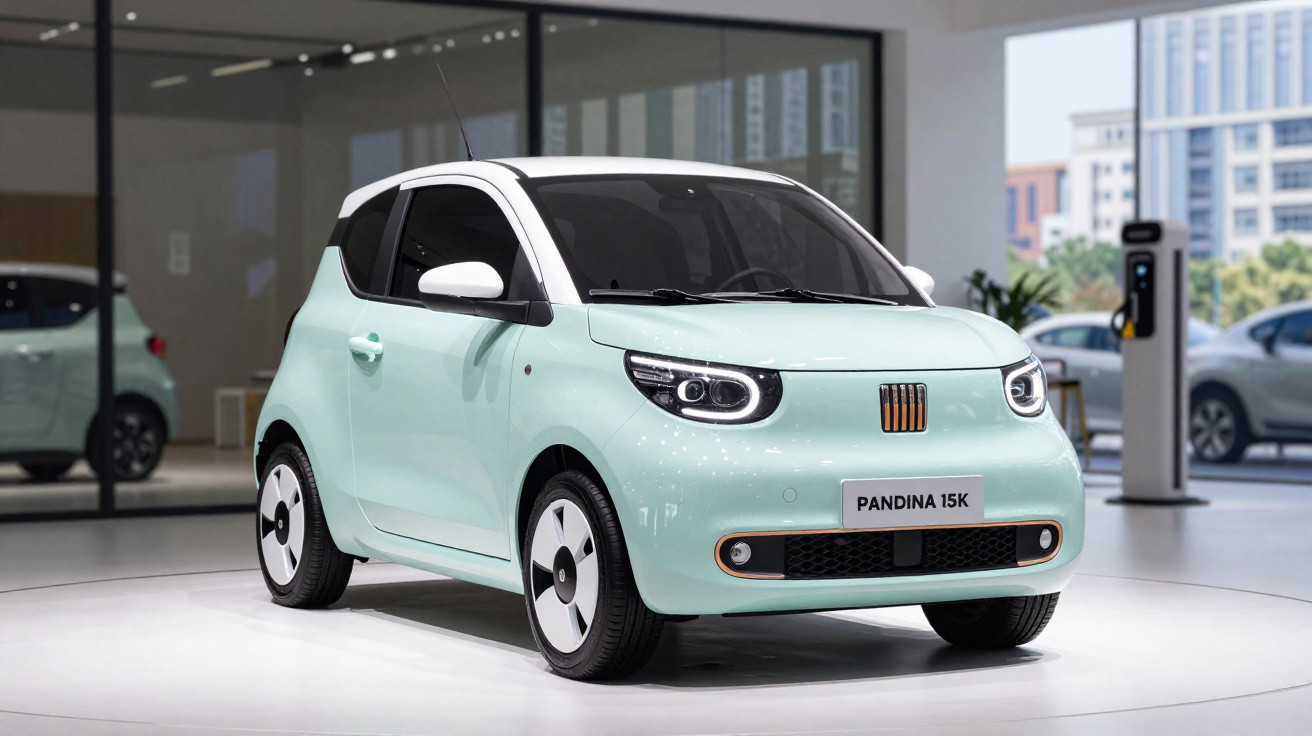
Fiat is working on several fresh models for the next few years. At the centre of this push is expected to be an especially affordable city car positioned below the new Grande Panda. Early signals from within the group and Italy’s specialist press already paint a fairly clear picture, even though Fiat has not yet made anything official.
New entry-level city car takes centre stage
Fiat wants to broaden its line-up significantly in the high-volume part of the market. The brand needs sales numbers, and those are typically generated through small, budget-friendly cars. That is exactly where the forthcoming city runabout fits in, with plans for it to sit beneath the Grande Panda as Fiat’s new entry point.
The name "Pandina" is currently being discussed, as it is already used for a version of today’s small Fiat. If that badge is retained, the new mini-Fiat would effectively replace the existing small petrol-powered Panda models - but with a more modern approach, some level of electrification, and a clear focus on keeping costs down.
The new minicar is expected to launch below the Grande Panda and serve as a particularly affordable entry option.
While the name has not been confirmed, there are plenty of reasons to think Fiat will stick with the familiar designation. It reduces marketing effort and makes full use of the Panda family’s strong recognition across Europe.
Electrified, but not only: an engine line-up for every budget
On the technical side, Fiat is said to be planning a wide spread of powertrains. One thing is certain: electrification is now unavoidable, even among the smallest cars. According to reports from Italy, the new mini-Fiat is expected to be offered in several forms:
- mild hybrid with a small petrol engine and a 48-volt system
- a fully electric version with zero local emissions
- a conventional internal-combustion model as a possible base variant
This approach mirrors the group’s current direction. With cars such as the Fiat 600 and the Grande Panda, pure petrol power has been reintroduced in certain markets to keep entry prices attractive. For cost-conscious buyers, an all-electric range can still be a deterrent - whether because of upfront cost or concerns about charging access.
That is why the new minicar could play a bridging role: electric where it makes sense, and combustion technology where customers still expect it. In practice, this makes it easier to balance CO₂ requirements with everyday realities.
Why mild hybrid makes sense for urban driving
Mild hybrids are often seen as a compromise, but they can be a very strong match for city use. A small electric motor assists when pulling away, recovers energy during braking, and reduces the load on the petrol engine. The result is lower fuel consumption and emissions, without the cost and complexity jump associated with a full hybrid.
For commuters who spend most of their time in stop-start traffic and do not have a charger at home, this kind of drivetrain can be a practical middle ground between a traditional petrol car and a more expensive electric vehicle.
Paris debut: concept car offers a preview
Fiat has not released official specifications so far, but the timetable is starting to take shape. The brand intends to show several concept studies at the Paris Motor Show, with one expected to point directly at the upcoming city car and appear close to production.
The appearance in Paris is seen as the starting signal: Fiat is likely to preview the design and technology of the future entry-level model there.
Manufacturers typically use major shows like this to test design themes and gauge public reaction. Experience suggests many concept elements later carry over to production with minimal change - such as lighting signatures, overall proportions and the interior layout.
Price target: under €15,000 - can Fiat pull off a bargain hit?
For most prospective buyers, the key question is price. Italian media reports suggest Fiat is aiming for a starting point clearly below €15,000. If achieved, the new minicar would stand out as one of the very few genuinely inexpensive new-car options left in Europe.
To put the intended positioning into context, here is a quick comparison:
| Model | Segment | Target starting price (estimate) |
|---|---|---|
| New mini-Fiat (Pandina) | Minicar | under €15,000 |
| Fiat Grande Panda | Small car | around €18,000–20,000 |
| Renault Twingo E-Tech successor | Electric minicar | likely over €20,000 before incentives |
With a price tag like that, the small Fiat could slot neatly into a gap many brands have effectively abandoned. A lot of city cars have become unprofitable under tougher safety and emissions rules and have either disappeared or moved sharply upmarket.
Technical underpinnings: talks of an alliance with Citroën
To hit such a low price point, trimming equipment alone will not be enough. Reports therefore say Fiat is in discussions with Citroën about a technical partnership. The background is that the sister brand has been considering bringing back the C1 minicar.
That could lead to a classic shared-platform project. Both marques would use the same architecture, along with major components such as suspension, steering and drivetrains. Recent examples like the Citroën C3 and Fiat Grande Panda show this sort of relationship can work without buyers feeling they are purchasing a rebadged twin.
Shared platform, different personalities - that is how costs could be reduced without diluting each brand’s identity.
For customers, the main benefit would be straightforward: more choice at the lower end of the market. The more volume spread across multiple brands, the more realistic an aggressively low entry price becomes.
Timing: production not expected until late 2026
Anyone already considering a purchase will need to be patient. Industry expectations point to a launch no earlier than the end of next year. Depending on regulation, supply chains and the market environment, the full reveal of the production version may not happen until 2027.
The current roadmap looks like this:
- Autumn in Paris: a concept reveal with a clear link to the production model
- During 2026: more information on powertrains, ranges and pricing
- Late 2026 / early 2027: start of series production and a market roll-out that may vary by country
Why city cars are becoming relevant again
In recent years, many manufacturers have stepped away from the city-car class. At the same time, rents, energy bills and insurance costs have increased. For plenty of people, that shifts the car from lifestyle purchase to pure utility - and that is exactly where affordable minicars come back into focus.
Likely target groups for the upcoming mini-Fiat include:
- young drivers buying their first car
- city residents with limited budgets and minimal parking space
- commuters covering short daily distances
- households looking for an inexpensive second car
For these buyers, what matters most is the total cost picture: purchase price, tax, insurance and running costs. A light, efficient minicar with straightforward engineering often has clear advantages over heavy compact SUVs.
What buyers should consider now
Anyone interested in the future city runabout can already think through a few practical points. Home or workplace charging will matter if the electric version is on the shortlist. Annual mileage is also relevant: those driving more kilometres typically benefit more from the low energy use of an EV or mild-hybrid model.
Key questions remain unanswered for now: how large will the battery be in the electric version? What will real-world winter range look like? And how far will Fiat cut back on the cabin and infotainment to stay below the €15,000 mark? The first clear answers are expected in the autumn, when the covers come off in Paris.
Comments
No comments yet. Be the first to comment!
Leave a Comment