
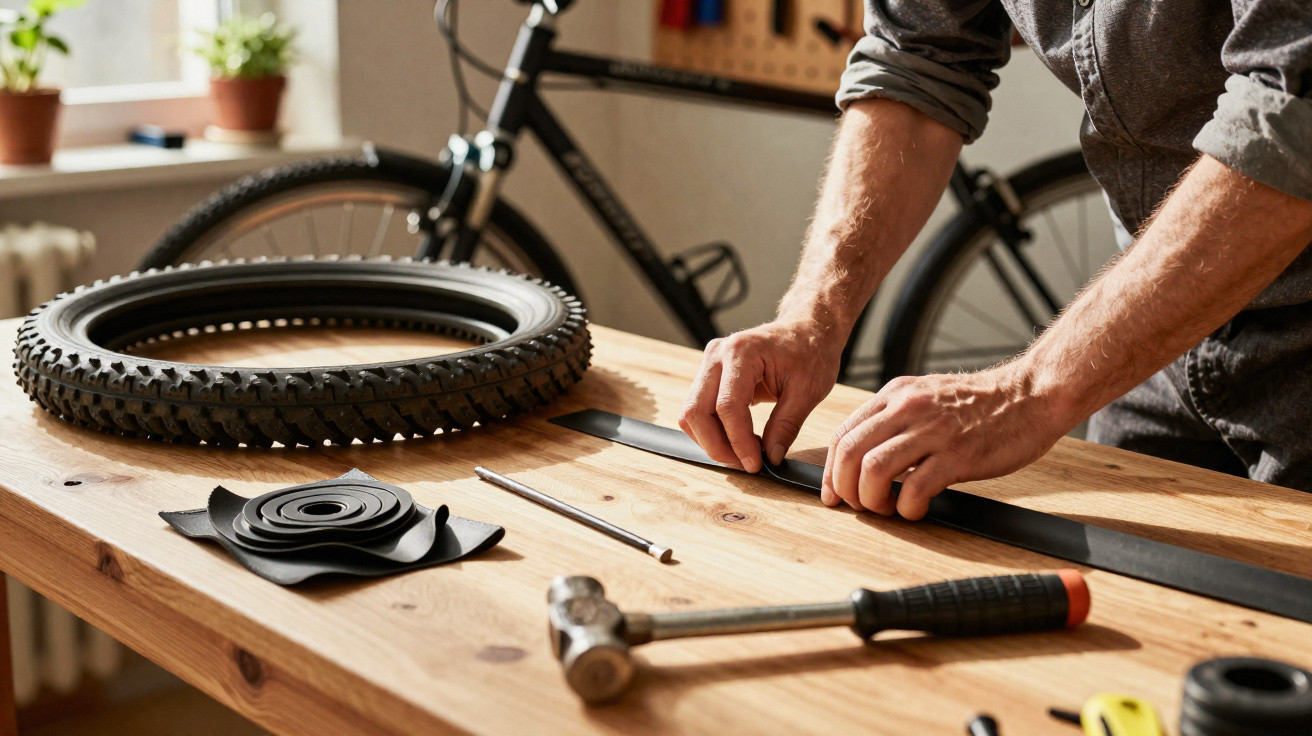
An old bicycle tyre may seem useless once it is no longer safe for riding, but its tough rubber can be put to work around the house. The inner tube, the outer tread and even small sections of casing can be repurposed into straightforward aids for organisation, protection and minor fixes, extending the life of a material that would normally be thrown away.
How can you turn an inner tube into a durable elastic?
You can slice the inner tube crossways into closed strips, creating elastic loops in various sizes. The rubber is supple, grips well and is handy for bundling cables, securing light items or keeping tools tidy inside boxes and drawers.
You can also cut a longer band to use as a simple fastening strap for everyday household tasks. Avoid very heavy loads or any use where a snapped strap could cause injury, because an old tube may have small cracks and reduced strength.
- Securing coiled cables;
- Grouping small tools;
- Closing packets and containers;
- Organising items inside boxes;
- Holding light objects that need a little elasticity.
Can an old tyre improve tool grip?
Yes. A cut piece of the tyre’s outer rubber can be trimmed and fitted around the handle of certain tools to create a more grippy surface. The tread pattern helps reduce hand slip, particularly on smooth plastic or metal handles.
How to use bicycle tyre rubber as anti-slip protection
Another option is to turn sections of the tyre into small anti-slip strips. Once cleaned, they can be attached to surfaces such as steps, plant-pot bases, furniture feet or items that tend to slide on smooth floors.
The rubber’s texture increases friction and also acts as a buffer between two hard surfaces. Before sticking anything down, remove dirt and residue from the piece and choose an adhesive that is suitable both for rubber and for the surface you are fixing it to.
- Strips for steps and small platforms;
- Protection under plant pots and boxes;
- Support for objects that slide on worktops;
- Covering for parts of tools;
- Pads to reduce direct contact between surfaces.
What should you do before reusing a bicycle tyre?
Wash the rubber thoroughly with water and washing-up liquid, let it dry completely, then check for splits, exposed metal wires or heavily degraded areas. Tyres with the internal structure showing should be handled more carefully, and inner tubes that have become too dried out are not good candidates for uses that rely on elasticity.
Why is it worth keeping at least part of the tyre?
The inner tube and the outer tread have different properties and can solve small problems without the need to buy a specific accessory. The first provides stretch, while the second offers thickness, wear resistance and a naturally grippy surface.
Repurposing a bicycle tyre does not mean storing parts forever; it is about recognising materials that still have a purpose before disposal. Cut into strips or small pieces, what looked like nothing more than old rubber can become an organiser, anti-slip protection or extra grip for everyday tools.






Comments
No comments yet. Be the first to comment!
Leave a Comment