
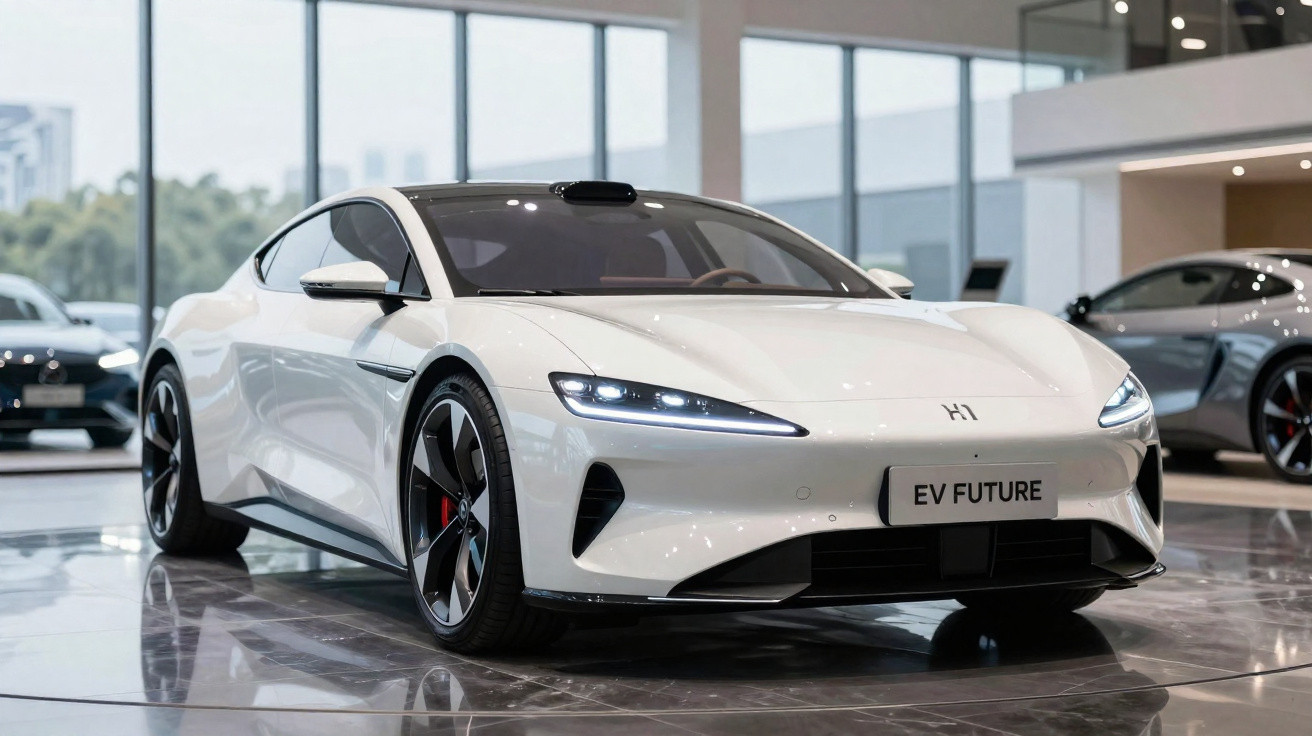
Electric cars are not, in truth, at the heart of this company’s plan. Not at the moment. And possibly not for quite a while.
For a long time, the message was a spotless, plug-in tomorrow: polished adverts, eco-friendly taglines, happy families gliding around in whisper-quiet SUVs. Then, via a handful of carefully chosen lines to investors and the press, the brand made clear where its real emphasis sits: hybrids, hydrogen, and “choice” for drivers who aren’t ready to commit to fully electric.
It read like a technical clarification on paper. In the room, it landed more like an admission.
Plenty of people left with the same thought.
What if the EV future isn’t as straightforward as we’ve been sold?
One of the world’s most trusted brands quietly taps the brakes on electric cars
This wasn’t announced with pyrotechnics and fanfare. It came instead in the slightly tense register companies adopt when they know they’re about to disrupt a storyline. The firm - the sort that enjoys Toyota-level trust, with a reputation built over decades - said electric cars are “part of” its vision, but not the central pillar. Over the coming decade, most of the heavy lifting will be done by hybrids, plug-in hybrids, and next-generation combustion engines.
On the page, that sounds almost mundane. In the real world, it exposes a fracture in the narrative we’ve been encouraged to accept: everyone goes electric, quickly, together, and in one clean sweep. When a brand synonymous with dependability effectively says, “we’re not staking everything on EVs,” it doesn’t merely nudge share prices. It unsettles confidence in how fast change is really going to happen.
Most of us have already been in that exact moment: standing in a showroom, looking at a gleaming electric SUV, and wondering whether you’re about to make a painfully expensive error. For customers of this brand, that uncertainty suddenly feels justified. Perhaps they weren’t “behind” at all. Perhaps they were simply less persuaded by the hype.
And the data makes the picture far less binary. Worldwide EV sales are still increasing, yet the rate of growth is easing in several major markets. Across Europe, some of the earliest EV success stories are now seeing more buyers drift back towards hybrids. In the United States, retailers describe lines of unsold electric models, while interest and waiting lists for efficient petrol cars and hybrids continue.
This company saw the pattern early in its own figures. Loyal buyers came into dealerships attracted by the idea of electric, then stalled when the charging reality hit. No driveway. No straightforward access to rapid chargers. Proper winters. Long family journeys. Many opted for a hybrid instead - and left feeling quietly reassured. The brand took note and leaned harder into what was already selling, even while public messaging kept using “electrification” as an intentionally broad, slightly hazy umbrella term.
That is where the acknowledgement shifts the atmosphere. Officially, the company says it wants a “multi-pathway” route to lower emissions. Put plainly: EVs where they fit, hybrids where they still make more sense, and emerging approaches (such as hydrogen) developing in the background. You could call that hedging. You could also call it pragmatic. Charging networks are not expanding evenly. Electricity prices swing. Battery raw materials sit in a geopolitical minefield.
So when a trusted giant is, in effect, saying “we’ll walk before we sprint,” it’s more than corporate caution. It’s a public hint that the EV storyline is more complex than the adverts have suggested.
What this really means if you’re thinking about your next car
The practical implication is simple: you have permission to take your time and make your EV decision ruthlessly realistic. Rather than starting with, “Should I go electric now to future-proof myself?”, begin with three basic questions. How far do you actually drive on a typical day? Where would you really charge - not in theory, but at 11 p.m. in the rain? And how long do you intend to keep your next vehicle?
Once you answer those honestly (even on the back of an envelope), patterns tend to show themselves. Short daily journeys, private parking with a socket, steady routines? An EV could still be an excellent fit. Flat living, unpredictable shifts, or long trips through areas where charging remains patchy? A well-designed hybrid may cut fuel consumption substantially without turning your life upside down.
Let’s be honest: hardly anyone is building perfect 10-year cost spreadsheets every day. So it’s worth staying human. Instead of pursuing “the perfect choice”, go for what feels like a calmer choice. If chargers, tariffs, and software updates are keeping you awake, that tells you something. If rising fuel bills and city rules worry you more, that tells you something else. This brand’s repositioning is a reminder that choosing a stepping-stone option is not the same as falling behind.
A family I spoke with in a mid-sized European city captured it in a single driveway. On one side: a fully electric hatchback bought with government incentives and big expectations. On the other: an unassuming hybrid that looks almost dated next to its silent neighbour. It’s obvious which keys get used most in winter. The parents put it plainly: the EV is brilliant around town, but on longer runs - or when their building’s charger is occupied - the anxiety starts.
The hybrid still uses some fuel, but it brings less stress. They aren’t climate sceptics; they’re parents trying to juggle school runs, work commitments, and infrastructure that doesn’t always cooperate. That’s the reality this global brand is responding to. Its wager is that, for at least the next decade, millions of drivers like them will want something between a loud engine and an all-in battery gamble.
“The future is not 100% electric, 100% of the time, for 100% of people,” a senior executive admitted off-record. “Our job is to build what people can actually live with, not just what looks good in a keynote.”
That may sound restrained - even deflating if you were hoping for a bold, heroic EV revolution. But it also creates space for a more grounded discussion. Your postcode matters. The resilience of your power grid matters. Your budget, your climate, and your family needs shape the “right” answer far more than any slogan about zero emissions by 2035.
- Begin with your day-to-day life, then match the technology to it - not the other way round.
- Compare total monthly running cost, not only the list price or the fuel line.
- Plan in 3–5-year horizons, not 20; the market and regulations are moving quickly.
A trusted brand blinking first – or quietly leading?
This admission leads to an uncomfortable question: is the company sidestepping responsibility, or is it quietly shielding customers from a rushed transition? The reality is probably an awkward mix of both. Yes, it has a commercial incentive to keep selling familiar systems it already excels at. And yes, it also understands that towing a caravan through a cold country in a heavy EV is not as effortless as a glossy brochure implies.
There’s a political dimension too, one people prefer not to say out loud. Governments announce ambitious EV targets, then struggle to install enough chargers, strengthen the grid, and simplify permitting. Manufacturers end up caught in the middle: promise too much electric capability and risk furious customers stuck queueing at broken chargers; move too slowly and face fines, bans, and public pressure. This brand is choosing to lean on its reputation for caution, even if that makes it look unfashionable.
For drivers, the deeper issue isn’t “EV versus hybrid versus petrol”. It’s credibility. Who do you trust when your next car might represent three, four, or five years of savings? A start-up promising over-the-air miracles? A tech chief executive tweeting optimistic range figures? Or a conservative manufacturer quietly signalling, “we’re not putting all our eggs in the EV basket yet - and you shouldn’t either, unless your circumstances genuinely suit it”?
Perhaps that’s the real change. The EV future hasn’t been scrapped. It’s simply arriving more slowly, more unevenly, and with more friction than the marketing decks suggested - and that’s exactly the kind of topic that belongs at the kitchen table.
This acknowledgement from a widely trusted giant doesn’t end the electric dream; it makes it more relatable. It forces uncomfortable questions into the open: are we building infrastructure where people actually live, or where it makes for good headlines? Are incentives helping households who most need lower running costs, or mainly rewarding early adopters? And are we comfortable with a transition that runs in more than one lane?
Some will label this timidity; others will see it as grown-up restraint in a market drunk on hype. What’s undeniable is that it gives ordinary drivers room to say out loud what many were already thinking privately: that choosing a next car isn’t only about the planet, or fashion, or keeping up with the neighbours. It’s about real life - messy diaries, winter mornings, and budgets that don’t care about corporate roadmaps.
If one of the world’s most trusted brands can concede that electric cars are not its primary focus, perhaps we can acknowledge our own doubts and constraints too. And from that more honest starting point, the conversation about the future of driving might finally become genuinely interesting.
| Key point | Detail | Why it matters to you |
|---|---|---|
| The brand isn’t going all-in on electric | Hybrids, PHEVs and multiple technologies are prioritised rather than an immediate 100% EV shift | Understand the transition will be gradual, with credible in-between steps |
| Real-world context matters more than slogans | Uneven infrastructure, costs, climate and driving habits influence the “right” solution | Helps you judge whether an EV, a hybrid or something else truly fits your life |
| Trust is the real battleground | Brands, governments and start-ups compete for your belief in a future narrative | Encourages you to ask your own questions instead of following a tech trend |
FAQ:
- Is the electric car future cancelled because of this? No. EVs are still growing globally, but the pace and shape of that growth are changing. This brand is saying the road will have several lanes, not just one.
- Should I postpone buying an electric car now? Not automatically. If your daily routes, charging options and budget fit an EV, it can still be a very smart choice. The key is to base it on your reality, not on pressure.
- Are hybrids really better for the environment? They usually emit less CO₂ than equivalent pure petrol cars, especially in city traffic. They’re not “zero-emission”, but they can be a meaningful step down in fuel use.
- Why would a big brand downplay EVs after investing so much? Because unsold cars on lots, unhappy customers and fragile supply chains are expensive. They’re balancing climate goals with what their buyers are ready to live with.
- What’s the smartest move if I must change cars in the next year? Compare three options side by side: efficient petrol, hybrid, and EV. Calculate monthly total cost, test drive all three, and choose the one that makes your everyday life feel calmer, not more complicated.
Comments
No comments yet. Be the first to comment!
Leave a Comment