
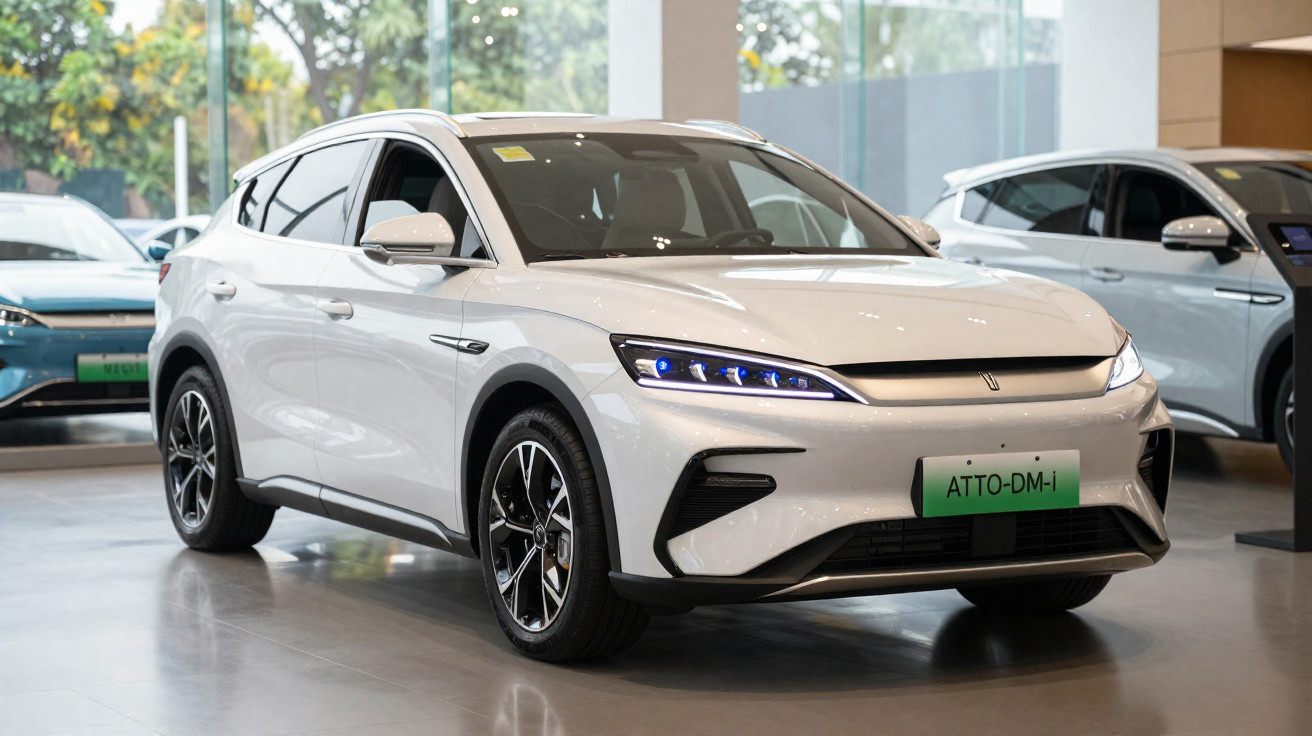
The BYD Atto 2 DM-i may be small, but it can take you a long way - literally and figuratively.
BYD models are a bit like sardines: the smaller they are, the better they taste. The BYD Atto 2 DM-i fits that pattern perfectly. But before I explain why, to my mind, this plug-in hybrid version is the best powertrain you can choose for the Atto 2, it is worth unpacking that comparison. After all, who doesn’t enjoy a proper sardine barbecue…
BYD has a few distinctive traits. The least interesting (because it is the most widely discussed) is probably that it is a Chinese brand - or that it is the world’s biggest seller of electric vehicles.
The more compelling quirk is something else entirely: the huge amount of component sharing across the range. Many of the parts you find in an Atto 2 or a Dolphin Surf are exactly the same as those used in models such as the Seal U, the Han or the Tang, which sit several rungs higher in both price and segment.
BYD can do this because it manufactures almost everything in-house, relying far less on outside suppliers - not unlike Toyota and Hyundai. In many cases, reusing an existing component (even if it is over-specified) works out cheaper than developing a brand-new part from scratch.
And that is where the sardine analogy comes in. The smallest BYDs can sometimes be the most satisfying. Metaphors aside, this was a first drive in the city of Barcelona.
I had two versions available to try, but with limited time I focused mainly on the Atto 2 DM-i - the plug-in hybrid (PHEV). It comes with a headline figure that immediately stands out: up to 90 km of electric-only range.
Space is one of the Atto 2’s strengths
About a year ago, I drove the fully electric BYD Atto 2 with the smaller battery, the one that barely managed more than 220 km in real motorway driving. Back then, two things stood out: cabin space and the quality of the finishes. Both are impressive considering the class.
In this DM-i version, the centre console loses the crystal-look gear selector - the selector moves to the steering column - but everything else stays broadly the same. And that is good news. Interior room remains excellent, front and rear, and the materials feel clearly above the segment average.
The boot also strengthens the overall first impression. With around 425 litres in this plug-in hybrid version, it gives up very little versus the pure EV and still feels surprisingly generous given the car’s exterior dimensions. The packaging is very well executed.
On the technology front, the Atto 2 DM-i is well equipped. A capable infotainment system, automatic climate control, several charging options - wired and wireless - and even heated and ventilated seats. In this respect, it is plainly among the segment leaders.
It is a shame the exterior design is so uninspiring. In a class where image matters, the BYD Atto 2 DM-i looks a little too anonymous. It does not put you off, but it does not win you over either.
Plug-in hybrid, but not like the others
In this configuration, the Atto 2 DM-i pairs a naturally aspirated 1.5-litre petrol engine (around 100 cv) with an electric motor of roughly 200 cv, supplied by an 18 kWh battery. Combined output sits at about 210 cv, which is more than enough for a compact SUV in this segment.
In everyday driving, it never feels short of shove. Responses are strong, the car feels immediately willing, and it stays relaxed in normal use. That said, the electric mode seemed more reliant on the combustion engine than I expected.
Any time I went beyond 90 km/h or asked for a firmer burst of acceleration, the petrol engine would cut in almost straight away, even when there was battery charge available. I raised this with BYD representatives, who acknowledged that the DM-i system management software is still set to receive updates before the car reaches the road.
As things stand, the package is pleasant, but it is not yet as efficient as the published figures suggest. And tuning a PHEV is anything but straightforward. Toyota has been blending combustion and electric drivetrains for over 30 years and knows there are no shortcuts. Not even the famous “China speed” can work miracles.
On the combined cycle, BYD quotes 1,8 l/100 km - an optimistic number that depends heavily on disciplined charging. Out on open roads, it was clear there is room to improve the system calibration.
The main play? The price
Here comes the best news. In Portugal, the BYD Atto 2 DM-i is easy to choose: there is only one version. The top-spec model. It costs 33 990 euros, exactly the same figure MG asks for the HS PHEV.
Does it make more sense than the electric version? That depends on your needs. I also drove the electric Atto 2 with the new 64,8 kWh battery, which promises up to 430 km of range (WLTP). That variant has become much more appealing, especially for businesses, thanks to the tax benefits linked to EVs.
Even so, with a claimed 90 km of electric range, this DM-i looks like a very balanced answer for anyone who wants a compact SUV that can do almost everything without relying entirely on charging. I know it looks small, but… try getting into one.

Comments
No comments yet. Be the first to comment!
Leave a Comment