
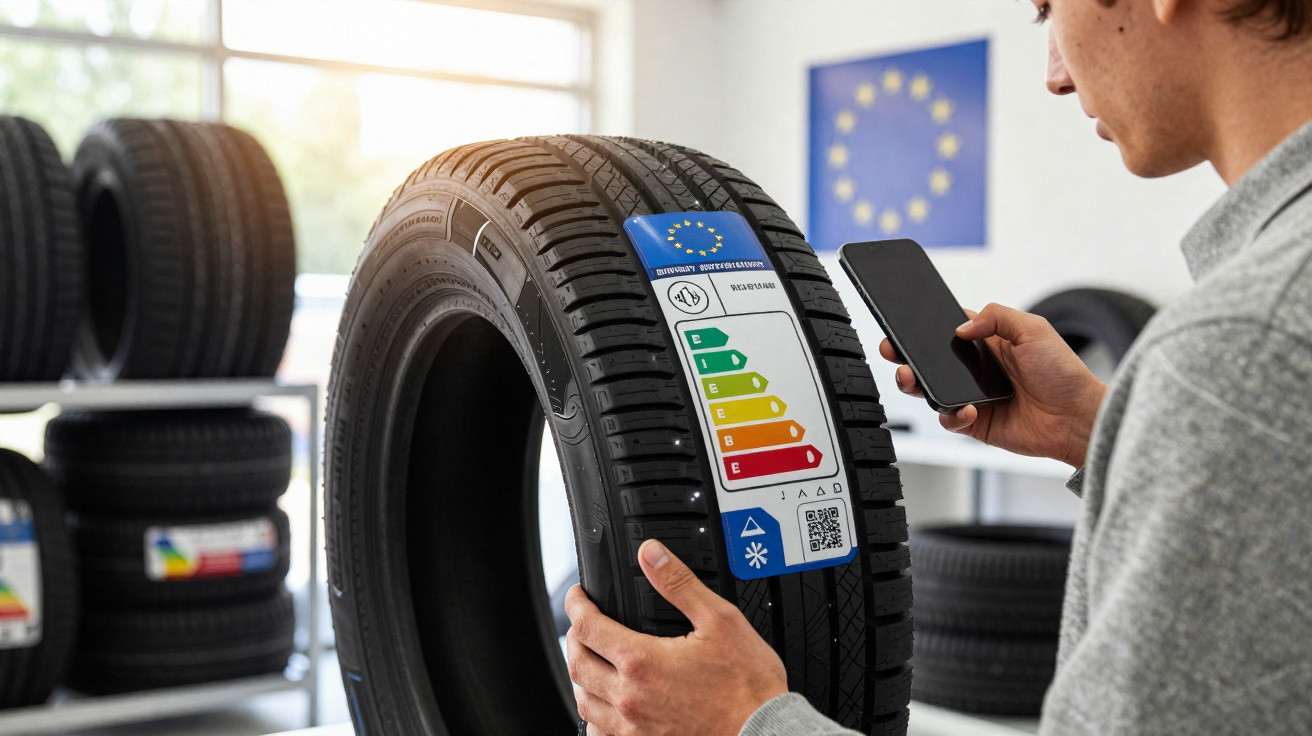
Tyre labels are not new, but from today, 1 May 2021, there is a new tyre label that not only comes with a refreshed design but also provides additional information.
As before, the aim is to help drivers make better-informed decisions about one of the most important safety components on any car - after all, tyres are our only contact with the road. When it is time to replace them, it pays to choose carefully.
This updated tyre label is set out in Regulation (EU) 2020/740 - consult it if you want the full, detailed framework behind the changes.
Why the tyre label matters
Because tyres directly affect grip, efficiency and noise, the tyre label is intended to make comparisons clearer at the point of purchase, so consumers can weigh up safety and performance before committing to a replacement set.
Tyre label: what changed?
The new tyre label keeps several of the same headline items as the previous version - namely the energy efficiency rating, wet grip performance, and external rolling noise. However, some of these elements have been adjusted, and new ones have been added, as set out below.
Energy efficiency and wet grip scale
Energy efficiency and wet grip performance - the grading moves from seven levels down to five. In other words, where it previously ran from “A” (very good) to “G” (poor), it now runs only from “A” to “E”.
External rolling noise rating
External rolling noise - as well as the decibel figure (as before), there is now a noise class scale from “A” (very good) to “C” (poor). This replaces the earlier “)))” symbols.
Tyre identification and type
Tyre identification - this section states the tyre’s brand and model, its size, load capacity index, speed category, tyre class - C1 (passenger cars), C2 (light commercial vehicles) or C3 (heavy vehicles) - and, finally, the tyre type identifier.
Snow and ice tyre pictograms
Snow and ice tyre pictogram - if a tyre is suitable for driving in snow and/or on ice, that will be shown through two pictograms.
QR code and EPREL product database
QR code - scanning the QR code gives access to the EPREL (European Product Registry for Energy Labelling) database, where the product information sheet is available. This includes not only the label values, but also the start and end of production for that tyre model.
Exceptions
The new tyre label applies from 1 May 2021 to new tyres. Tyres already on sale with the previous label are not required to switch to the new one, so for a period it will be normal to see both tyre labels side by side.
There are also tyres that are not covered by the updated labelling rules:
- Tyres for professional off-road use;
- Tyres designed exclusively to be fitted to vehicles first registered on 1 October 1990;
- Temporary-use tyres;
- Tyres with a speed category below 80 km/h;
- Tyres with a rim diameter below 254 mm (10") or 635 mm (25");
- Studded tyres;
- Tyres for competition vehicles;
- Used tyres, except if they come from countries outside the EU;
- Retreaded tyres (temporarily).



Comments
No comments yet. Be the first to comment!
Leave a Comment