
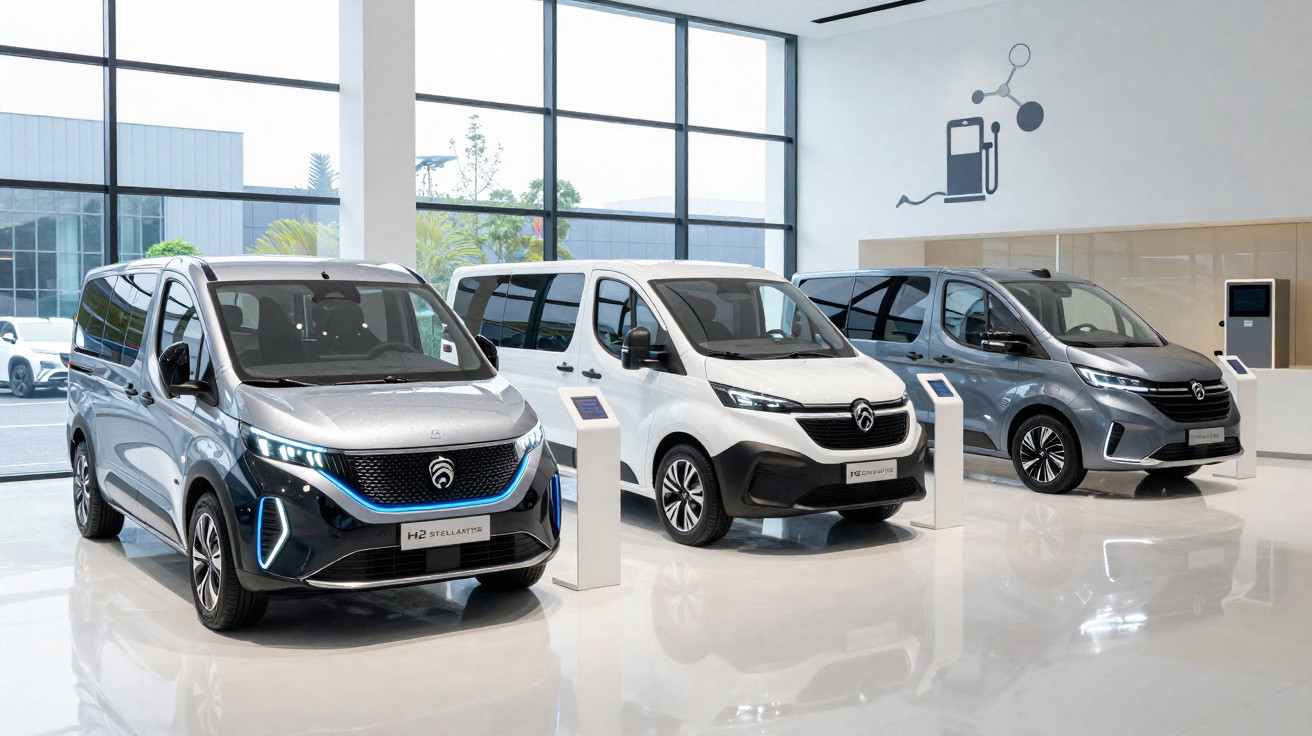
Stellantis has just confirmed it will introduce its first hydrogen models for the Peugeot, Citroën and Opel brands later this year. The newly formed automotive heavyweight-created through the merger of FCA and PSA-promises driving ranges of more than 400 kilometres and refuelling times of just three minutes.
As it continues to electrify its line-up, Stellantis is also progressing other mobility approaches in parallel. Among them are fuel-cell electric vehicle (FCEV) versions, supported by a small, low-capacity battery.
Hydrogen versions of the Peugeot Expert, Opel Vivaro and Citroën Jumpy
The first market-ready outcome of this strategy is due before the end of the year, with hydrogen-powered versions of the Peugeot Expert, Opel Vivaro and Citroën Jumpy vans. These three light commercial vehicles will leverage the multi-energy platform that underpins all of them.
Why Stellantis is adding hydrogen alongside battery-electric
Speaking during the presentation event for these models, Xavier Peugeot, head of Stellantis’ light commercial vehicle division, underlined that the new variants are intended to better meet the demands of business customers.
According to Frank Jordan, Stellantis’ head of development and research, this fuel-cell-based solution is “complementary to the purely electric solution, matching different needs for those who require more range”.
Jordan also stressed that “hydrogen will be a central pillar in the transition to an increasingly green society and that is why this vehicle fits into this vision of a hydrogen ecosystem, in which many governments are investing more and more. We are paving the way for the green ecosystem in Europe”.
What does this system involve?
The set-up Stellantis will install in these three models-developed in partnership with Faurecia and Symbio-pairs a hydrogen fuel cell with the ability to draw on an electric battery to extend range or boost performance.
The electric motor can be supplied either by a 10.5 kWh battery (chargeable at 90 kW) or by three hydrogen tanks (4.4 kg at a pressure of 700 bar). The tanks are positioned under the floor where the traction battery sits on the fully electric versions, although this layout includes additional structural reinforcement and extra protective components.
The fuel-cell system, rated at 44 kW, is mounted at the front, above the electric motor. The battery-shared with the plug-in vehicle programme-will be installed beneath the cabin. Even so, the load bay is unaffected and there is no loss of cargo capacity.
Launch before the end of the year
Xavier Peugeot says these three models will go on sale before the end of the year, but only in selected countries, reflecting the differing levels of hydrogen refuelling infrastructure.
Pricing has not yet been disclosed and is expected to be announced closer to the launch date.
Comments
No comments yet. Be the first to comment!
Leave a Comment