
The supercar scene is increasingly split between two mindsets. On one side sit electrified or fully electric machines, some seemingly built with a single purpose: chasing headline records, as with the Yangwang U9. On the other are cars such as the Kimera K39, where an analogue, mechanical driving experience matters more than outright numbers.
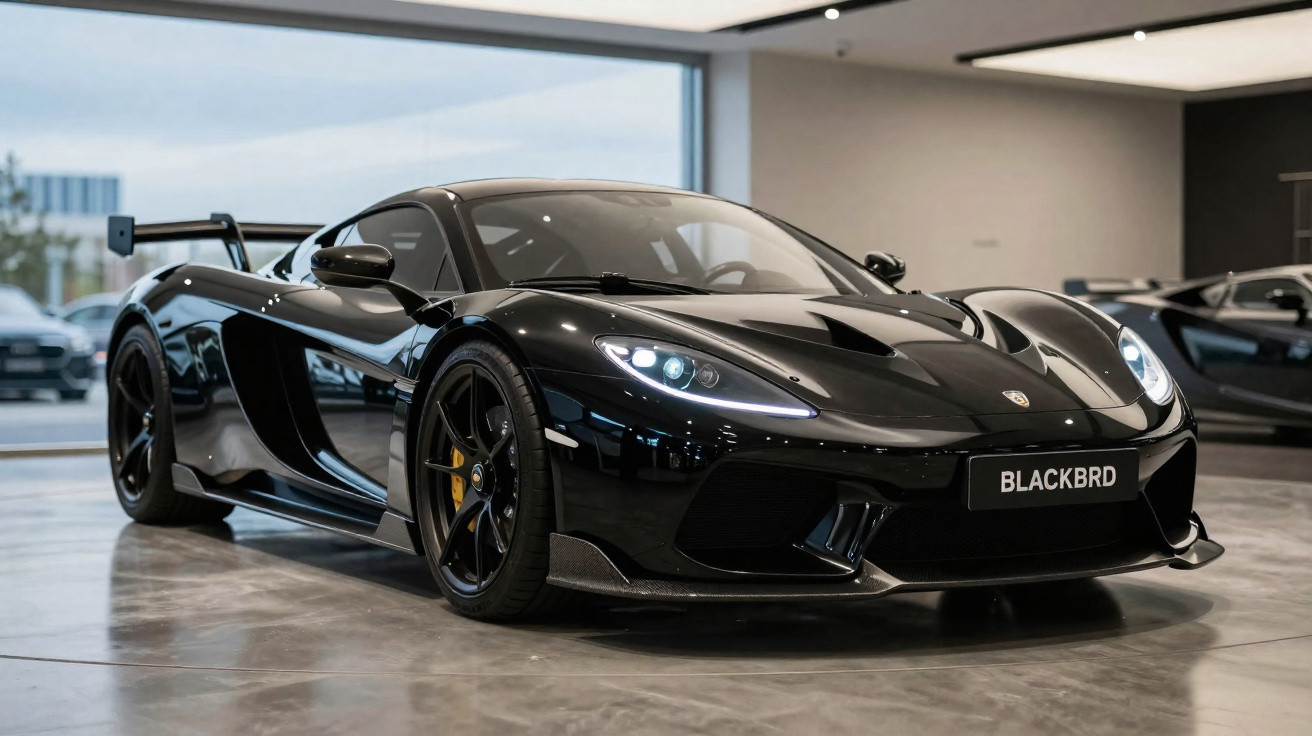
The new Hennessey Blackbird belongs firmly to that second camp. There are no electric motors, no turbos, no automatic gearbox and not even a screen inside. Instead, it offers a naturally aspirated V8, three pedals and a manual gearlever with an exposed metal gate - a formula that feels lifted straight from another era.
Its name is borrowed from the legendary Lockheed SR-71 Blackbird spy plane - still the fastest jet aircraft in the world, credited with Mach 3.32, roughly 3530 km/h. This is Hennessey’s third model after the Venom GT and Venom F5 hypercars.
But unlike the Venom F5, engineered to pursue top-speed records, the Blackbird puts driving enjoyment at the heart of the project. It is a purist’s brief, even if the figures remain unmistakably supercar-level.
Naturally aspirated V8, manual gearbox and rear-wheel drive
At the core is a brand-new 6.2-litre naturally aspirated V8, developed with Ilmor Engineering. Hennessey expects it to produce between 800 hp and 850 hp - that is, between 811 cv and 862 cv - and to spin beyond 9000 rpm.
All of that power is sent solely to the rear axle through a six-speed manual transmission with an exposed metal shift gate, a near-extinct feature among modern supercars.
Performance claims are emphatic. Hennessey quotes 0–60 mph - 0-96 km/h - in just 2.5s and a top speed of 354 km/h.
To help deliver those numbers, the Blackbird uses a carbon-fibre monocoque and carbon-fibre bodywork. Dry weight is expected to come in below 1360 kg, less than many sports cars with far less power.
Designed with eyes on the sky
The aviation connection goes beyond the badge on the tail. The Blackbird uses distinctive aerodynamic solutions and does without the typical oversized rear wing.
In its place are two active vertical stabilisers, inspired by the SR-71’s fins, which rise automatically from 114 km/h to improve stability at high speed. When retracted, they sit almost flush, largely concealed within the bodywork.
A cockpit where the driver is in charge
That same ethos carries into the cockpit. There is no infotainment screen, no digital instrument cluster and no steering-wheel buttons. Instead, the driver is greeted by a large analogue rev counter, physical switches and even a traditional ignition key.
Taking centre stage is the gated manual shifter, complete with a visible linkage between the lever and the transmission.
Connectivity has not been ignored entirely. A dedicated mount, which Hennessey calls the Holster, lets you place a smartphone in the middle of the dashboard, turning it into the main access point for navigation, music and other multimedia functions.
Despite its deliberately analogue approach, Hennessey insists the Blackbird is not intended solely for track use. It features adaptive suspension, room for two cabin bags, four cup holders and several storage compartments.
The brand says the target was a supercar comfortable enough to cover 800 miles (1287 km) in a single day. That does not mean it can do it on one tank, but it signals Hennessey’s intention that the Blackbird should not spend its life locked away in a garage.
When does it arrive?
Production will be capped at just 71 units, a direct nod to the SR-71, with a base price of 2.5 million dollars before tax.
More than two thirds of the run is said to have been reserved even before its public debut, scheduled for 14 August at The Quail during Monterey Car Week. First deliveries are expected in 2029 or 2030.


Comments
No comments yet. Be the first to comment!
Leave a Comment