
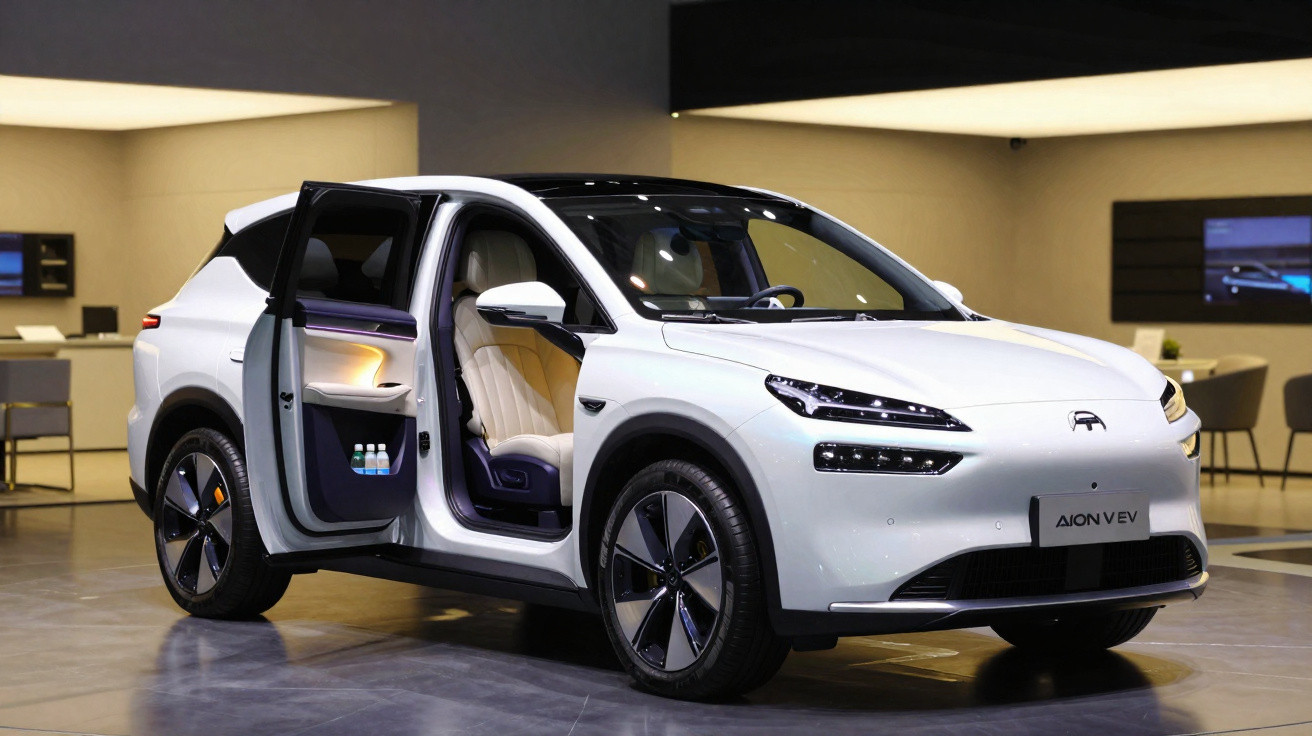
It doesn’t seem to be missing a thing - not even a fridge in the flagship version. Full test of the GAC Aion V.
In terms of price, equipment, space and comfort, this is a genuinely credible contender. If it were a house, you’d say it offers a lot of square metres for the asking price.
That’s the backdrop to my week with a 100% electric model that may not be the outright king of range, but for just over €40,000 it stands out as one of the market’s most generous offerings for kit and cabin room. You really have to drive it to understand it - and that’s exactly what I did.
Its styling may not be the most eye-catching, but my back couldn’t care less about what my eyes think. The GAC Aion V puts comfort front and centre - and that’s no bad thing. The question is whether that’s enough to take on the established names.
Discreet or anonymous?
There’s not a huge gap between the two, and Chinese models often end up being labelled as the latter.
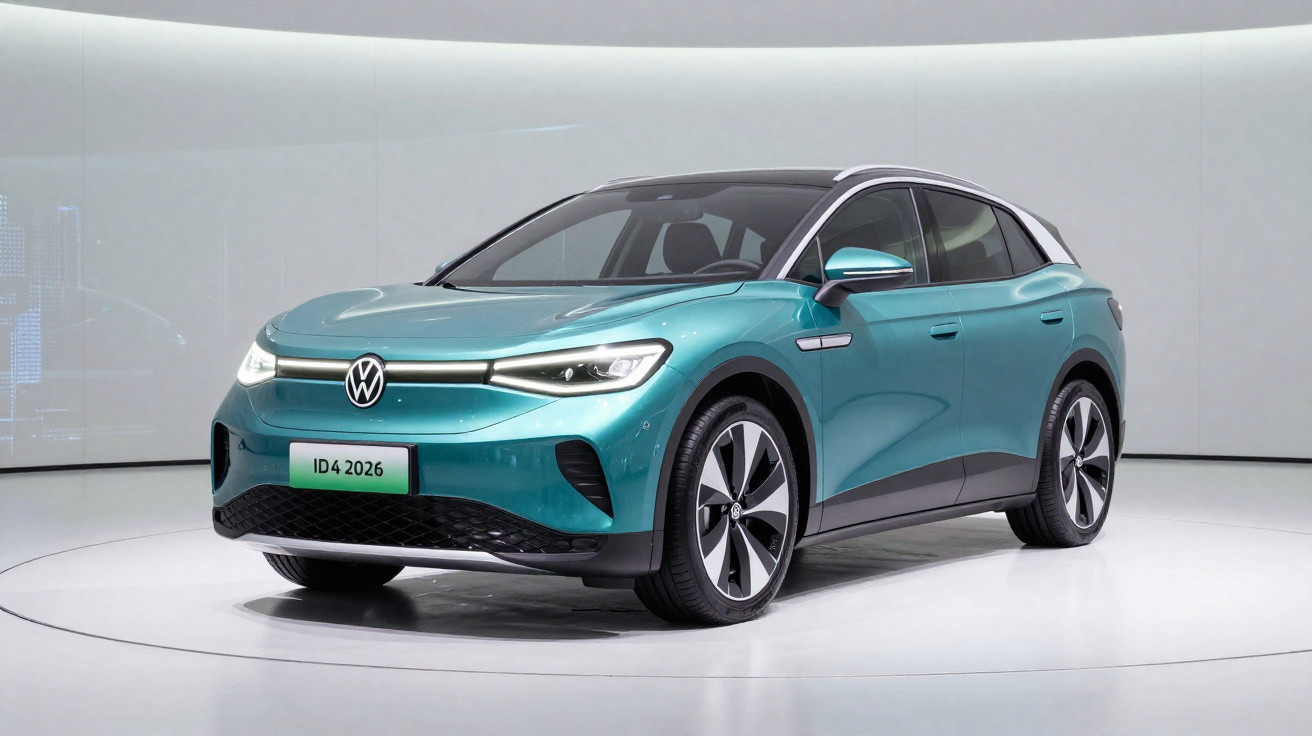
Even so, I’d place the Aion V firmly in the “discreet-looking” camp. It has a sturdy, substantial presence that comes across better in the metal than it does in photos. It doesn’t have the sex appeal of a Peugeot 3008, but next to a Volkswagen ID.4 its family-friendly shape doesn’t look out of place.
Enough with the screens
The moment I sat behind the wheel of the GAC Aion V, I was hit with a strong sense of déjà vu. Not because I’d driven this SUV before, but because the cabin layout follows a template that’s common across many Chinese brands. Take away the badge on the steering wheel and, at first glance, it would be hard to say exactly what I was sitting in.
The formula is familiar: minimal physical buttons, and a long list of functions funnelled into the central display. Climate control? Adjusted through the screen. The infotainment system? Of course. Driving modes? They’re there too - although you have to dig through a few menus to find them.
That minimalist approach goes even further here. In fact, I’d argue it goes too far, particularly when I need to open a menu just to adjust the door mirrors, operate the panoramic roof blind, or set the level of regenerative braking.
Where the GAC Aion V pleasantly breaks away from many other Chinese offerings - and shows it can sit alongside more established brands - is in how solid the interior feels.
On Lisbon’s cobbled streets, the Aion V came out on top. With no stray rattles giving away weak points, the cabin shows real attention to finishing, backed up by materials that are genuinely nice to the touch.
Space is not an issue
If there’s one area where this “unknown quantity” can go toe-to-toe with European rivals, it’s passenger space. Any doubts vanished when my children said: “Dad, in this car we can’t reach the front seat with our feet“.
Rear legroom is impressively generous, the completely flat floor helps whoever’s sitting in the middle, and the huge panoramic roof adds to the airy feel.
On top of that, you get a few of the treats Chinese manufacturers like to include: heated and ventilated rear seats and, in the top version, even a refrigerated and heated box built into the centre console. Everything is clearly geared towards maximising comfort.
The boot is less convincing. The 427 litres feels modest given the Aion V’s exterior footprint.
Competent, but not exciting
If you’re the sort of driver who considers a lively, engaging drive essential when choosing your next car, the GAC Aion V may not be the right fit.
From the driver’s seat, the comfort-first brief is obvious. The Chinese SUV feels capable enough - which is hardly surprising given its role as a family SUV.
Steering feedback is limited, brake feel still has room to improve - especially in the handover between regenerative and hydraulic braking - and the weight makes itself known once you pick up the pace, exposing how hard the suspension has to work to deal cleanly with shorter, sharper imperfections.
On the motorway, however, the GAC Aion V impresses with its stability, comfort and sound insulation, almost as if to remind you it will also be built in Austria.
Efficiency impresses more than range
The front-mounted electric motor produces 150 kW (204 hp) and 210 Nm, delivering more than enough performance for family use, with power always arriving smoothly and progressively.
Rather than the usual “punchiness” you get from some EVs, the Aion V goes for predictability - which makes it notably calm to drive and easy to manage in everyday traffic.
The 75.3 kWh LFP battery claims up to 510 km of WLTP range - a figure that will be difficult to replicate outside a lab. Even so, its energy management deserves credit.
By the end of the test, the trip computer showed an average of around 18 kWh/100 km, dropping to figures close to 14.6 kWh/100 km with a more careful approach and no real hurry.
When it comes to charging, the Aion V accepts up to 180 kW on DC, taking it from 10% to 80% in about 24 minutes. On AC it supports up to 11 kW. Those numbers are in line with the competition and, in practice, make a rapid charge stop short enough for a coffee - not for an ice cream stored in the Aion V’s own fridge.
Not especially cheap
With a starting price of €40,990, the GAC Aion V isn’t trying to win on price alone. Instead, it positions itself alongside the segment’s key European rivals.
That said, it doesn’t need to be cheap to matter. The Premium version - already very well equipped - offers a space-to-equipment ratio that’s hard to ignore, and it even makes it possible to skip the Luxury variant without feeling like you’re giving up much.
In real terms, the roughly €2000 gap is tricky to justify unless the built-in fridge or the massage function in the seats sits right at the top of your priority list.
On top of that, the eight years or 160,000 km general warranty and the eight years or 200,000 km battery warranty are reassuring, particularly when we’re talking about an unfamiliar brand.
None of this is to say the GAC Aion V will have an easy ride. There are plenty of rivals and they’re well specified, but with strengths such as a genuinely spacious cabin, high levels of comfort and even notable robustness, it shows that taking on established names isn’t an unrealistic ambition - it simply depends on what you value most in a car.
Comments
No comments yet. Be the first to comment!
Leave a Comment