
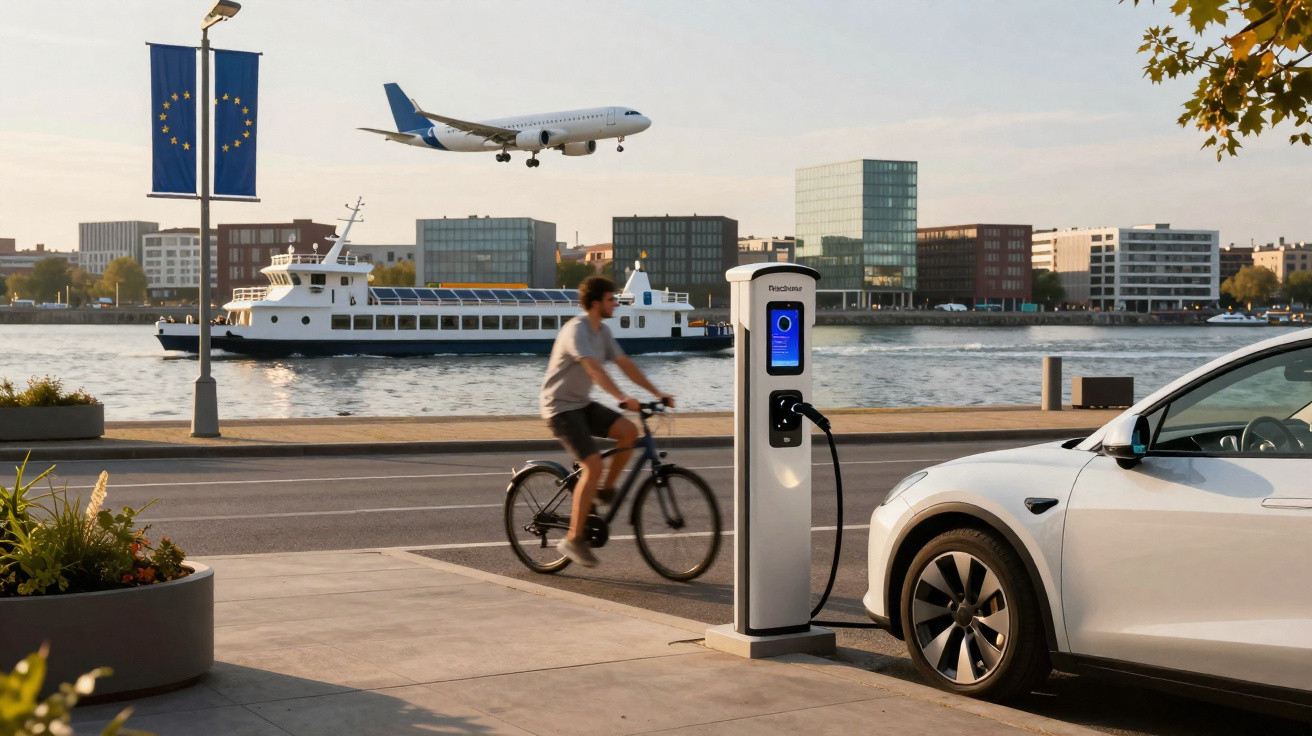
The European Commission has just unveiled a set of proposals to cut CO2 emissions from new cars which, if adopted - and everything suggests they will be - would bring internal combustion engines to an end as early as 2035.
Under the plan, CO2 emissions from new cars would need to fall by 55% by 2030 (instead of the 37.5% target announced in 2018) and by 100% by 2035. In practical terms, that would mean that from that year onwards every new car would have to be electric - either battery-electric or fuel-cell.
Because the proposal also implies the phase-out of plug-in hybrids, it sits within a wider legislative package - called “Fit for 55” - designed to ensure the European Union cuts its emissions by 55% by 2030 compared with 1990 levels. Above all, it is presented as another decisive step towards carbon neutrality by 2050.
According to the Commission’s proposal, “all new cars registered from 2035 must be zero-emission”. To make that workable, the executive also requires EU Member States to expand their charging capacity in line with sales of zero-emission cars.
European Commission: the charging network must be strengthened
As a result, this package would require governments to step up the roll-out of charging points and hydrogen refuelling stations. On major motorways, electric chargers would have to be installed every 60 km, while hydrogen refuelling would need to be available every 150 km.
“Stricter CO2 standards are not only beneficial from a decarbonisation perspective, they will also deliver benefits for citizens, through greater energy savings and better air quality,” the executive’s proposal states.
“At the same time, they provide a clear, long-term signal to guide both the automotive sector’s investments in innovative zero-emission technologies and the deployment of recharging and refuelling infrastructure,” Brussels argues.
What about the aviation sector?
The European Commission’s proposals extend well beyond cars (and internal combustion engines). They also include a new regulation intended to speed up the shift from fossil fuels to sustainable fuels in aviation, with the aim of making air travel less polluting.
In the Commission’s view, it is essential to ensure that “increasing levels of sustainable aviation fuels are available at European Union airports”, and all airlines would be required to use them.
This proposal “focuses on the most innovative and sustainable aviation fuels, namely synthetic fuels, which can achieve emissions savings of up to 80% or 100% compared with fossil fuels”.
And maritime transport?
The European Commission has also put forward a proposal to encourage the uptake of sustainable marine fuels and zero-emission maritime propulsion technologies.
To that end, the executive proposes setting a maximum limit on the greenhouse-gas content of the energy used by ships calling at European ports.
Overall, CO2 emissions from transport “currently represent up to a quarter of total EU emissions and, unlike other sectors, are still rising”. For that reason, “by 2050, emissions from transport must decrease by 90%”.
Within transport, cars are the biggest polluters: road transport currently accounts for 20.4% of CO2 emissions, aviation for 3.8%, and maritime transport for 4%.
Comments
No comments yet. Be the first to comment!
Leave a Comment