
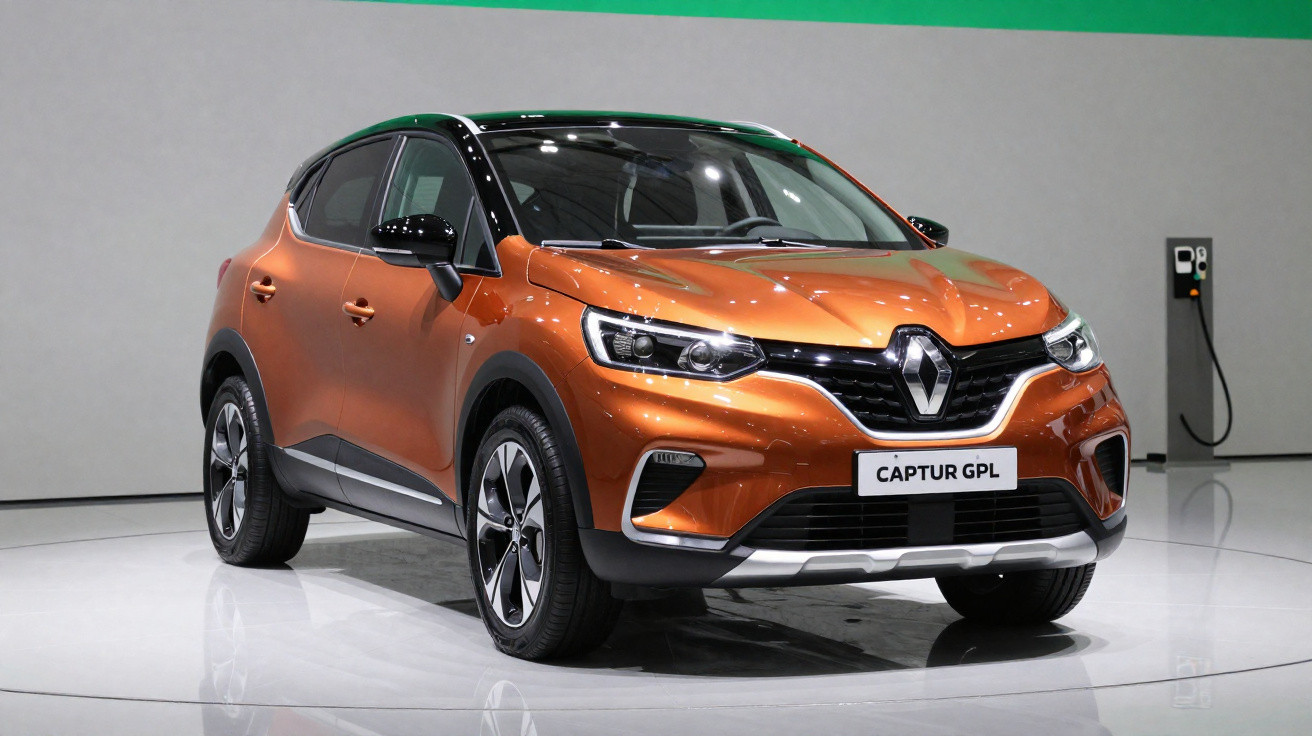
The Renault Captur shows that LPG is a brilliant option - one of the best if you’ve got nowhere to charge an electric vehicle.
I can still picture the moment, just over a year ago, when I was putting together my test of the Renault Clio TCe 100 LPG. Guilherme walked past, spotted what I was working on, and we ended up chatting about the Clio - especially as he’d already driven it at the international launch.
Halfway through that conversation, Guilherme came out with a line about this liquefied petroleum gas (LPG) version: “The right technology, at the right time”. It was spot-on and summed everything up. And now that the refreshed Renault Captur has arrived with that very same setup, I’ve found myself repeating it. It still fits perfectly.
While plenty of families are running the numbers to see whether a hybrid - or even a fully electric car - is within reach, bi-fuel (LPG) choices often seem to be ignored in those calculations.
Take my word for it: do the maths again…
The frustrating part is that, even on most manufacturers’ own online calculators, this option continues to be overlooked. Everyone appears to be marching in the same direction, assuming the future is unquestionably 100% electrified. Renault - and Dacia, too - is heading that way as well, but without dropping other technologies that still make a great deal of sense, such as LPG.
Updated look
Renault has used much the same styling approach it applied to the Clio and carried it across to the Captur. Up front, the redesign is substantial: the new nose is completely different from the previous model and comes across as more contemporary and more assertive. At the rear, the changes are far more subtle, limited mainly to a cosmetic update to the light clusters.
Beyond that - apart from the new alloy wheel designs - the differences are largely in equipment, which varies depending on trim and what’s included. The car in the photos is the Techno, the higher-spec of the two versions offered with this Eco-G system.
Inside, the cabin is much as we already knew it, with only small changes. The highlights are the fully digital instrument display, now with a fresher look, and the 10,4” vertical central touchscreen. It also brings several built-in Google apps along with plenty of other functions.
On this point, Renault deserves real credit. Try this infotainment system: it’s so straightforward that even people who usually aren’t keen on technology and gadgets will get on with it. Voice commands feel natural, and the Google integration means you’re always using tools that already feel familiar.
The driver-assistance systems are also well judged (automatic braking, lane-keeping assistance, blind-spot warning, etc.). Just as importantly, they’re also quick and easy to switch off - which matters when you want to drive without constant prompts.
Renault has added a new button to the left of the steering column that stores your preferred settings. Once the car is started, you press it once, press again to confirm, and that’s it. No endless warnings and beeps for no good reason. Perfect, isn’t it?
Refined driving manners
With this update to the Renault Captur, the suspension feels as though it has been retuned, leaning a little more towards comfort. On smooth roads, it rides more softly, and when the road turns twisty, the Captur still holds itself together well.
The drawback shows up on rougher, more broken surfaces. The suspension doesn’t have quite the same decisiveness and composure as the French brand’s latest models. Comfort remains acceptable, but a bit more noise and vibration makes its way into the cabin than in some rivals.
As for the engine, the 1.0-litre petrol unit - an inline three-cylinder producing 101 cv, supported by direct fuel injection and a turbo with intercooler - delivers broadly similar performance whether it’s running on gas or petrol.
Paired with a six-speed manual gearbox, the claimed top speed is around 173 km/h and 0–100 km/h takes 13 seconds. In everyday driving, the Renault Captur LPG generally feels like it has enough pulling power for most situations. The exception is when it’s fully loaded - at that point, you’ll want to think twice before committing to an overtake.
Difference? What difference?
Years ago, you could feel a clear gap between driving on petrol and on LPG. These days, it’s barely noticeable. The switch that lets you choose between the two is located to the left of the steering column - and it really is just a simple button.
When you press it, the changeover isn’t instantaneous; you need to wait two or three seconds. After that, the only real clue is on the instrument display: the fuel-gauge indicator switches from one tank to the other, and a small square lights up with the letters LPG (the English acronym for GPL).
With both tanks filled - 49 litres of petrol and 32 litres of LPG - Renault claims a maximum range of up to 1300 km for the Captur LPG. In the test car, before we even set off, the trip computer was showing 570 km of petrol range and 420 km on LPG.
Crucially, those figures aren’t there to create some combined average range - not at all. They genuinely add together, meaning 990 km in this case. That’s one of the standout advantages of LPG, especially when you have two separate fuel tanks.
The other benefit, as you’ve probably already guessed, is the pump price of LPG, which is far lower than petrol. As I’m writing this review, the national average in Portugal is still below the one-euro-per-litre mark, which is roughly half the price of petrol.
Quick mental maths (well, almost…)
Let’s run through a few quick calculations using current fuel prices. Filling the petrol tank (1,738 €/l) comes to 85,16 euros. Filling the LPG tank (0,982 €/l) works out at 31,42 euros. If you mainly stick to LPG mode and leave the petrol side alone, the savings add up significantly over time.
Even so, it’s worth noting that, in LPG mode, the 101 cv 1.0 TCe becomes noticeably thirstier. Using petrol, I recorded an average of 7,5 l/100 km - Renault quotes 6,1-6,4 l/100 km, and I wasn’t exactly driving gently. In theory, that would allow a maximum of 640 km.
With the LPG system switched on - which is how I drove it for the majority of the time, and also with a less relaxed right foot - I saw 10,8 l/100 km.
Compared with the claimed 7,6-8 l/100 km, that gap is huge. So I reined it in and ended up recording just one litre more than the brand’s figure: 8,9 l/100 km.
Either way, even with my brisk average, a full LPG tank (32 litres) is enough for nearly 300 km. Adding both fuels together, the Renault Captur LPG can cover more than 930 km using about 115 euros worth of fuel.
There’s one more calculation to make - arguably the most important of all. Driven at a ‘normal’ pace, the cost comes in at under 9 €/100 km. Do the same exercise on petrol and it rises to 13,5 €/100 km.
That’s a difference of almost five euros per 100 km. It isn’t an exaggeration to say LPG is the new Diesel. Big distances for controlled money.
And yes, filling an LPG car is slightly more fiddly than filling with petrol, but it’s still simpler than charging a 100% electric car at a public charging point. No cards, no apps, and it’s much quicker. That’s simply an observation.
Good news for your wallet
Beyond fuel consumption, the purchase price is also a positive surprise. In a market where the conversation is dominated by electric cars and hybrids, we’re constantly confronted with very high price tags. With this Renault Captur LPG, it doesn’t have to be that way.
Renault has been using its Eco-G technology for years, and it’s relatively straightforward compared with many other solutions. Because of that, the Renault Captur you see here - with all extras fitted - doesn’t even reach 30 thousand euros.
The Techno version starts at 26 300 euros, then you add 700 euros for the metallic paint with a black roof and around 2800 euros in options. You still need to include administration and delivery costs - which will probably push it past the 30 thousand euros line - and you end up with a small family SUV with strong arguments when it comes to monthly running costs.
Comments
No comments yet. Be the first to comment!
Leave a Comment