
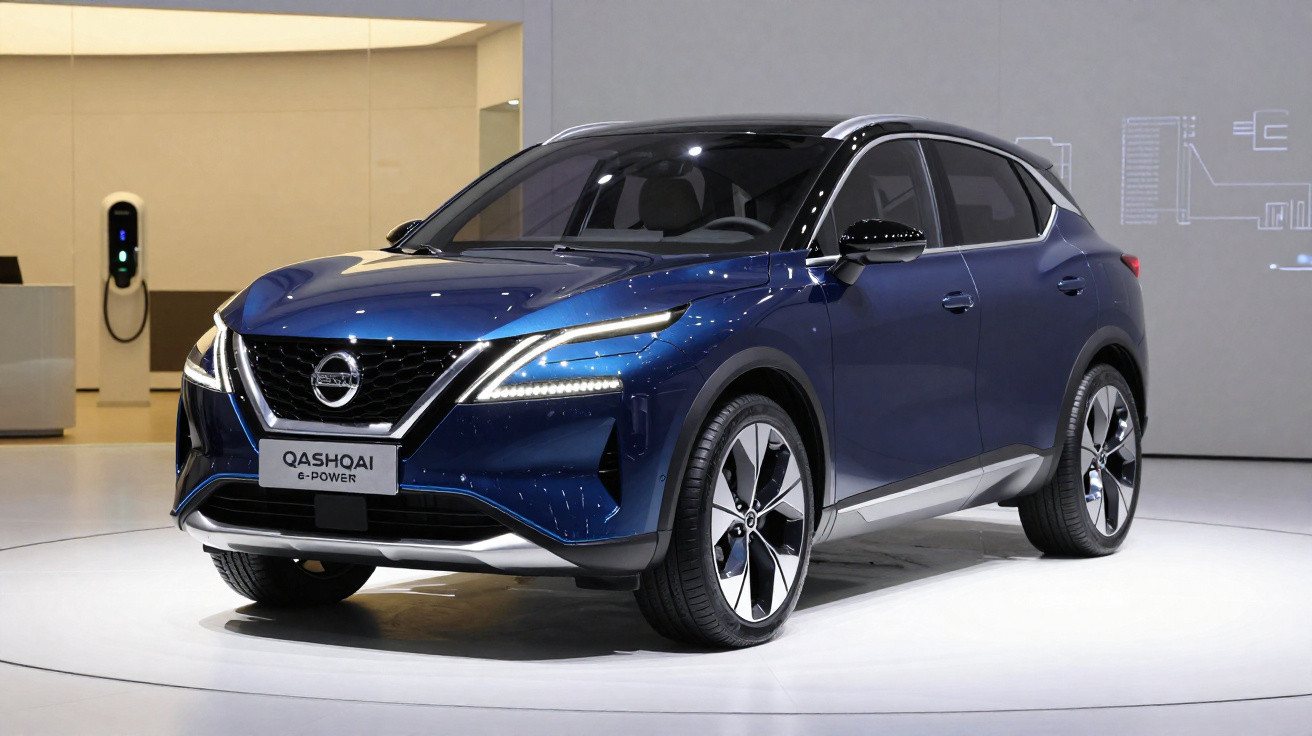
If it were not for the pandemic, the third generation of the Nissan Qashqai would already have been with us since the end of last year. Development of the new model slipped, as did the start of production, which is now expected to begin in the spring. To soften the impact of this longer-than-planned wait, Nissan has been unveiling it in stages - and today we find out which engines will power the new Qashqai.
As previously confirmed, Nissan’s best seller will not offer Diesel engines. Instead, the upcoming model will be sold only with electrified powertrains: a petrol mild-hybrid and a brand-new e-Power hybrid system.
With vehicle electrification high on the agenda, it is no surprise that Nissan has stated it wants 50% of its European sales by the 2023 fiscal year (ending on 31 March 2024) to come from electrified models.
Electric, but petrol-powered
To reach that goal, Nissan is placing major hopes on customer uptake of the new e-Power hybrid powertrain, which will make its European debut in the latest Qashqai. In Japan, the Nissan Note was the first to use this type of setup and it became a huge success, finishing as the best-selling car there in 2018 and second in 2019.
The e-Power powertrain, however, will only arrive in Europe in 2022. It will differ from the versions seen in the Note and Kicks, while still following the same operating principle - a subject we have already covered.
Because it is a hybrid, it combines two power sources: a petrol engine and an electric motor. Unlike many “conventional” hybrids (full hybrid) on the market - such as the Toyota Prius - the petrol engine here acts purely as a generator and is not connected to the driven axle. Drive comes exclusively from the electric motor.
In other words, the future Nissan Qashqai e-Power is, for all intents and purposes, an electric vehicle - except the electricity its motor needs will not come from a large, expensive battery, but from a petrol engine. That’s right: the Qashqai e-Power is an electric car… powered by petrol.
The drivetrain consists of a 190 hp (140 kW) electric motor, an inverter, an energy generator, a (small) battery and, naturally, the petrol engine. That petrol unit is a completely new 1.5 l engine producing 157 hp. It will be the first variable compression ratio engine to be sold in Europe - Nissan has offered one in North America for several years.
Since the petrol engine’s role is only to generate electricity, it can spend more time operating in its ideal efficiency range, which should mean lower fuel consumption and reduced CO2 emissions. Nissan also promises a quieter powertrain because the engine needs fewer revs. It further claims a more natural connection between acceleration and road speed, with a better relationship between engine speed and vehicle speed - goodbye, “rubber band” effect?
Nissan also says the Qashqai e-Power will deliver stronger performance than other hybrids - it has 190 hp and 330 Nm - and because the electric motor is the only unit driving the wheels, the driving experience should mirror that of a pure electric vehicle: torque always on tap and instant response.
As if to underline how closely this e-Power relates to EVs rather than typical hybrids, it also includes the e-Pedal system found in the 100% electric Leaf. That means you can drive using only the accelerator pedal, largely doing without the brake pedal - when active, regenerative braking is strong enough to slow the car, delivering deceleration of up to 0.2 g.
The petrol engines in the new Qashqai
While the Qashqai e-Power may take most of the spotlight, the Nissan crossover will initially be sold only with petrol engines when it goes on sale. More specifically, it will launch with two versions of the same engine, the familiar 1.3 DIG-T.
The new feature is its pairing with a (just) 12 V mild-hybrid system. Why 12 V and not 48 V as seen elsewhere?
Nissan says its 12 V ALiS mild-hybrid system (Advanced Lithium-ion battery System) delivers the expected features for this type of setup, including torque assist, extended stop-start at idle, rapid restarting, and assisted deceleration (CVT only). The result is a 4 g/km reduction in CO2 emissions, while remaining cheaper and lighter than 48 V systems - the complete system weighs just 22 kg.
According to Nissan, the new Qashqai’s extra efficiency versus its predecessor also comes from the new generation being 63 kg lighter and from improved aerodynamics.
As mentioned, the 1.3 DIG-T will be offered in two outputs, as with the current generation: 140 hp (240 Nm) and 160 hp (260 Nm). The 140 hp version comes with a six-speed manual gearbox. The 160 hp variant, in addition to the manual, can also be paired with a continuously variable transmission (CVT). When equipped with the CVT, the 1.3 DIG-T’s torque rises to 270 Nm, and it is the only engine-gearbox combination that allows four-wheel drive (4WD).
Comments
No comments yet. Be the first to comment!
Leave a Comment