
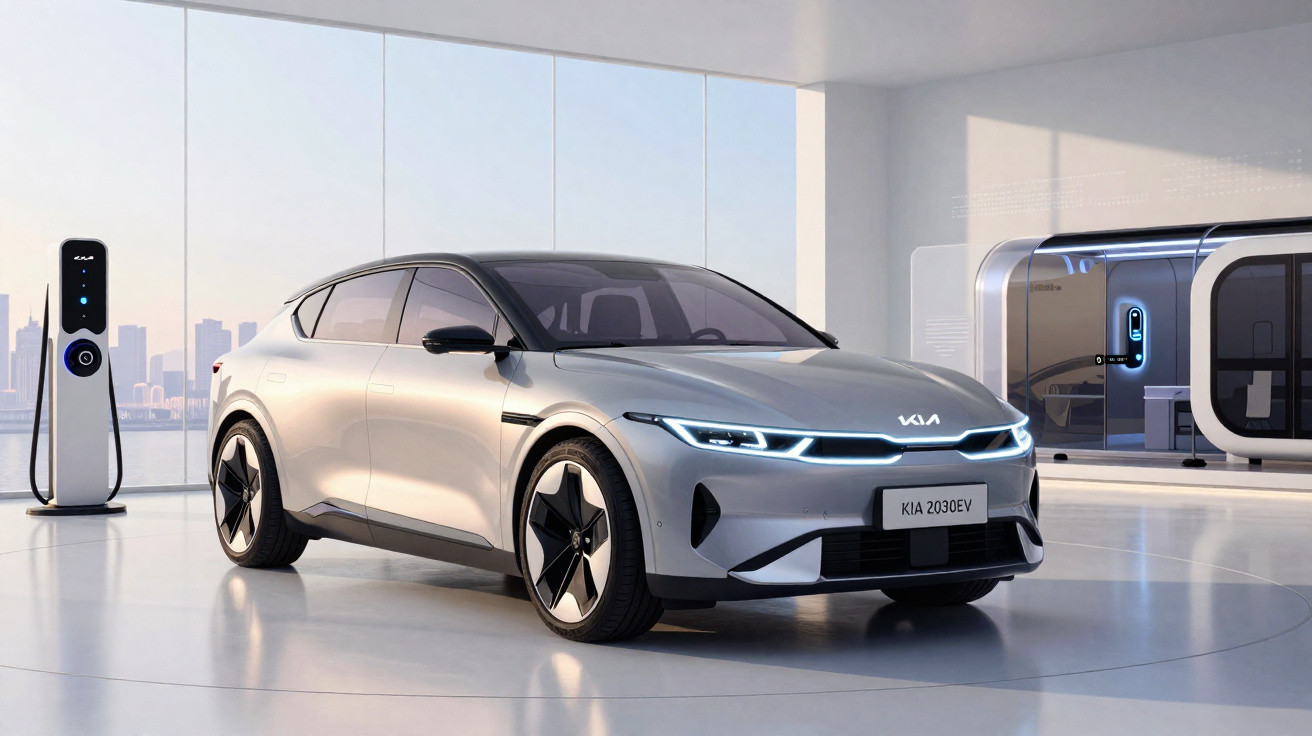
Kia is going through a far-reaching period of change, and the new logo is only the most visible sign of it. The South Korean manufacturer is shifting its emphasis towards creating sustainable mobility solutions, which is why the company name is changing from Kia Motors Corporation to simply Kia Corporation.
Kia’s sustainable mobility goals to 2030
When we talk about sustainable mobility solutions, we inevitably have to talk about fully electric and electrified vehicles. Kia’s aim is to reach 2030 with 40% of its global sales coming from electric vehicles and hybrids (both conventional and plug-in), which would amount to approximately 880 thousand fully electric vehicles and 725 thousand hybrid vehicles.
To get there, Kia will launch seven new electric vehicles by 2026 on a dedicated platform - the already revealed e-GMP - alongside four other planned electric models derived from internal-combustion platforms. In other words, 11 fully electric vehicles in total, all due to be on sale a year earlier than originally set out in “Plan S”.
CV, the first
The first of these new electric models will be unveiled at the end of next March and will go on sale in the second half of the year. For now, it is known only by its codename, CV. It is expected to adopt the EV name followed by a number - EV1, EV2, … are the designations for the new models - and it will be a crossover, with likely rivals including the Volkswagen ID.4, the Ford Mustang Mach-E and the unavoidable Tesla Model Y. That places it at least one rung above the current e-Niro.
What the e-GMP platform brings to the Kia CV
The new e-GMP platform - set to debut with the Hyundai IONIQ 5 - is expected to give the future CV a compelling set of features in the EV world. It supports 800 V charging, enabling faster top-ups (4min for every 100 km of range), and a maximum range of up to 500 km. Performance has not been overlooked either, with 3.0s for 0-100 km promised for the most powerful version. It will also enable remote updates (over the air) and, later on, the ability to reach level 3 autonomous driving.
Kia expects the CV to play a key role in improving how the brand is perceived and in shaping its future positioning. It is therefore no surprise that it will be the model to debut Kia’s new logo, while its design - overseen by Karim Habib’s department - is also expected to signal a new stylistic direction for the marque.
The rest of Kia’s e-GMP-based electric models have not been detailed, other than the fact that three will be SUVs and the other three will passenger cars. As for the other four electric vehicles, we know that one will be a commercial vehicle and another will be the successor to the Kia Niro.
Launch timeline for Kia’s 11 electric vehicles through 2026
The planned rollout of all 11 electric vehicles by 2026 is currently set out as follows (provided nothing changes): the CV in 2021, one model in 2022, three in 2023, two in 2024, and a further three across 2025-26.
PBV
Kia’s mobility push will also involve offering services (such as car sharing), while also developing dedicated-use vehicles specifically for those roles, known as PBV - Purpose Built Vehicle.
The first of these vehicles is due in 2022 on a dedicated platform - a skateboard-type architecture - and it will be able to accommodate a range of bodies depending on the intended use, from taxi to goods vehicle. They will also feature a strong focus on autonomous driving, in line with a future that more and more brands are investing in.
Comments
No comments yet. Be the first to comment!
Leave a Comment