
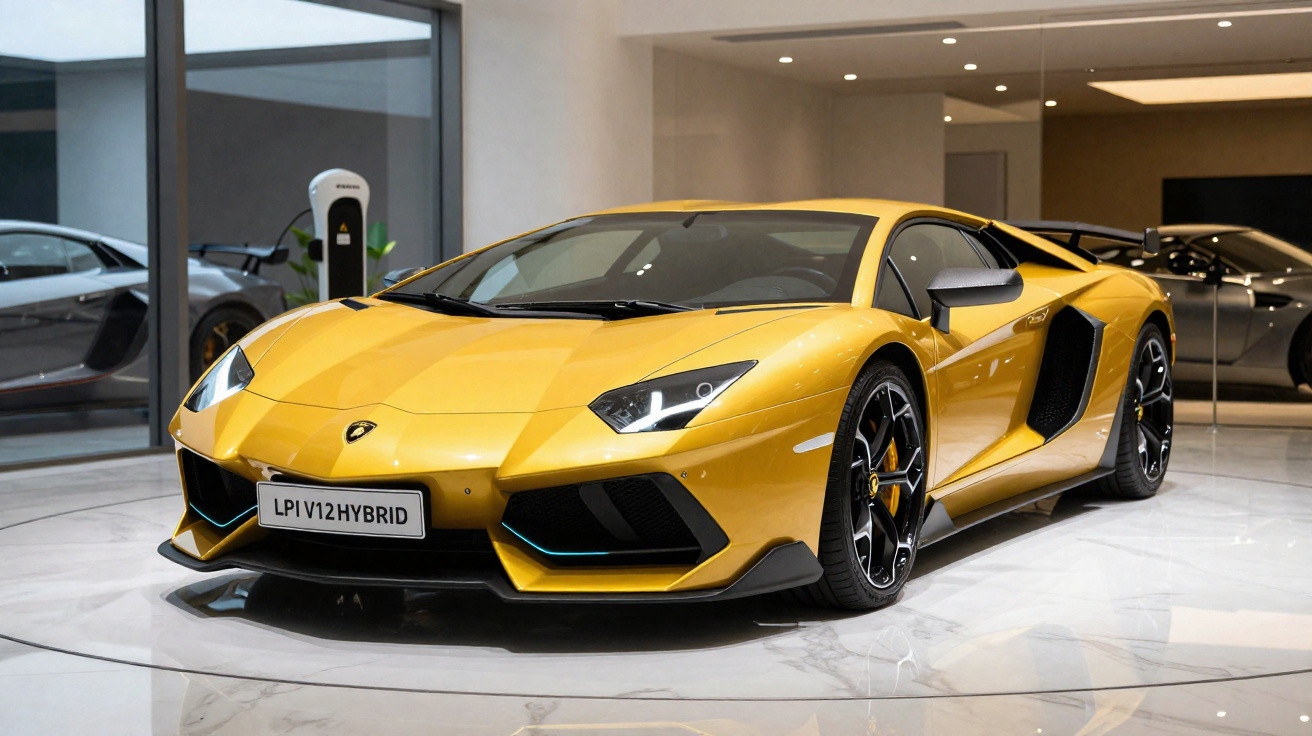
Lamborghini is gearing up to unveil the long-awaited successor to the Aventador in 2022, shortly after the Sant’Agata Bolognese brand brings a plug-in hybrid version of its Urus SUV to market.
Launch timing and the Urus plug-in hybrid
Those two moves represent major milestones in Lamborghini’s push to reinvent itself for the electric era. Unlike the Aventador, its replacement will embrace electrification - an outcome that always felt unavoidable.
However, as Lamborghini’s Chief Technical Officer Maurizio Reggiani confirmed around four months ago in comments to Car and Driver, the Aventador’s successor will still stick with a naturally aspirated V12 engine (as tradition demands), but it will be supported by a hybrid system. The approach mirrors what we have already seen on the new Lamborghini Sián, which delivers a combined 819 cv.
Hybrid V12 powertrain plans for the Lamborghini Aventador successor
Reggiani also indicated that an electric motor could be positioned on the front axle, noting that “if we have the possibility of having a front axle with torque vectoring we can do something truly exceptional in terms of dynamics”. The rear wheels would continue to be driven by a 6.5-litre V12.
One element still up in the air is whether the new supercar will use supercapacitors - as the Sián does - to feed the electric motor, or whether it will rely “only” on a lithium-ion battery.
Although a 2022 market launch has not yet been confirmed by Lamborghini, Stephan Winkelmann, the Italian manufacturer’s Chief Executive, told Autocar that the company could reveal two new V12-engined models during 2021.
Everything suggests that one of those will amount to an initial unveiling of the Aventador successor, positioned as Lamborghini’s next-generation V12 flagship. This model has been delayed several times - partly due to the pandemic, but also because Lamborghini must engineer a hybrid setup that preserves the dynamics and character its V12 cars have always delivered, while still meeting every emissions requirement.
Regulations, customer expectations and Lamborghini after 2030
Winkelmann did not go into technical specifics, but he stressed that “the challenge is to meet the demands of legislators without disappointing customer expectations in the coming years”. On that front, the Sián - introduced in 2019 - again serves as a key reference point for what comes next: “The Sián is a success story, because we realised we have to sell electrification by giving a benefit to supercar owners”, he added.
Looking further ahead, Winkelmann is clear that it will be “legislation telling us what we can no longer do”. Even so, as he said around four months ago in an interview with the UK team at Top Gear, his aim is “to keep the internal combustion engine for as long as possible” across the two brands he oversees.
“My biggest challenge is to have a clear strategy for what will happen after 2030, to be able to follow the next generation - not only in terms of product, but also in terms of what that means for the brand. The first step is to understand what that means up to 2030”, said Winkelmann.
Comments
No comments yet. Be the first to comment!
Leave a Comment