
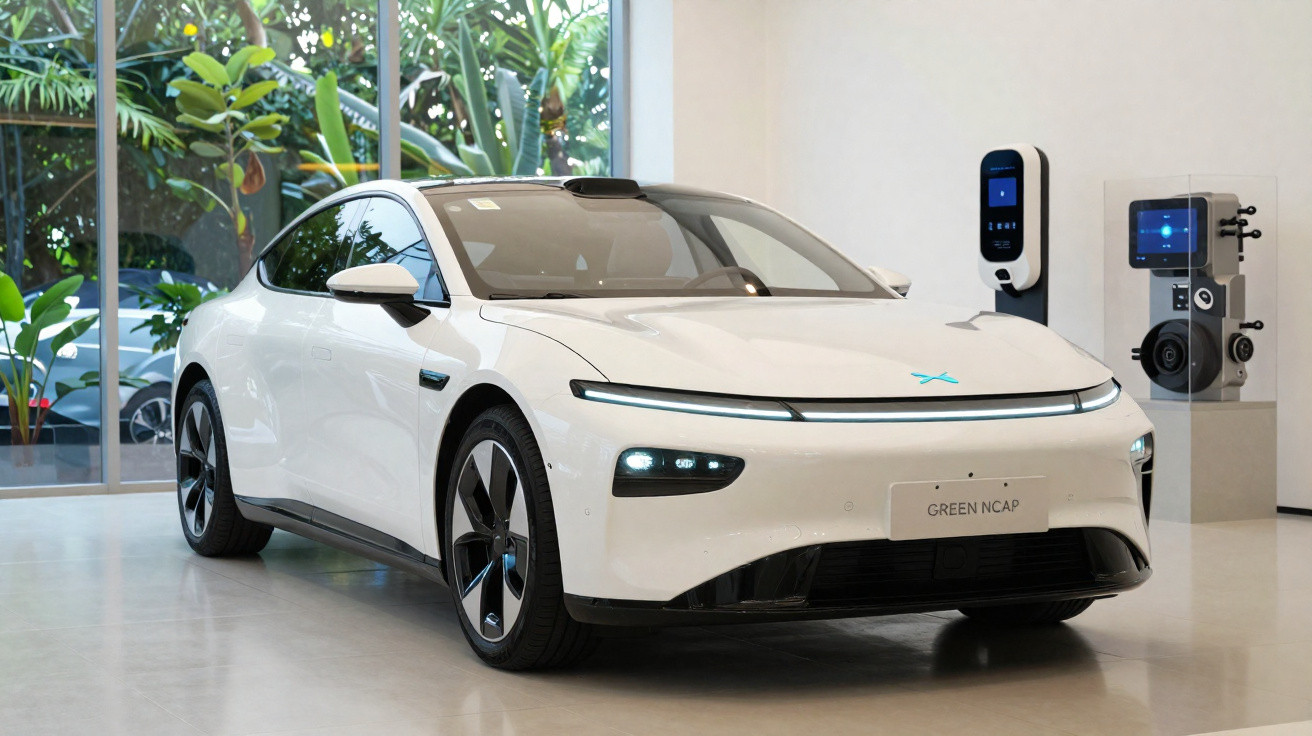
Green NCAP’s role in assessing cars’ emissions performance is comparable to Euro NCAP’s role in measuring how well cars perform on safety.
How Green NCAP tests vehicles
In its test programme, vehicles are assessed both in the laboratory and on the road, using conditions that are more demanding than the regulatory WLTP and RDE (Real Driving Emissions) protocols. The scoring is based on three separate areas: the Clean Air Index, the Energy Efficiency Index, and-introduced as a new element for 2020-the Greenhouse Gas Emissions Index.
From tank-to-wheel today to well-to-wheel in future
As you would expect, battery-electric vehicles start with a clear advantage because they produce no tailpipe emissions. For now, the rating only considers a “tank-to-wheel” approach-meaning emissions generated while the vehicle is being used.
Looking ahead, Green NCAP intends to move towards a broader “well-to-wheel” assessment. That would also take into account, for instance, emissions linked to manufacturing a vehicle, as well as the source of the electricity required by electric vehicles.
The 24 models tested
In this test round, around 24 models were evaluated, spanning fully electric cars, hybrids (non-plug-in), petrol, diesel, and also CNG. In the table below you can see each model’s rating in detail:
| Model | Stars |
|---|---|
| Audi A4 Avant 40 g-tron DSG | 2 |
| BMW 320d (auto) | 2½ |
| Dacia Duster Blue DCi 4×2 (manual) | 2½ |
| Honda CR-V i-MMD (hybrid) | 2½ |
| Hyundai Kauai Electric 39,2 kWh | 5 |
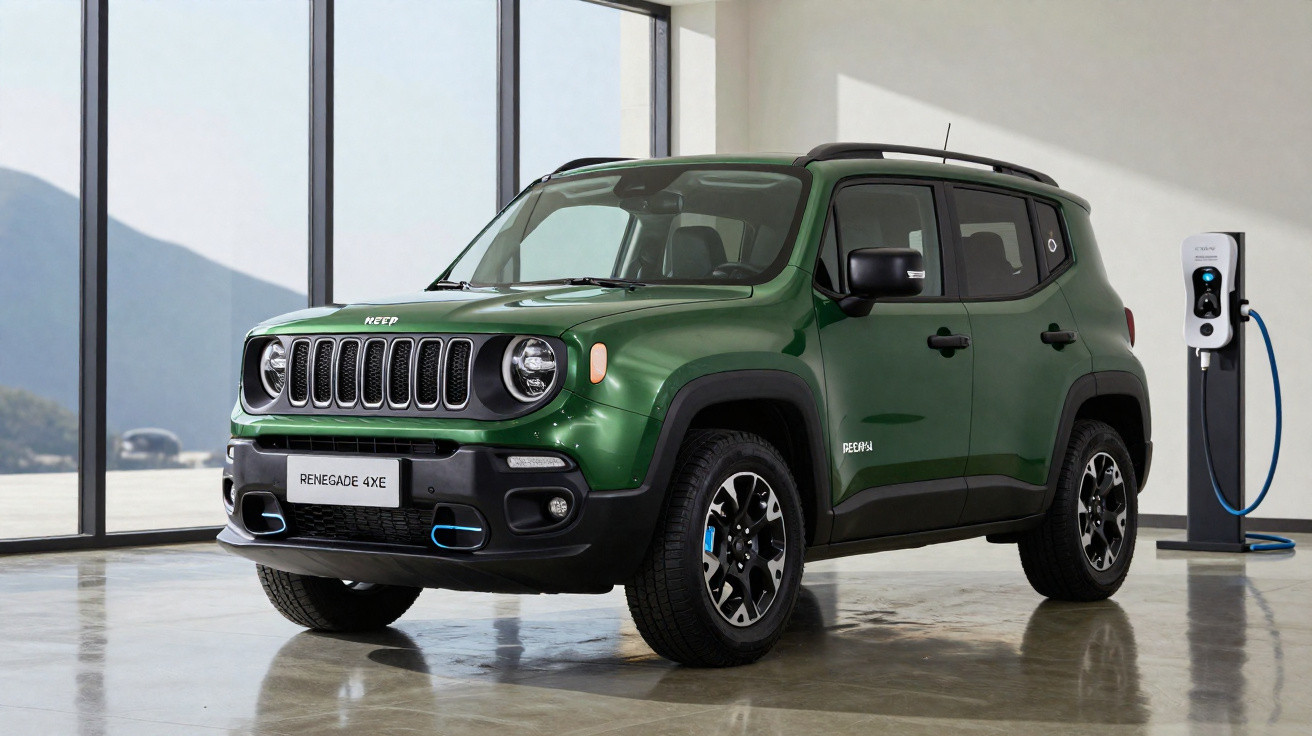
| Jeep Renegade 1.6 Multijet 4×2 (manual) | 2 |
| Kia Sportage 1.6 CRDI 4×4 7DCT | 1½ |
| Mazda CX-5 Skyactiv-G 165 4×2 (manual) | 2 |
| Mercedes-Benz C 220 d (auto) | 3 |
| Mercedes-Benz V 250 d (auto) | 1½ |
| Nissan Qashqai 1.3 DIG-T (manual) | 2½ |
| Opel/Vauxhall Zafira Life 2.0 Diesel (auto) | 1½ |
| Peugeot 208 1.2 PureTech 100 (manual) | 3 |
| Peugeot 2008 1.2 PureTech 110 (manual) | 3 |
| Peugeot 3008 1.5 BlueHDI 130 EAT8 | 2½ |
| Renault Captur 1.3 TCE 130 (manual) | 3 |
| Renault Clio TCE 100 (manual) | 3 |
| Renault ZOE R110 Z.E.50 | 5 |
| SEAT Ibiza 1.0 TGI (manual) | 3 |
| Suzuki Vitara 1.0 Boosterjet 4×2 (manual) | 2½ |
| Toyota C-HR 1.8 Hybrid | 3½ |
| Volkswagen Passat 2.0 TDI 190 DSG | 2½ |
| Volkswagen Polo 1.0 TSI 115 (manual) | 3 |
| Volkswagen Transporter California 2.0 TDI DSG 4×4 | 1½ |
As with Euro NCAP, Green NCAP awards stars (from 0 to 5) by combining the results across the three assessment areas. It is also worth noting that some of the models tested may no longer be on sale-for example, the Peugeot 2008 listed here is from the previous generation.
Green NCAP only tests cars that have already been run in, with several thousand kilometres on the odometer, to better reflect vehicles as they are actually used on the road. The cars used for testing are sourced from rental fleets.
Unsurprisingly, the only vehicles to reach five stars are the electric models-in this case, the Hyundai Kauai Electric and the Renault Zoe. The more revealing comparisons are therefore between internal-combustion models: the fuels they use and whether they receive support from an electric motor, as seen with the Honda CR-V i-MMD and the Toyota C-HR.
Among vehicles with a combustion engine, Toyota’s hybrid sits at the top of the table. The Honda hybrid does not match that result, largely because the tested vehicle did not have a particulate filter. However, Honda has stated that this gap will be addressed by fitting that device to CR-Vs being produced towards the end of this year.
It also becomes clear that stronger ratings are easier to achieve with smaller cars-Peugeot 208, Renault Clio and Volkswagen Polo-each scoring three stars. The same applies to the SEAT Ibiza tested here in TGI form, i.e. running on Compressed Natural Gas (CNG). By contrast, the largest vehicles in this group-Mercedes-Benz V-Class, Opel/Vauxhall Zafira Life and Volkswagen Transporter-do no better than one and a half stars. Their Energy Efficiency Index takes a significant hit due to greater mass and a poorer aerodynamic drag profile.
The SUVs in the sample average around two stars, which is generally lower than the models they are based on. In the D-segment, the family saloons (and estates)-BMW 3 Series, Mercedes-Benz C-Class and Volkswagen Passat-score between three and three and a half stars (Mercedes). That performance is helped by their diesel engines, which already comply with the latest Euro6D-TEMP standard.
These are ratings that match-or even exceed-those achieved by smaller cars, suggesting that the negative perception diesel has attracted may be overstated when the discussion is about this newest generation of powertrains.
A special mention goes to the Mercedes-Benz C 220 d, which achieved a particularly high Clean Air Index score-evidence of highly effective exhaust after-treatment systems. On the other hand, the Audi A4 Avant g-tron’s two stars feel underwhelming, with its final outcome dragged down by a low Greenhouse Gas Emissions Index score, particularly relating to methane emissions. That issue did not arise, for example, with the SEAT Ibiza-the other model in the test group that uses CNG.
Are there no plug-in hybrids tested?
Plug-in hybrids have been at the centre of intense debate since the Transport & Environment study claimed they pollute far more than official figures suggest-potentially even more than purely combustion-powered models. Up to now, Green NCAP has not tested any plug-in hybrids because, in its words, it is “very complex”.
According to Green NCAP, the test procedures are still not finalised because, as it explains: “to achieve comparable and representative results, the battery state of charge has to be known and the instances in which the battery is charged (during tests) recorded”.
Despite the difficulty involved, Green NCAP says the next round of tests-whose results will be published in February-will include plug-in hybrid vehicles. Will they arrive at the same conclusions as the Transport & Environment study?
Comments
No comments yet. Be the first to comment!
Leave a Comment