
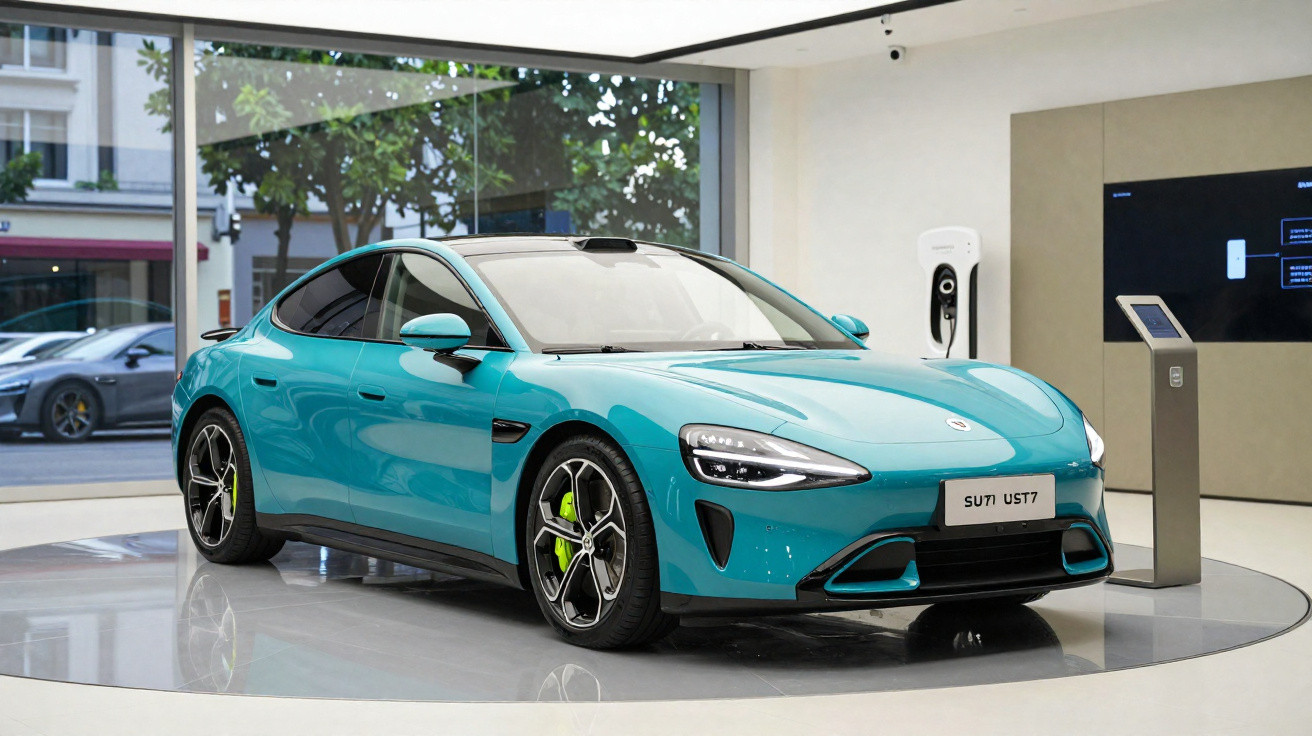
What only recently looked like a PR stunt on the Nürburgring Nordschleife is now turning into something tangible: the ultra-high-performance electric saloon Xiaomi SU7 Ultra has received its first standard road registration in Germany. That clears the way for the car to be seen not only on the “Ring”, but soon on everyday roads across Europe - and with performance figures that make more than a few supercars look ordinary.
From Nordschleife record hunter to a road car with number plates
In Germany, the Chinese technology group Xiaomi has so far been best known for smartphones, robot vacuum cleaners and smart-home gadgets. Three years ago, the company decided to enter the automotive industry with a bold, single-minded concept: a fully electric saloon called the SU7.
The most extreme version goes by the name Xiaomi SU7 Ultra. This model has been generating headlines since summer 2024, after setting an eye-watering time on the Nürburgring. A prototype completed the legendary Nordschleife in 6:22 minutes, while the later production version recorded a lap of 7:04.957 minutes.
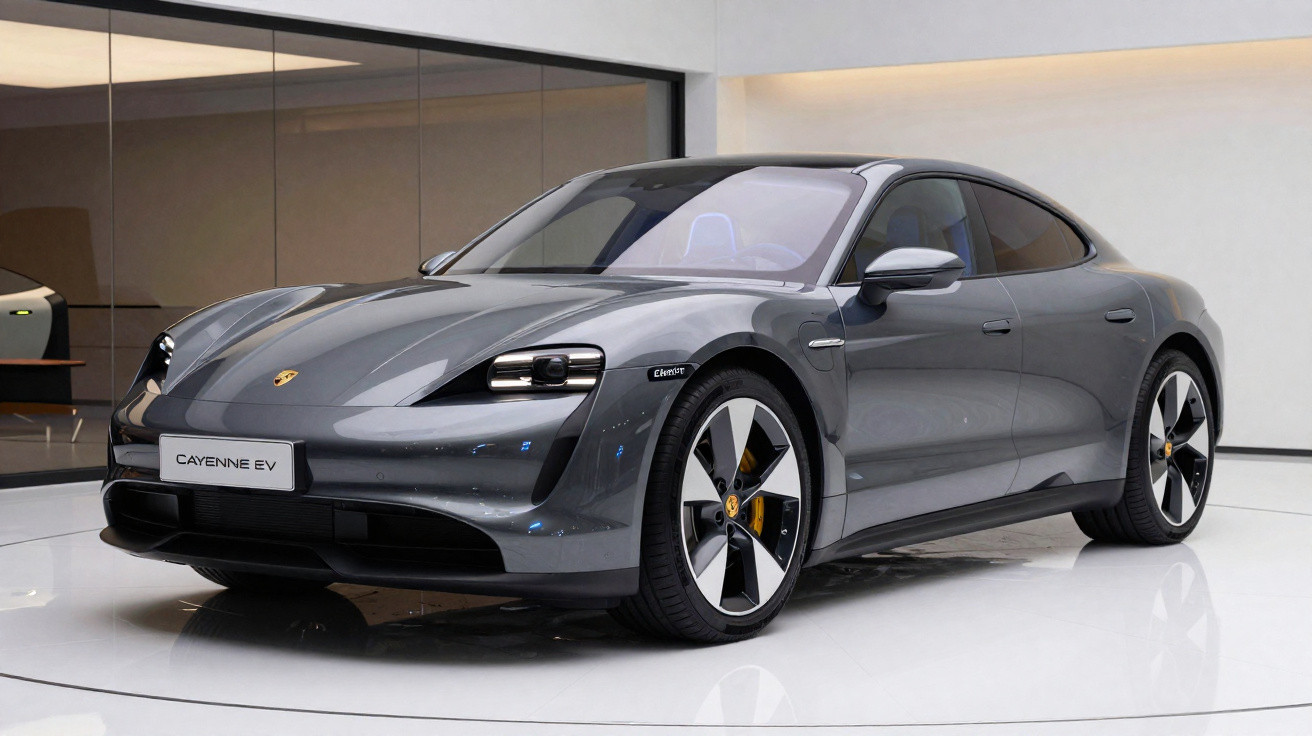
“With this figure, the SU7 Ultra was considered the fastest production electric saloon on the Nürburgring - quicker than the Porsche Taycan Turbo GT or the hyper-electric Rimac Nevera.”
Now comes the next milestone: on 5 July 2025, the first SU7 Ultra was officially registered in Munich. Its registration number is M SU7088E. That means the EV can drive legally on European roads - while also serving Xiaomi as a rolling test platform.
Road trip across Germany - 260 km/h on the Autobahn
With this first road-registered vehicle, Xiaomi is currently checking how the extreme saloon behaves in day-to-day use. A road trip of around 800 kilometres has already taken it from Berlin via Hamburg to Frankfurt. On an unrestricted section of Autobahn, the SU7 Ultra accelerated to 260 km/h - entirely legally.
This single registration is more than a publicity flourish. It indicates that European homologation for the model is essentially on track. In other words: the key technical requirements, safety standards and regulatory expectations for the European market are largely met. Many young Chinese brands stumble at precisely this hurdle - Xiaomi appears to have cleared it.
Supercar-level performance: Xiaomi SU7 Ultra figures
On paper, the SU7 Ultra’s specifications read like something from a tuning forum - except they are officially stated. Xiaomi quotes 1,548 PS, delivered by multiple electric motors. The manufacturer claims 0 to 100 km/h in 1.98 seconds, and a theoretical top speed of up to 350 km/h.
- Power: 1,548 PS
- 0–100 km/h: 1.98 seconds (manufacturer claim)
- Top speed: up to 350 km/h
- Battery: 93.7 kWh (CATL Qilin II)
- Range: 630 km (CLTC), estimated a little over 500 km (WLTP)
The battery comes from the Chinese cell giant CATL and belongs to the Qilin II generation. In China’s CLTC cycle, the 93.7 kWh pack is rated for 630 kilometres. Because that test cycle is considered optimistic, industry observers expect Europe to see a WLTP figure of comfortably more than 500 kilometres.
“That puts the SU7 Ultra on a par with many current premium electric saloons for range - just with far more power.”
“Civil” versions with up to around 700 PS planned
The Ultra will not be the only variant. Xiaomi is planning a complete SU7 family, with outputs ranging from about 320 to roughly 690 PS, aimed at “normal” customers. Initial information suggests that the most efficient versions could reach up to 902 kilometres in the Chinese cycle - which, on paper, would equate to around 720 kilometres WLTP.
With that, Xiaomi is clearly taking aim at models such as the Tesla Model 3 and Model S, the Mercedes EQE and the BMW i5. The emphasis is on a premium feel, lots of technology and strong value for money.
Launch in Europe: market entry targeted from 2027
Xiaomi intends to offer the SU7 range officially in Europe from 2027, complemented by an SUV called the YU7. A dedicated development and design centre in Munich is already working on tailoring the vehicles to European expectations - from chassis calibration through to driver assistance systems and infotainment.
| Aspect | European adaptation |
|---|---|
| Suspension | Fine-tuning for Autobahn speeds and rough rural roads |
| Driver assistance systems | Alignment with EU requirements and local traffic rules |
| Design | Focus on the tastes of customers in Germany, Austria and Switzerland |
| Software | Language packs, navigation data, integration of local services |
The intended pricing strategy is particularly noteworthy. For the “normal” SU7 versions (excluding the Ultra), an internal entry price of around €35,000 is repeatedly mentioned. If that figure holds, Xiaomi would be offering an electric saloon with noticeably more technology and range than many current volume models - at the price of a well-specified compact car with an internal combustion engine.
Pressure on European manufacturers increases
With the SU7 Ultra and the wider planned line-up, pressure on European manufacturers will continue to rise. Brands such as BYD, Nio and MG are already attracting attention with aggressive pricing and respectable quality. Xiaomi adds a further advantage in software, electronics and user interfaces.
“In particular, the combination of a smartphone ecosystem, a connected car and aggressive pricing could become uncomfortable for established brands.”
Anyone already using a Xiaomi handset may be drawn to a seamless connection with the car: consistent apps, cloud services, features via subscription - all of that fits neatly into the business model of a technology group.
What Nürburgring records really mean in everyday use
Many readers ask the same question: how relevant is a Nordschleife lap record to daily driving? For commuting, a lap time clearly makes no difference. But it does demonstrate where the limits lie: brakes, cooling, suspension and software all have to perform at the highest level when an EV weighing close to two tonnes is driven flat-out for extended periods.
If a manufacturer has that kind of load under control, customers benefit too. Brakes are less likely to overheat on mountain roads, the battery remains stable at higher speeds, and performance is available for longer. This is exactly where Xiaomi is trying to score points: using records as proof that the hardware and software are robust enough.
That also brings up the classic questions that still feel more open for high-performance EVs than for combustion cars:
- How sharply does range fall when driving at sustained high speed?
- How reliably do rapid charges from 10 to 80 per cent work?
- How long do the battery and drivetrain last with sporty driving?
- How well does the software perform for driver assistance and safety systems?
These are precisely the points Xiaomi is currently evaluating with its Munich-registered test vehicle in real traffic conditions.
Opportunities and risks for buyers in Germany
For prospective buyers in Germany, the SU7 family would add another choice within an already expanding EV market. Anyone looking for long-range saloons with strong performance could find what they want here - especially if prices do end up clearly below comparable models from European brands.
On the other hand, there are unresolved issues: how dependable will service and workshop networks be? How quickly can spare parts be supplied? For how long will Xiaomi guarantee software updates? And what will residual values look like after a few years if the brand is only just establishing itself locally?
Anyone interested in such a vehicle should look closely ahead of the possible 2027 launch: test drives, user reports from China and early long-term testing will show whether the impressive specification sheets also hold up in everyday life. It is already clear, though: with the first road registration of the Xiaomi SU7 Ultra in Germany, the benchmark for electric saloons has been raised - for speed, for range and, above all, for value for money.

Comments
No comments yet. Be the first to comment!
Leave a Comment