
Used (or nearly new) tyres: are they worth it? This is something many drivers weigh up, especially when money is tight or when a deal looks too good to miss. After all, the cost can be noticeably lower than buying a brand-new set. But is it a sensible choice? It depends.
As a rule, buying new tyres is always recommended. Over time, they remain the safest and most balanced option. Even so, there are a few circumstances where a used tyre can be a reasonable solution:
- Temporary tyres (because of a puncture, for example);
- For vehicles that are rarely driven or only used for short journeys;
- For classic or rare vehicles, where finding new tyres can be difficult.
Risks to consider
Even if the savings look appealing, there are real risks that shouldn’t be overlooked. A used tyre typically comes with an unknown history. You can’t be certain how it was driven on or whether it has internal damage that cannot be seen from the outside. Even a careful visual check may fail to reveal structural weaknesses.
Another drawback of used tyres is that they won’t perform like a new tyre. That can mean reduced grip - particularly on slippery surfaces - a higher likelihood of aquaplaning, and longer braking distances.
These outcomes are mainly linked to tread wear. Tyres close to the legal limit (1.6 mm) deliver very poor performance in difficult conditions and may be considered dangerous. They also won’t last as long as a new set - between 40,000 and 60,000 kilometres - which can mean replacing them more often. Over the long term, that can reduce or even wipe out the initial saving.
Finally, there’s the issue of warranty. Unlike new tyres, used tyres rarely come with any manufacturer protection.
What to check before you buy
If you decide to go ahead with used tyres, there are a few key points you should assess:
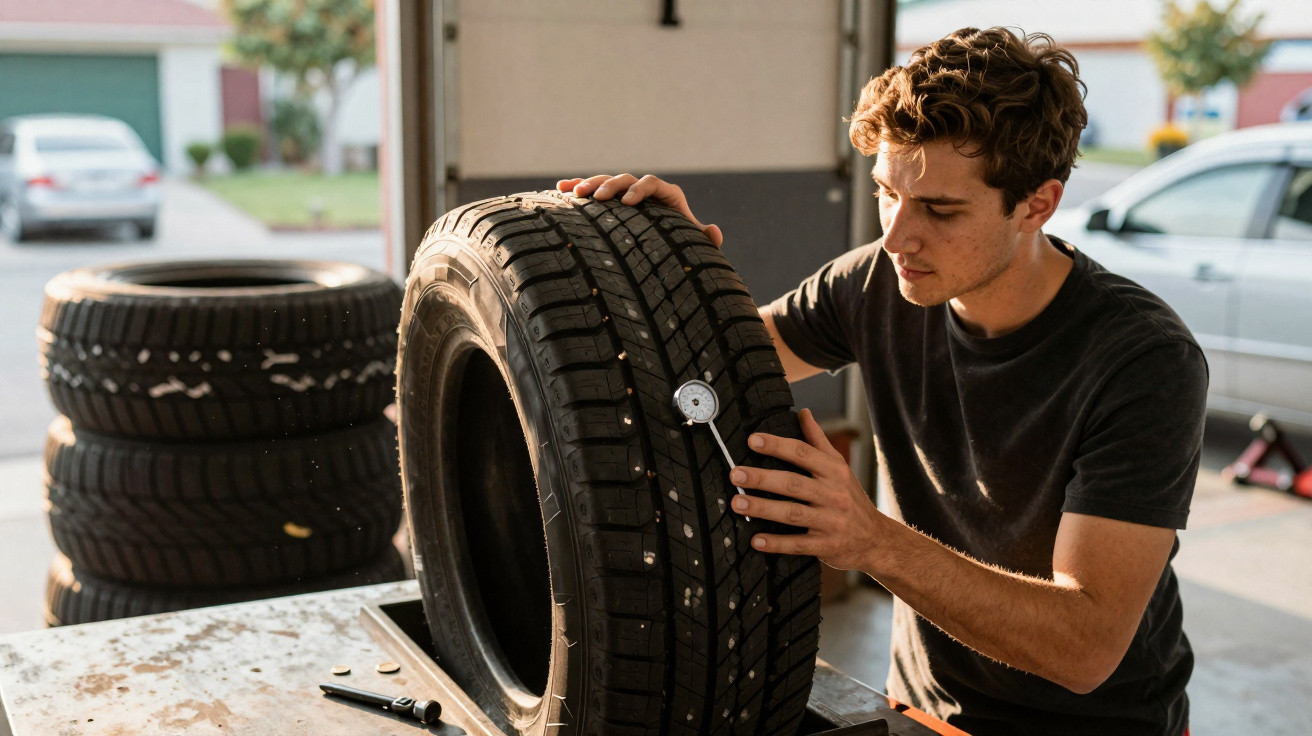
- Tread depth: The legal minimum is 1.6 mm, but it’s recommended that a used tyre has at least 5 mm of tread depth - a new tyre typically has around 8 mm;
- Condition of the sidewalls: Wear should be even, and there must be no cracks, cuts, chips, or smooth patches;
- Manufacture date (DOT): On the sidewall you’ll find the letters “DOT” followed by four digits. The first two show the week and the last two show the year of manufacture. It’s recommended not to buy tyres that are more than six years old, because the rubber degrades over time, losing elasticity and grip.
So, if you do choose to buy used tyres, the advice is straightforward: check the groove depth and age (DOT code) carefully, look for any signs of damage, and whenever possible buy from established, reputable sellers that offer a warranty or returns.






Comments
No comments yet. Be the first to comment!
Leave a Comment