
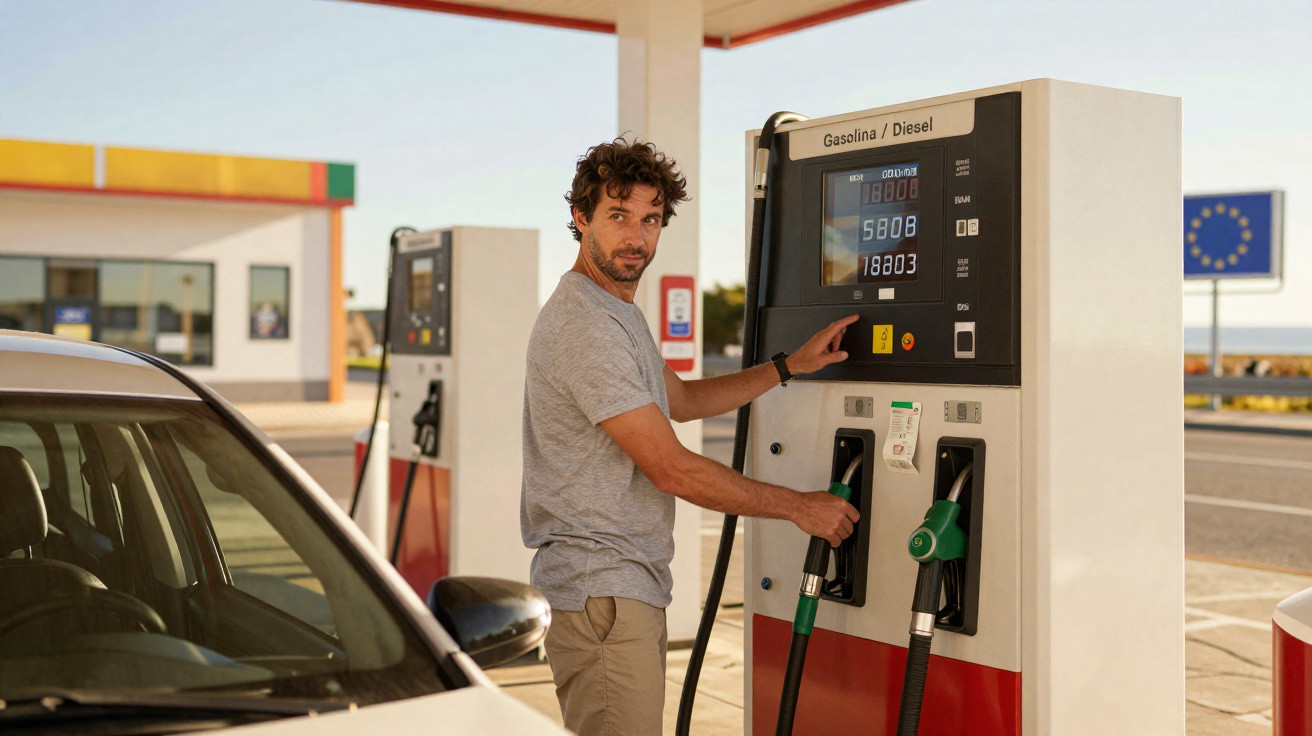
Petrol station prices are climbing, crude has pushed past the US$100 mark, and many motorists are asking the same thing: how long can this keep going? One EU country is now offering an answer that is being read closely in Berlin and Vienna as well. In Lisbon, the government has agreed a tailored approach that promises direct relief at the pump - without blowing a hole in the public finances.
How Portugal aims to soften the fuel price shock
The decision follows a familiar pattern. Geopolitical tensions - particularly in the Middle East - drive oil prices upwards. When crude becomes more expensive, diesel and petrol typically rise almost in lockstep. One detail is often overlooked: the state automatically takes in more tax, because VAT is calculated on the higher final price.
Portugal’s model targets exactly that dynamic. The government does not want to be accused of making money from the crisis, so it is introducing an automatic correction mechanism that activates once fuel prices jump too sharply.
Steigt der Kraftstoffpreis um mehr als zehn Cent pro Liter gegenüber Anfang März, senkt der Staat seine Mineralölsteuer und gibt den zusätzlichen Mehrwertsteuer-Gewinn an die Autofahrer zurück.
At the heart of the approach is a simple principle: the state should not profit when prices surge due to international crises. Any extra VAT revenue created by the price spike is returned to drivers via a cut in energy tax. It is not a classic “discount”, but rather a tax-neutral brake.
Diesel triggers the protection mechanism already
For diesel, reality caught up with the plan faster than the government would have liked. The price of the fuel has already crossed the defined threshold. According to government calculations, without intervention as much as 25 cents per litre could have been added - a serious blow for haulage firms and commuters.
That is why Lisbon has pulled what amounts to an emergency lever: diesel fuel duty was reduced at short notice to cushion the jump on forecourts. Transport companies, delivery services and long-distance commuters feel the impact immediately.
- Threshold: +10 cents per litre compared with the start of March
- Once the threshold is reached, the state reduces energy tax
- Aim: additional VAT receipts are fully neutralised
- Result: the price still rises, but not as sharply as the market would otherwise dictate
This mechanism is already in force for diesel. In practical terms, prices are higher than they were in winter, but noticeably lower than they would have been without the tax brake.
Petrol is nearing the next price round
Petrol is under similar pressure, but the decisive step has not quite happened yet. At the start of the week, the price rose by seven cents per litre. That automatically pushes extra tax revenue into the public coffers - precisely the effect the government wants to avoid.
Only around four cents are missing before the protection mechanism also kicks in for petrol. From that point, the state must scale back its energy tax to offset the additional VAT intake. This is not handled case by case; it follows a fixed formula that is continuously adjusted to reflect market movements.
Die Regierung will zeigen, dass sie in der Krise nicht auf dem Rücken der Autofahrer mitverdient – und stellt sich damit bewusst dem Urteil der Wähler.
Brussels takes a sceptical view of tax tricks at the pump
While Portuguese drivers keep an eye on price boards at petrol stations, a second dispute is playing out in the background: the one with the European Commission. Subsidies in the energy sector are a red flag in Brussels. Competition officials worry that national solo moves could distort the market.
Portugal’s finance minister appears untroubled by that criticism. His argument is that the government is giving citizens breathing space while simultaneously giving up extra revenue. In his view, this is not an unlawful discount, but an “emergency brake” aimed at preventing crisis-driven windfall gains for the state.
Politically, his strongest card is the reference to the conflict in the Middle East. The government is leaning on the current exceptional situation and presenting the tax brake as a temporary crisis measure. That is the basis for its hope when Brussels assesses whether the move complies with strict state-aid rules.
Europe is under pressure to act
An oil price above US$100 per barrel is more than a headline figure. Psychologically, it functions like a sound barrier. Hauliers, tradespeople, delivery services and millions of commuters across Europe come under cost pressure - and sooner or later those additional costs filter through to consumers.
With this model, Portugal is opening a door that other EU states may end up walking through, whether they want to or not. If crude prices remain at these levels, governments will be pushed from all sides: by citizens, by businesses and by trade unions.
Je länger der Ölpreis hoch bleibt, desto größer wird der Druck auf alle EU-Länder, eigene Notfall-Steuerinstrumente an der Zapfsäule einzuführen.
Many countries already rely on time-limited energy relief measures, especially after the shock experiences of 2021 and 2022. However, the tools vary widely, from straightforward tax cuts to fuel vouchers. Portugal’s approach is a radically symmetrical one because it fully links relief to VAT receipts.
What Germany and Austria could learn from it
In Germany and Austria, intervening in energy prices is politically sensitive. Temporary fuel tax rebates in the past sparked heated debates. Critics argued that oil companies simply priced in part of the relief and pocketed the benefit.
Portugal’s model differs in one important respect: the state only returns what it gains extra during the crisis. In other words, it forgoes windfall income rather than building new subsidies. That can be appealing to finance ministers because it places less strain on budgets than conventional rebates.
| Model | Core element | Risk to the public finances |
|---|---|---|
| Portugal | Offsetting additional VAT revenue through lower energy tax | Limited, because it only means giving up extra receipts |
| Typical tax cut | Fixed reduction per litre, regardless of oil price | High, as permanent revenue losses are possible |
| Fuel vouchers | Direct payments to citizens or businesses | Very high, as the state actively pays out money |
For consumers in German-speaking countries, the question is straightforward: could a model like this help at home too? In practice, the answer depends on several factors - including the existing tax structure, political majorities and the willingness to pick a fight with Brussels.
What this means in practical terms for drivers
For Portuguese motorists, the immediate reality is clear: fuel remains expensive, but it is less painfully expensive than a pure market price would make it. Commuters with long journeys, delivery fleets and taxi operators see the difference in their monthly outgoings.
Of course, the underlying problems do not disappear. Anyone who depends on a car remains tied to fossil fuels - and therefore to crises, conflicts and speculation in commodity markets. The tax brake eases the symptoms, but it does not solve the root cause.
At the same time, Portugal’s experiment underlines how much tax policy has become part of crisis firefighting. Finance ministers are forced into short-notice emergency measures whenever oil prices swing too far. Longer-term plans for climate-friendly mobility can quickly slip down the agenda.
For consumers, it is worth reading the receipt carefully: those who understand current price dynamics can make better choices - whether that is selecting a vehicle, planning journeys, or deciding if lift-sharing or switching to buses and trains would pay off.
Even if Portugal feels far away, the mechanisms being used there could soon serve as a blueprint. At the latest when the next price surge hits pumps in Germany or Austria, the same question will return: should the state really take a share of every extra cent drivers have to pay in times of crisis?

Comments
No comments yet. Be the first to comment!
Leave a Comment