
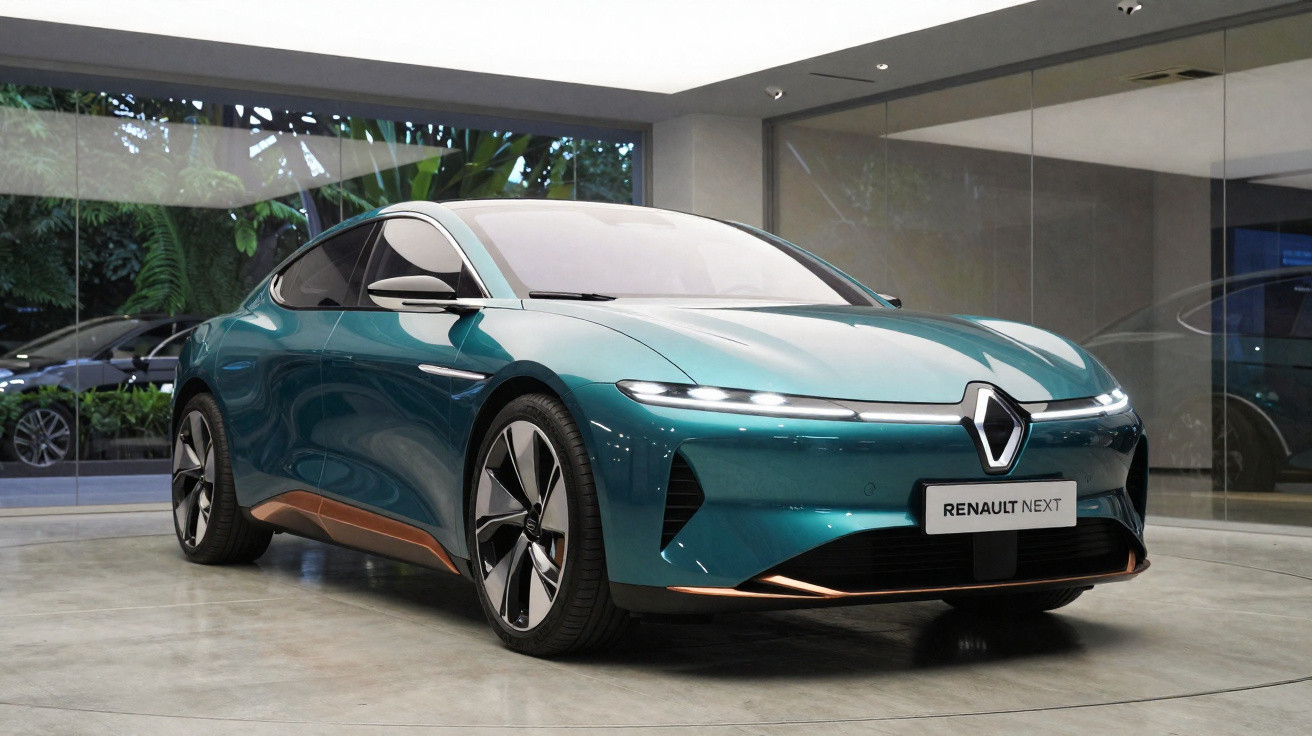
Outside a Renault dealership, a neat row of glossy electric cars sat nose-to-tail: doors shut, infotainment displays glowing blue through the windows. They looked poised to roll out at any moment, yet no-one seemed keen to take one home. Inside, a salesperson flicked between his phone and the silent doorway, then glanced at a stack of EV leaflets that hadn’t been touched for days.
All over Europe, the same hushed tableau is becoming familiar. Showrooms stocked with electric ambition, buyers weighed down by uncertainty. Prices feel steep, charging still feels like a faff, and the early “honeymoon” with EVs is clearly fading. Renault spotted the shift sooner than many. Rather than waiting it out, the French carmaker has opted to do something that most of the industry treats as untouchable.
It’s the sort of decision that reads sensible in a strategy deck - and looks explosive on a sales invoice.
Electric sales are stalling – and Renault flipped the script
Renault’s leadership doesn’t need another spreadsheet to sense hesitation. It shows up in dealer briefings, in customer conversations, and in those uncomfortable seconds when someone genuinely likes an electric Megane - then balks at the price. Demand for EVs hasn’t fallen off a cliff, but the surge has undeniably eased. That sense that “everyone will be electric by tomorrow”? It has evaporated.
Renault’s response has surprised nearly everyone: in a growing number of markets it is leaning harder on cheaper hybrids and petrol models, while discreetly turning down the volume on EV evangelism. This isn’t a nostalgic return to yesterday, but a deliberate sidestep. Tesla can keep talking about autonomy and software; Renault is chasing the buyer who simply needs a car that won’t frighten their bank balance.
The earliest clue wasn’t a headline-grabbing concept - it was the lack of noise. Fewer grand EV pledges on stage. More emphasis on “the right technology at the right price”. Less tomorrow, more today.
The figures underpinning the shift are stark. Across Europe, EV growth has cooled after several frantic years, and in some countries registrations have even slipped. Where incentives were reduced, demand dropped sharply. Many early adopters made the jump with the help of generous subsidies; without them, the same purchase suddenly feels far less compelling.
Renault has felt this pressure through models such as the flagship Megane E-Tech Electric and the small-but-not-cheap Zoe. On paper, they stack up well - but they are squeezed by two hard realities: Chinese rivals undercutting on price, and a more cautious middle class that checks monthly outgoings before it admires 0–62 mph figures. In France and elsewhere, retailers are seeing more customers ask about hybrids again.
Within Renault, that message didn’t sit quietly in a report. It triggered a strategic response. The range is being rebalanced, with extra emphasis on hybrids and even efficient petrol engines, while the once-inevitable “all electric, all the time” storyline is being toned down. That’s the radical element: not walking away from EVs, but refusing to stake the entire business on them while buyers hesitate.
From the outside, it can look like backtracking. From Renault’s perspective, it’s straightforward survival. EVs cost a fortune to engineer. Plants need retooling. Supply chains must be rebuilt around batteries and scarce materials. Spending billions on electrification precisely when customers are wavering is like going all-in just as the table falls silent.
So Renault is placing a different bet: lengthen the transition and earn money at each stage of it. That means smaller batteries, more hybrids, and cars such as the Renault Austral and Arkana taking the spotlight instead of only the most futuristic BEVs. Look closely at the messaging: “electric” remains - but more often as “E-Tech hybrid”, not a triumphal “100% electric”.
This approach also keeps Renault aligned with everyday constraints: people in flats, drivers who do long motorway runs, and anyone who simply doesn’t have the headspace to plan every charge. A fully electric world looks tidy and straightforward in theory; in everyday life it’s untidy, frustrating, and inseparable from budgets and routines. Renault is choosing to work with that reality rather than pretend it isn’t there.
What Renault is actually changing – and what it means for you
Behind the rhetoric is a very specific repositioning: Renault is presenting the electric car as one choice among several, rather than the only “right” choice. You notice it as soon as you scan the range. The upcoming Renault 5 Electric is framed as a cool, attainable city-friendly option, while the rest of the line-up offers a quieter assurance: you can go partly electric without committing to fully electric.
Renault understands where many buyers are stuck. They like the idea of using less fuel and enjoying quieter driving, but they don’t like the idea of being stranded at a charger on a wet Sunday with hungry children in the back. So the brand talks about “electrified mobility” instead of pure EV preaching - selling a sense of modernity without demanding a leap of faith.
It may sound like marketing-speak, but there is a practical tactic underneath. Walk into a Renault showroom today and you may well be guided towards a hybrid Austral or a Clio E-Tech before anyone steers you to a battery-electric Megane. Hybrids offer Renault two clear benefits: they are typically cheaper to build than long-range EVs, and they soften concerns for drivers who don’t trust the charging network. For you, that can translate into more choice over fuel versus electricity, more room to negotiate, and often a lower upfront price.
There’s also a regulatory angle. Europe’s CO₂ targets are strict, and many manufacturers rushed into EVs to cut fleet emissions quickly. Renault is taking a more measured route: using efficient hybrids to reduce a large share of emissions, then focusing pure EV investment where it genuinely fits. Think small-battery city cars and light vehicles that don’t need 600 km of range.
The downside is obvious: Renault risks losing some of the “we are the future” shine that all-EV brands deploy so effectively. The upside could matter far more - affordability. While some competitors chase €60,000 electric SUVs, Renault is wagering that the real volume lies with people searching for a family car between €25,000 and €35,000 that doesn’t feel like a downgrade. Let’s be honest: almost nobody sits down with a spreadsheet to calculate lifetime energy savings day after day. They look at the monthly payment - and whether the car will cope with the next holiday journey.
Renault’s most provocative move is to stop fighting that instinct and build its strategy around it.
How to navigate this new car market without getting lost
If you’re wrestling with the same uncertainty, one simple process can help. Begin by tuning out the labels. Ignore “electric”, “hybrid”, “mild hybrid”, “plug-in”, “E-Tech” - the lot. Take a sheet of paper and note three things: how many kilometres you drive each week, where you park overnight, and the true monthly budget limit you won’t exceed.
Only when those answers are clear should you return to the powertrain options. Renault’s updated approach - and similar shifts elsewhere - essentially revolves around the same three questions. A full EV can work well if your trips are mostly short and you can charge easily at home or work. A full hybrid such as Renault’s E-Tech starts to make sense if you mix town driving with motorway miles and don’t want to think about plugs. A sensibly priced petrol car can still come out on top if your annual mileage is modest.
This is basic logic, yet many people do the reverse: they fall for a shape on Instagram or a “zero emissions” slogan, then try to contort their routine to fit the car. The more radical approach, as a buyer, is to do the opposite: choose the car to match your life as it actually is.
Next, keep an eye out for a few predictable pitfalls. One is assuming you’ll be diligent about charging in future. On a good day, plugging in every evening sounds effortless. Then work overruns, it’s freezing outside, the kids are exhausted - and you skip it. Again. Another is forgetting how much a heavy EV or PHEV can add in tyres and insurance.
Renault - and others - are banking on a more mature, slightly disillusioned customer: someone who has heard the promises and now wants evidence. If that’s you, treat the test drive like a pressure test. Drive routes you genuinely do: a busy supermarket run with a full boot, a quick motorway overtake, a tight parking bay. Put direct questions to the salesperson about battery warranty, resale value and software updates. You’re not being awkward; you’re doing what the market largely failed to do at the start of the EV wave - reality-checking.
On a human level, this transition is also emotional. We’ve all experienced that moment of signing off a big purchase with a small knot in the stomach. Cars still carry aspiration, memories of trips, and a feeling of independence. Renault’s pivot is a reminder that those emotions don’t vanish just because the powertrain changes. A slightly imperfect, compromise-friendly hybrid may suit your life better than the most virtuous specification sheet in the world.
“The real revolution isn’t going 100% electric overnight. It’s giving millions of people a path they can actually walk today,” confided a Renault product manager off-stage after a press presentation. “If we lose them on price or fear, we lose the transition itself.”
To stay clear-headed in a noisy market, it helps to keep a handful of points firmly in mind:
- EV hype is easing, which can increase your negotiating power.
- Hybrid technology is no longer a half-step; for brands such as Renault it has become a core pillar.
- Price, charging access and annual mileage matter more than catchphrases.
- Regulation will continue to push electrification, but not necessarily at the pace your life can follow.
- The “best car” is the one that feels calm to own, not heroic to rationalise.
The silent revolution behind Renault’s radical choice
Renault’s decision says more than “one manufacturer changed its plan”. It signals a wider shift away from a moralising, quasi-evangelical approach to electric mobility and towards something more practical and negotiable. The dream hasn’t disappeared - it’s being forced to mature. EVs are no longer the dazzling newcomer on the showroom floor. They are now a line on the price list, competing with dozens of compromises.
That may sound less exciting, but it could be exactly what the transition needed. Once the novelty fades, what’s left is day-to-day usability and trust. Can you live with this car for seven years? Will it still feel like a smart decision if energy prices move, if your job location changes, if your family grows? Renault’s radical choice is to admit - openly, and with its investment decisions - that many people aren’t ready to answer “yes” to those questions for a pure EV. Rather than blaming them, Renault is offering an alternative lane.
For you, as a reader and perhaps a future buyer, the key right now isn’t picking a side in the “EV vs petrol” argument. It’s noticing that the market has quietly entered a third space: layered options, where the boldest choice is often not the most extreme. An affordable hybrid Clio can be a climate-conscious decision in a rural area. A small 100% electric Renault 5 can be a joyful, almost defiant choice in a congested city. A well-maintained used petrol car can buy time while charging infrastructure improves.
Renault’s reset is an invitation to drop the idea that the “right” car is the one that wins debates on social media. The right car is the one that suits your life now and keeps options open later. That line is far less dramatic than “the electric revolution has arrived”. Yet in quiet dealership offices across Europe - surrounded by rows of unsold EVs - it may be exactly what gets the conversation moving again.
| Key point | Detail | Why it matters to you |
|---|---|---|
| EV sales slowdown | EV growth has cooled, particularly where subsidies are being reduced. | Helps explain why discounts and fresh strategies are appearing. |
| Renault’s hybrid focus | Renault is prioritising E-Tech hybrids and smaller EVs rather than only large-battery models. | Offers more realistic options if a full EV feels too expensive or risky. |
| Buyer’s method | Start with mileage, parking and budget before choosing a technology. | Makes your next car decision calmer, clearer and better aligned with real life. |
FAQ
- Are electric cars really “not selling” any more? They are still selling, but not at the breakneck pace of recent years; in some markets demand has levelled off or dipped as subsidies fall and prices remain high.
- Is Renault abandoning electric cars with this strategy? No. Renault is rebalancing: it continues investing in EVs such as the Renault 5 Electric, while putting more emphasis on hybrids and efficient petrol models.
- Does it still make sense to buy an EV right now? Yes - if your driving is predictable, you can charge easily, and the multi-year total cost fits your budget. If not, a hybrid can be the safer choice.
- What’s the difference between Renault’s E-Tech hybrid and a plug-in hybrid? E-Tech hybrids replenish a small battery as you drive and never need plugging in; plug-in hybrids have larger batteries that you charge from a socket for longer electric-only trips.
- Should I wait before switching to any kind of electrified car? If your current car is running well and you’re unsure, waiting can be sensible. If fuel costs are climbing, looking at hybrids now can already deliver meaningful savings.
Comments
No comments yet. Be the first to comment!
Leave a Comment