
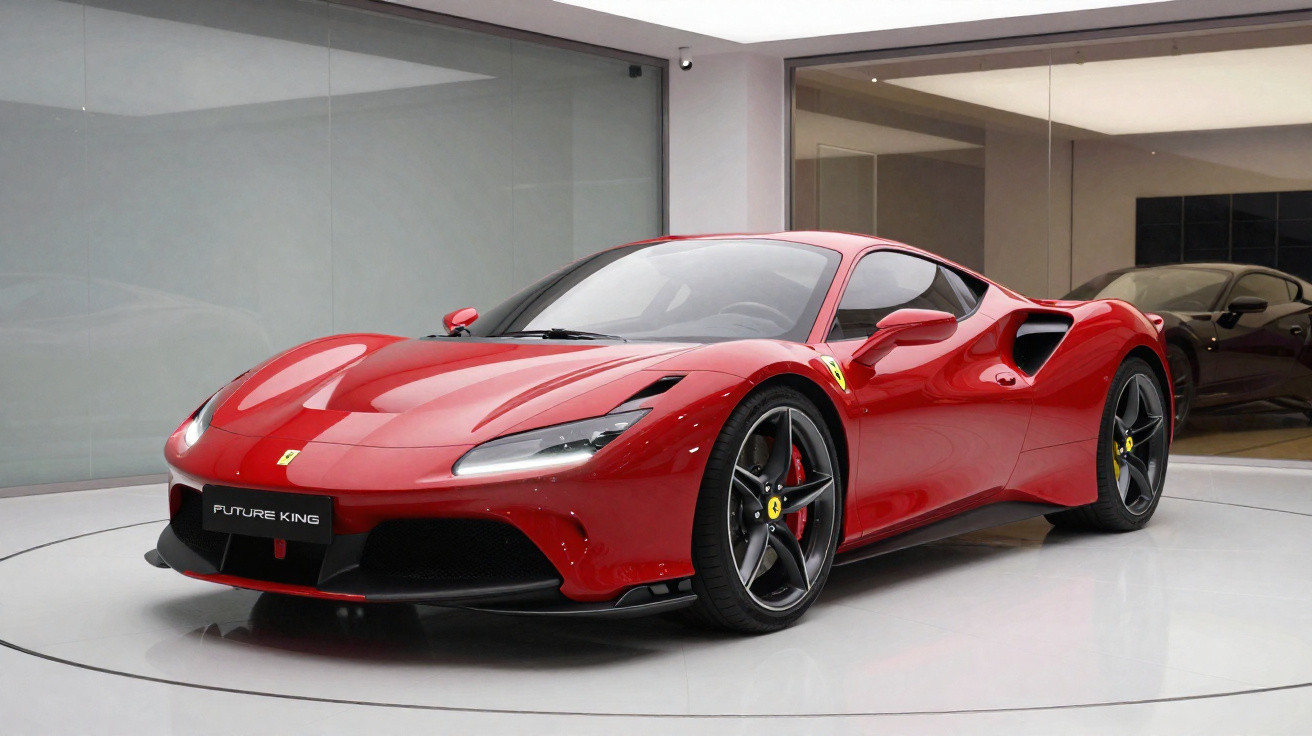
Two famous badges, a volatile stock market and an accelerating move towards electric cars are, quietly, changing what matters for investors.
Away from the spectacle of loud exhausts and polished marketing, Ferrari and Porsche are now competing on a different circuit: quarterly results, regulatory timetables and battery capacity. For shareholders, the issue is less about outright speed and more about which company can stay ahead as electrification reshapes costs and squeezes margins.
Ferrari vs Porsche: two icons, two very different promises
At a glance, Ferrari and Porsche appear to follow the same playbook: sell high-priced vehicles to wealthy buyers and convert brand desire into dependable cash flow. In practice, they sell two distinct propositions to the market.
- Ferrari trades on scarcity, long waiting lists and the sense that ownership is membership of an exclusive circle.
- Porsche offers everyday-usable performance, alongside a more tangible route into an electric future.
That split influences how each share behaves. Ferrari is valued more like a luxury brand that happens to build cars. Porsche, by contrast, is priced more like a manufacturer under pressure to transform before customers and regulators dictate the terms.
Ferrari has turned scarcity into a business model, while Porsche treats scale and electrification as its main levers of growth.
Two stock market journeys since the 2010s
Ferrari listed in New York in 2015. Porsche AG followed years later, debuting in 2022 after being separated out from the Volkswagen Group. Since those listings, the two stocks have reflected different investor expectations - and different categories of risk.
Ferrari: luxury multiple, limited volumes
Ferrari’s ticker, RACE, neatly captures how the market tends to frame the company. Investors often compare it less with mainstream carmakers and more with premium fashion or top-shelf spirits.
- Leadership intentionally limits production to preserve exclusivity.
- Price rises have largely filtered through without shortening waiting lists.
- Profitability looks closer to leading luxury groups than to industrial competitors.
The result is an elevated price-to-earnings multiple - a kind of “dream premium”. Shareholders are, in effect, paying for confidence that the prancing horse can withstand downturns, tighter rules for internal combustion engines and the possibility of getting electrification wrong.
Investors pay Ferrari to stay Ferrari: rare, aspirational, and only partly exposed to the brutal economics of mass carmaking.
Porsche: scale, batteries and a heavier regulatory footprint
Porsche AG arrived on the public markets with substantial optimism. After a strong initial jump, the share price then largely drifted as the transition challenges became harder to ignore.
- Electrification forces multi‑billion investment in platforms, batteries and software.
- US tariffs of around 15% put pressure on margins for vehicles exported into an important profit market.
- Strategy has to align with the broader Volkswagen Group, adding layers of complexity.
There are positives. Porsche already delivers a meaningful proportion of electric vehicles, with roughly a quarter of deliveries coming from EVs at the start of 2025. That helps with regulatory compliance, even as it weighs on margins while the shift is still incomplete.
Key fundamentals at a glance
| Aspect | Ferrari | Porsche |
|---|---|---|
| Market positioning | Ultra‑luxury, very low volume | Premium performance, higher volume |
| Main stock story | Pricing power and brand scarcity | Electrification and industrial scale |
| Regulatory exposure | Thermal bans in Europe, pressure on engines | Tariffs in the US, fleet CO₂ rules in Europe |
| EV progress (early‑mid 2020s) | First full EVs only just arriving, targets revised | Roughly 25% of sales already electric |
Structural headwinds reshaping both brands
Strip away the slogans and both companies are dealing with the same broad set of constraints: climate policy, trade frictions, rapid technological change and shifting expectations among buyers.
Regulation: from exhaust pipes to spreadsheets
- Europe is moving towards ending sales of new pure internal combustion cars over the next decade.
- The United States is intensifying tariff pressure on imported vehicles, with premium marques in the firing line.
- China is backing its own manufacturers and prioritising domestic EV champions, creating added difficulty for Western luxury brands.
For Porsche, tariffs can hit a core market directly. For Ferrari, tightening emissions standards put the long-term role of V8 and V12 engines under scrutiny - even though they sit at the heart of the brand’s appeal.
The same rules aimed at cleaning city air now force prestige carmakers to reinvent the products that made them famous.
Technology: batteries, software and a risk of brand dilution
Electrification is no longer a distant objective; it now shapes budgets, recruitment and supplier relationships.
- Porsche established an early EV footprint with cars such as the Taycan and electric versions of its SUV line-up.
- Ferrari is taking a more cautious route, beginning with hybrids and then aiming for a first fully electric model at the end of the decade.
- Both must deliver software, connectivity and driver-assistance features that high-end customers increasingly expect as standard.
The central dilemma is hard to miss: how do you preserve a reputation built on mechanical theatre and visceral feedback when the product becomes quieter, more software-led and more constrained by regulation?
What equity investors actually bet on
Neither share is a straightforward “buy the badge you prefer” decision. Each one embeds different assumptions about revenue growth, profit margins and political or regulatory shock.
Ferrari: the “luxury multiple” bet
- Bulls argue that ultra-wealthy customers continue to buy even when the wider economy weakens.
- Order backlogs often run for many months, improving visibility on near-term revenue.
- The key risk is valuation: the share price already reflects a great deal of future success.
Owning RACE ultimately comes down to whether Ferrari can sustain exceptional margins while funding electrification and staying compliant with European emissions rules. If growth cools or development spending climbs faster than the market expects, the premium rating can deflate quickly.
Porsche: the “transition at scale” bet
- Porsche can spread the cost of new platforms across far larger volumes than Ferrari.
- A quicker switch to EVs could reduce future CO₂ penalties and help when standards tighten further.
- The main downside is the combination of heavy capital needs and geopolitical uncertainty around trade.
Porsche offers more exposure to the broader EV transition, while Ferrari offers more exposure to high‑end discretionary spending.
The electrification race: who adapts faster, not who shouts louder
For both investors and regulators, electrification has become a defining measure. Even so, the “right” speed of change is not identical for the two brands.
- Ferrari has to move cautiously enough to protect its emotional pull, yet quickly enough to avoid being labelled a regulatory laggard.
- Porsche is leaning harder into EVs and plug-in hybrids, aiming to demonstrate that high-performance electric cars can be viable day-to-day.
Markets tend to focus on three practical markers: the EV transition cost per vehicle, how traditional enthusiasts respond, and whether prices can rise without damaging demand. Up to now, both brands still command a premium versus peers in their segments - but investor tolerance can fade if profits stay under pressure for several quarters.
Practical angles for private investors
How to think about risk beyond the badge
- Assess how concentrated profits are in any one region, such as the US or China.
- Set R&D and capital spending against revenue; large gaps often indicate an intense transition period.
- Watch pricing discipline: do new models arrive with higher list prices and steady order books, or do discounts appear?
Private investors should also keep in mind how quickly policy news can move these shares: a tariff announcement, a change to emissions deadlines or the removal of EV incentives can shift valuations within a single session.
A simple mental simulation
A practical way to frame the opportunity is to picture two plausible paths over the next ten years.
- Scenario 1: regulation tightens quickly – higher fuel costs, tougher CO₂ limits and strong EV incentives. In this case, Porsche’s faster EV push may look more defensive, although reliance on volume can leave it exposed to sudden demand swings.
- Scenario 2: regulation slows and wealthy buyers focus on emotion – delays to bans, carve-outs for low-volume brands and strong demand for collectible cars. That environment supports Ferrari’s scarcity strategy and pricing power.
Reality will probably fall between those endpoints. In that context, position sizing and investment horizon can matter more than trying to pick a single definitive winner.
Beyond cars: why both groups think like lifestyle brands
Ferrari and Porsche both supplement vehicle income with merchandise, curated experiences and financial services. These higher-margin activities can be more significant than they first appear.
- They can lift overall margins versus relying solely on manufacturing.
- They help keep customers engaged in the gap between vehicle purchases.
- They allow each brand to experiment with new ideas while putting less capital at risk.
For shareholders, that breadth may add resilience when the car cycle weakens. Yet it also introduces a delicate trade-off: at what point does extending the logo too far begin to weaken the desirability that made it valuable?
The real contest is not just Ferrari vs Porsche, but industrial scale vs scarcity, and speed of electrification vs depth of brand loyalty.
For anyone following the sector, watching those trade-offs in the next few years may be more informative than the next lap record or a headline sales number.
Comments
No comments yet. Be the first to comment!
Leave a Comment