
For 21 consecutive years, Volkswagen has topped the European market, and there is little to suggest this year will break that run. That leadership is usually put down to a mix of factors: the strength of the products, the way they remain consistent from one generation to the next, a solid footprint in key markets - being the best-seller at home, in what is also Europe’s largest market, certainly helps - and notably loyal customers.
Electrification has introduced fresh pressures. Volkswagen’s early moves were not always the most convincing, and market uptake has not consistently matched expectations. Even so, in 2026 the German brand is getting ready to roll out models that will be pivotal on this front. The stakes are high, and the results could shape the outlook for the best-selling marque in Europe.
Although the new, more affordable generation of electric cars is likely to draw most attention this year, it will be a combustion model that is tasked with keeping the ship steady in uncertain times: the Volkswagen T-Roc.
The Made in Palmela SUV has been Volkswagen’s best-selling model in Europe in recent years - overtaking the Golf - so the second generation, now on sale from 33 594 euros, is expected to do no less.
We have already driven it, and the T-Roc’s importance within Volkswagen is also reflected in the decision to make it the car that will debut the brand’s first full-hybrid powertrain. That said, this will only happen in 2027.
The electric cars that cannot afford to fail
If the T-Roc delivers the volume and reassurance Volkswagen needs, the upcoming ID. Polo and ID. Cross must demonstrate that the brand’s electric strategy stands up in the real world. Their purpose goes beyond strengthening Volkswagen’s presence in the all-electric arena: they are intended to make electric mobility accessible to more people.
Volkswagen is quoting ranges of up to 450 km for the new ID. Polo, with pricing expected to start at around 25 thousand euros - broadly aligned with the combustion-engined Polo. The reveal is close, but we have already had an initial encounter that left a positive impression:
Alongside the ID. Polo, Volkswagen will introduce the ID. Cross closer to the end of the year - the electric counterpart to the combustion T-Cross. It shares the new MEB Plus platform with the ID. Polo and targets ranges of up to 436 km, although it will sit higher on price. The entry-level version should come in below 30 thousand euros.
We have also had the chance to drive it. Take a look at our first impressions:
Volkswagen ID.3 and ID.4 with substantial changes
However, 2026 will not be only about brand-new nameplates. Cars such as the ID.3 and ID.4 - Volkswagen’s first new-generation electric models - are set to receive a second update, and it is expected to be more meaningful than the first.
For the ID.4, due to arrive towards the end of 2026, the work is said to be so extensive that Thomas Schäfer, Volkswagen’s chief executive, believes it could pass for a new generation. Even the badge may be revised, shifting from ID.4 to ID. Tiguan to tap into the familiarity and proven appeal of that model name.
Beyond a significantly revised exterior design, the biggest developments are likely to focus on the areas that have attracted the most criticism: technology, perceived quality and efficiency - find out more details.
Before that, the updated ID.3 is expected to appear, with its unveiling scheduled for mid-April. Volkswagen has already previewed it with several sketches and has floated a new name: ID.3 Neo. Final specifications are not yet confirmed, but the brand has already indicated what to expect:
The best is saved for last
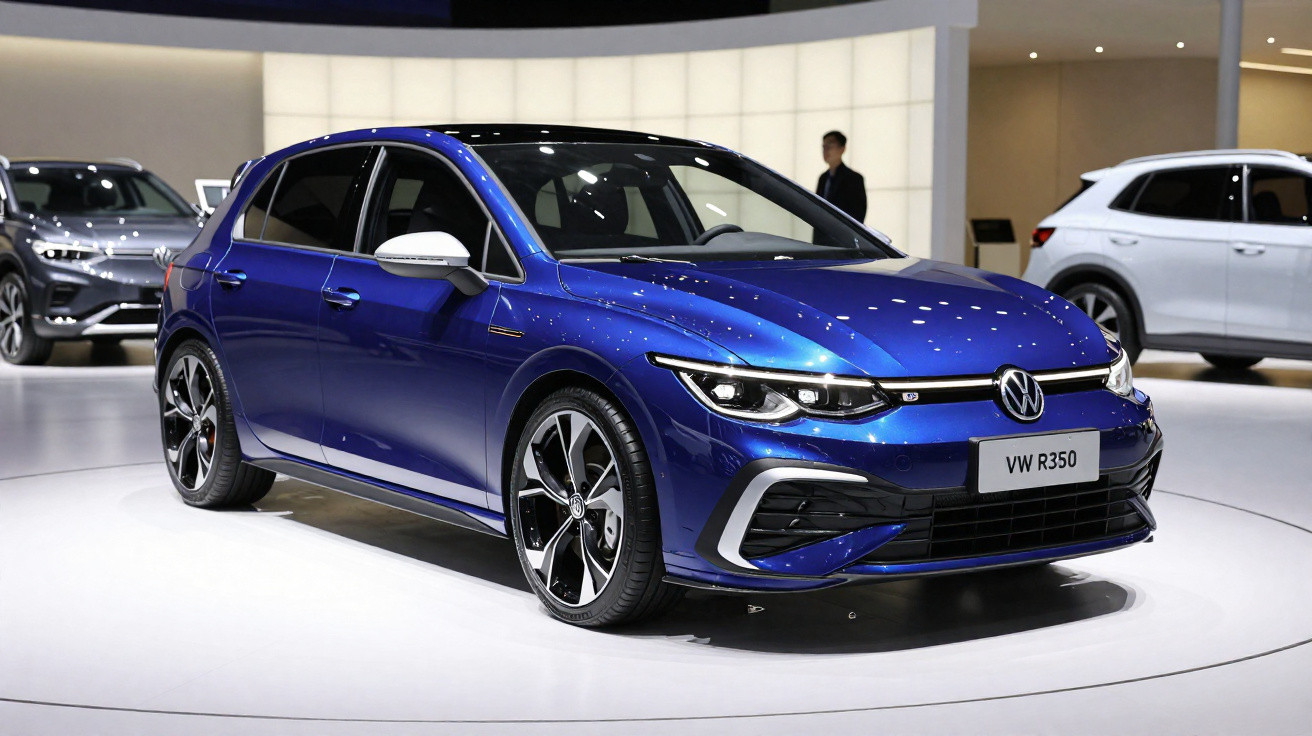
As the saying goes, “the best is saved for last”. Amid an offensive heavily defined by electrification, Volkswagen has still made room for a model aimed squarely at the hearts of petrolheads: the Golf R350 (name still to be confirmed).
It is positioned as the most extreme interpretation of the German hatchback, with the real surprise potentially sitting under the bonnet. For now it is only talk, but signs suggest it could use the same engine as the Audi RS 3: the iconic 2,5-litre, turbocharged inline five-cylinder (EA855) that bows out this year.
It would not be the first time Audi’s five-cylinder found its way into another Group brand’s model: CUPRA has already produced a second run of the Formentor VZ5 with this engine. If it happens again here, it could result in the most powerful production Golf ever.

Comments
No comments yet. Be the first to comment!
Leave a Comment