
The sacrifices we’ll make for a great drive
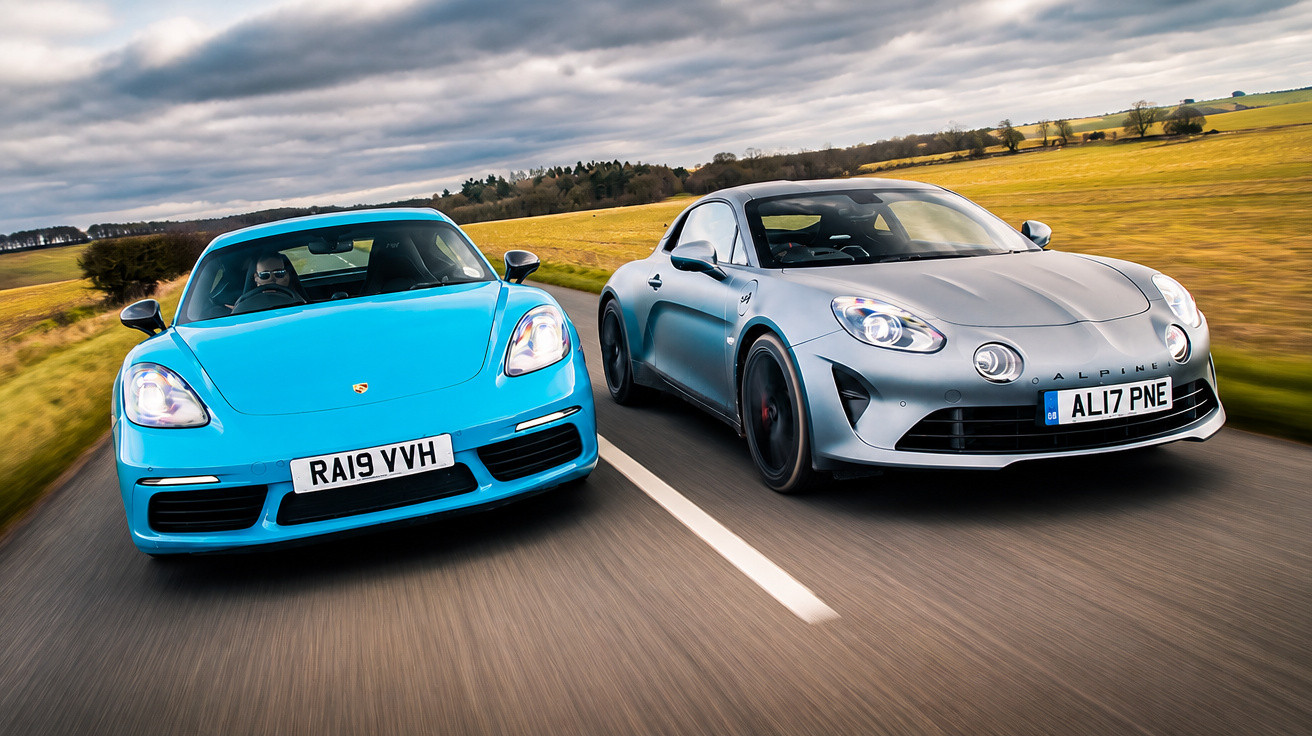
You like driving, don’t you? So do I. The real question is what you’re willing to give up to get the experience you want: luggage room, fuel use, day-to-day practicality, or the cost of keeping it on the road. Everyone draws that boundary in a different place, which is why we all end up in different cars. Still, one point is hard to argue with: if you can make a two-seater work, Porsche and Alpine both know how to build a good one.
Alpine A110S: what all those extra ‘S’ bits bring
This is the Alpine A110S - the S version with all the Ss: keener, firmer, quicker, and more stoppable. The 1.8-litre turbo gains an extra 40bhp, the torque spread is broadened, there’s an active sports exhaust, and high-performance brakes come as standard. Tyres are 10 mm wider at both ends, the springs are new, the anti-roll bars are stiffened, the suspension sits 4 mm lower, and the ESP has been recalibrated. In other words: the whole funfair.
[node:field_carousel-themed]
- Words: Ollie Marriage // Photography: Jonny Fleetwood*
Porsche Cayman T: more ‘S’ than ‘T’
Then there’s the Cayman T. I tried to come up with a neat string of Ts, but I came up short - because, really, this is another helping of Ss. Think of it as a base Cayman fitted with the sportiest slices of the options list: suspension 20 mm lower, larger 20-inch (508 mm) wheels, dynamic engine mounts, Alcantara, and decals.
They don’t line up on price (we’ll come back to that), but they’re closely aligned in intent and attitude. Power is similar too: the Porsche’s turbocharged 2.0-litre flat-four makes 296bhp, versus 288bhp for the Alpine. The Alpine is quicker, naturally, because it’s smaller and lighter - 1,114 kg plays 1,350 kg for the chunkier German. And it isn’t really that chunky; it’s just that the Alpine is basically Veganuary on wheels.
Alpine A110S vs Porsche Cayman T on the road
Mass is the lens through which you understand the Alpine. It returns around 10 mpg better efficiency everywhere than the Cayman, punches harder off the line with a more eager, fizzier response, and it doesn’t lean so heavily on its brakes or tyres. It also fizzes across rough surfaces with a light-footed feel.
The Porsche has to graft more. There’s extra inertia to haul through at lower engine speeds, which shows up as turbo lag. Even with wider tyres (30 mm broader front and rear), it pushes into understeer earlier, and it simply feels weightier through your hands. After a back-to-back 16 km cross-country blast, it’s the Porsche that seems to be holding its side and wheezing.
Well - kind of. Judge the Cayman T on its own and it’s terrific. If you love driving and a) can’t stretch to a GT4 or b) aren’t keen on buying a used naturally aspirated flat-six, this is the Cayman to go for right now. It doesn’t float and glide with the Alpine’s delicacy, but it pays you back in other ways. The steering, brakes and gearbox have a slick, oily mechanical accuracy that makes the act of operating them a pleasure in itself. The suspension is tightly sprung, yet the damping is properly outstanding.
I’ve given the flat-four plenty of criticism before, but up top it’s smoother and responds more instantly. Keep it fizzing above 4,500 rpm and there’s little to grumble about. I step out of the Cayman after every drive with that reassuring glow that, as a day-in, day-out car, it would be a genuinely satisfying companion.
[node:fieldbigreadimageleft-themed-delta:0]
How the A110S changes the Alpine formula
I wanted to avoid leaning too hard on comparisons with the standard A110, but you can’t really understand the S without that context. What makes the regular car so lovable is the way it chose its own route: softer, more playful, happy to roll a little, and proudly individual. By tightening everything up, Alpine has nudged it towards something more orthodox.
It is, without question, quicker - and even more nimble and alert. Through direction changes it’s sensational, and the way it talks back through its chassis and steering is the best you’ll find this side of a Lotus. There’s one dynamic area where both A110s still fall slightly short: the steering could do with a touch more bite on initial turn-in, just enough to tell you it’s really dug in.
That said, the S feeds you so much information that the moment the rear axle commits to the corner - that fraction after you move the wheel - you feel it immediately. Before long you realise you can adjust your cornering style to tease out different facets of the car, and whichever way you go about it, the A110S shines.
And the engine? It’s “only” four cylinders and 1.8 litres, yet its 259bhp/tonne power-to-weight ratio comfortably clears the Cayman T’s 219. It’s also the nicer unit to work with. It’s not entirely free of lag low down, but it’s cleaner and smoother, and once you’re past 5,000 rpm it’s clearly quicker than the standard A110 as well as the Cayman T.
Add a raspier top-end soundtrack to the extra shove and, for the first time, there’s a real incentive to let it run to the red line - even if a cut-out below 7,000 rpm isn’t exactly headline material. The Porsche will spin another 500 rpm if that’s important to you. It shouldn’t be.
Neither engine is truly unforgettable. Porsche has recently confirmed the Cayman GTS is now offered with a detuned version of the GT4’s 4.0-litre flat-six. That ought to inject some excitement back into the Cayman - while also underlining, for anyone who can’t reach its £64k asking price, how much the flat-four dulls the Cayman experience.
Still, the Porsche at least gives you a manual gearbox - and it’s a very good one. In the Alpine, you’re confined to the seven-speed twin-clutch. It’s decent enough, and hitting the Sport button on the steering wheel not only switches the dash graphics but, more importantly, tightens up the drivetrain. Just avoid the press-and-hold for Track mode - the arcade-game instrument display is simply off-putting.
[node:fieldinlinegalleries-themed-delta:0]
Cruising about? The Porsche suffers with more tyre roar, but otherwise it comes across as the more grown-up and relaxed car. In the Alpine, you’re constantly aware of the road’s texture; it gets jostled by broken tarmac and crosswinds and generally feels busier.
Practicality, cabins and price
If this contest were purely about driving, the Alpine would take it. But we’re back to the opening point: what you’re willing to sacrifice.
The Alpine’s two boots add up to around half the Porsche’s carrying capacity. The cabin is tighter, and the infotainment system is infuriating to use. The driving position may suit you perfectly, but I’d personally prefer less tilt away at the top of the steering wheel and a seat base that supports more of my thighs. The materials are fine - but look at what it’s being measured against. The Porsche’s interior is difficult to criticise: you climb in, everything behaves as you expect, and it feels spot-on for a car costing £51,145. Just don’t go looking for many treats. A Fiesta Zetec turns up with more gadgets and trinkets.
The Alpine sits at £56,810 - almost exactly £10,000 more than the base car. It’s been changed more fundamentally than the Cayman T (which is a seven grand step up), but it also sheds a little of the standard Alpine’s special charm. Put simply, as an everyday coupé, this is only the second-best Alpine.
And here it’s facing the best Cayman. For the first time, the Alpine loses.
Comments
No comments yet. Be the first to comment!
Leave a Comment