
A hundred and eleven years ago, electric cars were thriving.
In major cities such as London and New York, they outnumbered piston-powered machines. Electric drive had been fashionable since the late 1800s: quiet, free from the choking exhaust of internal combustion and, unlike horses, not prone to depositing surprises on the roadway. For urban duties, battery-powered carriages were a neat fit. Yet they were hamstrung by the same complaints we still obsess over now: limited range, inconvenient charging, and higher prices than contemporary mass-produced engine cars. Even so, a few people could see what electricity might become. They stuck with it, chasing that literal electric buzz of moving electrons. Above all, one person pushed harder than most: Thomas Alva Edison.
Edison, batteries and the Bailey Electric Phaeton
Edison - inventor, technological disruptor and all-purpose genius - was devoted to two things: the countless ways to control electricity, and relentless work. Make that three: he also had a taste for ‘Vin Mariani’, a Bordeaux infused with coca leaves, which may go some way towards explaining both his prolific imagination and persistent sleeplessness. Somewhere between being slightly fizzed on cocaine-laced tipple, he still found time to create the modern lightbulb, the phonograph, and the foundations of the motion picture industry, alongside a long list of everyday gadgets - including several kinds of battery. And it’s that fascination with batteries that matters most here.
Calling Edison a trailblazer is easy. For a while he employed a certain Nikola Tesla (yes, that one), before the partnership fell apart and fed into the ‘war of the currents’, where the pair battled over which sort of electricity (AC for Edison, DC for Tesla) would energise the world. But his work on lighter, more effective rechargeable batteries is what gives him particular relevance to today’s car world - especially as we stood in 2021.
The story runs like this. A great deal of industrial progress can be traced back to Edison’s stubborn streak. Despite a long-standing industrial friendship with Henry Ford, he remained unconvinced by internal combustion. The two even collaborated on an electric starter for Ford’s Model T - a device that, with delicious irony, helped finish off the electric car by removing the old, awkward hand crank.
True to form, in 1898 Edison created a more efficient alkaline storage battery (described then as an ‘accumulator’) and became convinced it could transform the electric car business. By 1909, the Edison Electric Company had become a major supplier of batteries for everything from submarines to phonographs, railways and mines - as well as for S.R Bailey and Company, maker of the Bailey Electric Phaeton. That car claimed a 100 miles range. Given that many electric cars of the era managed 20-ish, it was a bold statement, and Edison wanted to demonstrate it.
So, on 17 September 1910, he set off to drive an electric car 1,000 miles in an auto endurance competition, aiming to prove the credibility of battery power.
This was no spur-of-the-moment jaunt. The road tour began at the Touring Club of America at Broadway and 76th Street, New York, wandered through the countryside, then finished with a climb up Mount Washington in New Hampshire before heading back. Along the way, the basic Phaeton would be recharged using waterwheels and coal-fired generating stations. With a potent two and a half horsepower on tap, it had to haul a one-tonne Bailey across whatever the landscape demanded. Charging stops needed careful planning, and range had to be managed with restraint.
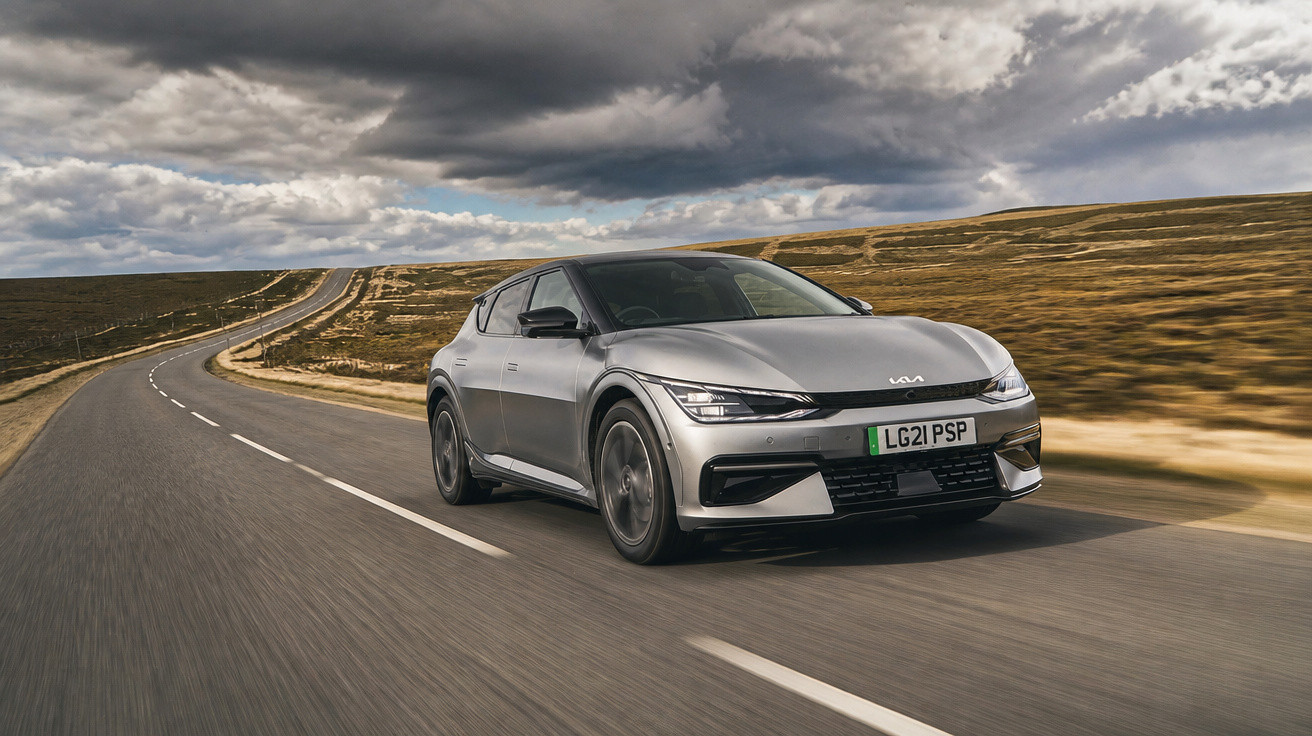
Re-running Edison’s 1,000 miles in a Kia EV6 (2021)
All of which is on my mind as I stand on the top of the Spittal of Glenshee in Scotland, next to an electric car with not much range left - and no easily reachable charge point. Because the idea is disarmingly straightforward: recreate Edison’s 1,000-mile odyssey in a modern electric car and find out how far we’ve progressed. To test whether Edison was right more than a century ago - and whether we’ve spent over 100 years exploring a fascinating but ultimately doomed offshoot of personal transport.
A quick search revealed that the Glenmorangie Distillery sits 500.1 miles from my front door, a neatly fitting (and entirely spurious) nod to Edison’s enthusiasm for alcohol. The Cairngorms could stand in for Mount Washington, and the A9 for the roads of New Hampshire. Easy.
Photography: John Wycherley
[Carousel: themed]
And yes - the shortage of watts is entirely my doing. Whether you’re burning pure petrol or using modern electricity, using the performance available means consuming more of it. And I’ve been enjoying this Kia EV6 with real enthusiasm because… well, because it’s excellent.
It also suits this experiment. The EV6 is part of the brand-new wave of electric cars in 2021 - a scientific bookend to the Bailey - with 800V charging, 300+miles of range and 321bhp. Yet unlike Edison’s phaeton, the EV6 is genuinely entertaining to drive, despite weighing roughly twice as much. Heavy, yes. Different, absolutely. But blasting along the roller-coaster road that threads through this part of the Cairngorms is better than you’d expect. Oddly, I don’t miss the soundtrack, because the scenery is loud enough.
This is clearly not the usual habitat for an electric car - the opposite of urban life and modern neatness. It’s a prickly, uncompromising place of hard-edged land and gentle skies, with the horizon keeping watch between the two. And the tarmac reaches out like one long, crooked finger connecting them. A driver’s road - in what shouldn’t really be a driver’s car.
The trip began strongly. Leaving home on a full charge was effortless, and the first 100+ miles down the A1 let the Kia settle into its soft hum and relaxed stride. Wetherby services delivered a handy top-up and a morning coffee, with a stop no longer than the 20 minutes I might normally take anyway. Next came Gretna Green and some 350kW chargers, where the EV6 was shovelling electricity into its battery at roughly 50 miles every five minutes. Perth delivered the same, and later we repeated the exercise at another late-night services - this time using a slower 50kW charger, purely to see what it would do.
Sure, the chargers weren’t always in ideal places (no shelter from the weather, nowhere to sit except in the car itself, a faint possibility of mugging and/or being forced into conversation with keen EV owners). But if the future of long-distance EV travel means a 15–20 minute stop every two and a half hours, that hardly feels like a hardship. At the time, I thought: this is going to vindicate Edison. Electric cars really are the future.
The EV6 itself reinforced that idea again and again. With 800V charging, it can handle higher voltages with lower current, which helps stop rapid DC charging from overheating. The cables can be thinner, saving weight. And while the concept isn’t, on its own, a total revolution (good battery management can charge the more common 400V systems extremely well), put an 800V car onto the biggest rapid charger you can find and it will inhale electricity like a supercharged Henry Hoover - without turning its batteries into a fireworks display. Add in the car’s layers of tech aimed at stretching range, and you get that familiar electric calm that makes EV cruising so attractive.
More surprising is how keen the EV6 feels once the roads start to misbehave. Four-wheel drive and a low-mounted battery give it solid grip and reasonable feedback. You can sense what it could do. Push beyond the safe edge of traction and the nose drags itself through, not unlike a slightly overweight Nissan GT-R. Honestly. On these heaving, blind Scottish military roads it felt composed, secure and unexpectedly enjoyable.
Not flawless, though: lift mid-corner or otherwise disturb its stance and the weight makes itself known. Likewise, get too brave with braking and you run straight into the immovable maths of mass and speed, and the resulting unwanted puckering. Mainly because even a small excursion beyond the margins would be… quite bad.
Still, heading out across rural Scotland on a crisp autumn day in something even mildly fun is worth lingering over. I did - right up until I remembered we still had a serious amount of driving ahead. The EV6 ironed out the final hours, then we charged again at a truck stop after digging through my collection of charging apps. Next morning brought a quick stop at the distillery in Tain, more photos and a bit of touring, with range in hand. Truly, it all felt effortless.
Naturally, that was the moment it unravelled.
When charging fails: broken units, queues and stress
It’s the relief that gets you. We knew the hotel booked for the second night had multiple on-site chargers, so the moment we rolled through the entrance I started to relax. Then it went sideways. To shorten a long story - and an even longer drive - the hotel chargers simply wouldn’t communicate with the car.
With more photography planned for the following morning, and no charging available at the Spittal of Glenshee, we diverted into Pitlochry to hunt for a working point. There were plenty, offering different power outputs. The problem was that the only unit (of eight) actually functioning was already in use. So we left the car plugged into a different charger at another spot by the station two miles from the hotel - a slow charger - and planned to collect it the next morning.
We started shooting at dawn, then began the run back south. A top-up in Nairn worked, but the charger’s screen was so faded the only way I knew it was charging was by looking at the car. Perth was fine. Gretna Green - so perfect on the way north - was jammed, with several cars waiting their turn.
That grim little game of ‘how long will this take?’ pushed us onwards to Todhills Southbound services, where the charger sat broken and abandoned. Now scraping electrons from the bottom of the battery barrel, we had to detour into nearby Penrith, losing another hour to traffic. A 50kWh charger at Booths supermarket was located, but it was occupied by two EVs that seemed determined to charge all the way to the full one hundred point zero per cent.
And that’s where it turned strange. All at once, the car park filled with electric cars looking desperate. After waiting 30 minutes, I reversed the EV6 into the space - and then about half a dozen more cars arrived and parked facing me. One after another, the drivers walked around, quietly establishing that everyone understood their position in the queue. Then they climbed back into their cars… and waited. While I sat in mine… and waited.
The EV6 is perfectly happy taking on charge, but on a relatively modest 50kW unit it still takes time. And I needed 80 per cent charge or more to reach the next stop. So I sat there, feeling the gaze of hungry Zoes on my every movement - tracking me like meerkats whenever I so much as shifted in my seat. I doubt Thomas Edison ever had to endure that.
At that point I began adding it all up. On the way north, I estimate EV touring cost us roughly 90 minutes compared with doing the same run in an engine car - and you could argue the extra rest was sensible on a 10 hour journey. On the way back - including an additional stop at Markham Moor - we lost about another five hours. Add the constant stress of keeping enough range in hand for Plan B charging, plus the roulette of arriving to find queues or broken kit, and the whole experience started to feel precarious.
Was it just bad luck and bad timing? Possibly. Could I have planned more carefully, or trusted the car’s range with more confidence? Quite possibly. But it happened.
The broader problem is that the infrastructure sits on a knife-edge. Drivers without home charging will depend on public chargers, and anyone covering longer distances needs to be sure that a charger will work when they arrive - and at a speed that makes sense. The cars, too, must be able to exploit the fastest chargers by having the right onboard capability.
In the end we proved Edison was right about electric cars: they function. But if 85 per cent of the time everything is straightforward, it’s the 15 per cent when it isn’t that stains your view of EV practicality and triggers anxiety. Most of my charging is done at home, and I plan long trips. That’s fine. When it goes wrong, it’s unnerving.
Edison finished his 1,000 miles, showing an electric car could go toe-to-toe with the ICE cars of his era. We could have comfortably covered the same distance in a couple of days, and with far more comfort. Yet Edison’s electric vision didn’t last: by 1915 Bailey and Edison had stopped building their electric phaeton, and Edison’s attention shifted elsewhere. The remaining electric cars limped on until around 1921, as Ford’s Model T brought cheap ICE cars to the masses and sounded the death knell for electric motivation.
Which means there’s still work ahead. The familiar line remains true: electric cars aren’t on the way - they’re already here. Government mandates will force the direction of travel, whether we like it or not, and cars like Kia’s EV6 are the benchmark we should be aiming for - a new kind of EV.
That future is not the misery petrolheads may fear. No, EVs won’t fit absolutely everyone in every situation, but most people could live with one - especially with home charging. Range and charging performance are now there. The emotional side is catching up too: there will be electric cars that are fun to drive without the usual compromises. Even list prices are trending down; as the upfront cost of batteries per kWh falls at an unprecedented pace, more affordable EVs will arrive soon enough. And that’s before the next steps in battery technology - the very area where Edison was leading the way back then.
A journey like this, difficulties included, leaves me even more optimistic. Use an EV for the dull bits, and keep the truly interesting fossil fuelled cars on the road. As EVs improve, the charging network we deserve will follow, and the early-adopter headaches will fade. We’ll get there - which means that, after 110 years, Edison’s dream of an electric future will, at least in part, become the present.

Comments
No comments yet. Be the first to comment!
Leave a Comment