
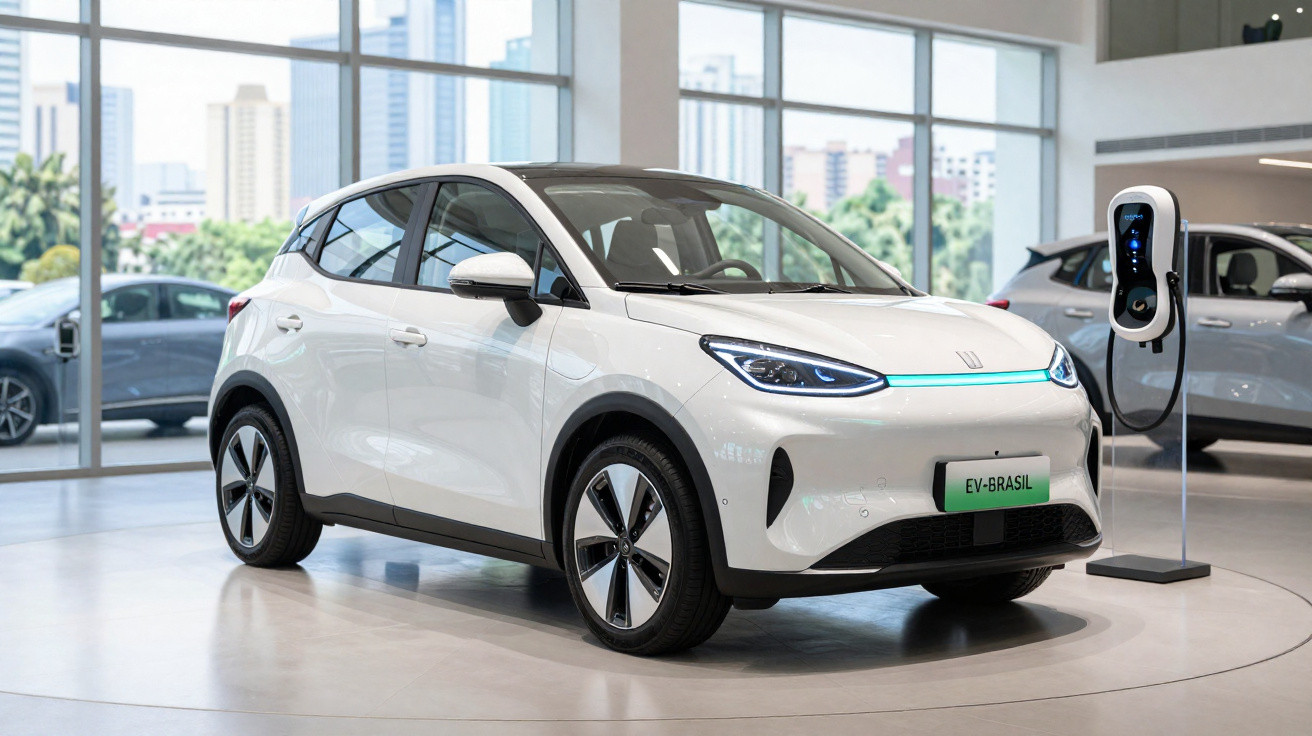
Electricity is getting pricier, and so is filling up - yet the prices of some electric cars are dropping surprisingly sharply.
For a long time, electric cars were seen as tech toys for high earners. That picture is changing: more and more budget-friendly models are arriving, especially aimed at city driving and everyday commuting. Makers are refining the technology, sharing components and platforms across ranges, and competing hard on price. For cost-conscious buyers, a new category is opening up: practical EVs that no longer feel like luxury purchases.
Why cheap electric cars are suddenly taking off
A few years ago, getting into the EV market often meant spending well over €30,000. Now the landscape looks very different. Stronger competition from China, simpler vehicle architectures and more precisely targeted trim levels are all pushing costs down. At the same time, EU emissions policy is pressuring manufacturers to put as many battery-electric cars on the road as possible - and not just high-end SUVs.
Affordable EVs are mainly achieved through smaller batteries, compact bodies and a strict refusal to add luxury extras.
Anyone willing to do without a panoramic glass roof, massage seats and a high-end sound system can now get a car that drives quietly, costs little in day-to-day use and, in some cases, is priced similarly to a well-specified petrol supermini.
Top 5 of the currently cheapest electric cars
1. Dacia Spring – the city price-cutting champion
In Europe, the Dacia Spring is widely considered one of the lowest-cost ways to drive electric at all. It is aimed squarely at people who simply want the cheapest possible way to get from A to B. The entry-level version - often called “Essential” - cuts back in many areas, but it fills that exact niche.
- Power: around 70 PS
- Battery: about 24 kWh
- Range: roughly 220 km WLTP
- Price level: below €17,000 without incentives (depending on the market)
Inside, it feels basic: hard-wearing materials rather than anything premium. A central screen, reversing camera or more stylish looks are often only available at extra cost or on higher trims. In town, however, the concept works: the Spring is small, nimble, easy to park and sips electricity.
One clear downside is rapid DC charging, which is often only available as an option - or not offered at all on the cheapest version. If you do longer journeys, you will need to allow more time at chargers. In return, running costs remain manageable, which makes it a strong fit for a second car, short commutes and car-sharing fleets.
2. City EVs from China – lots of kit for not much money
Alongside the Spring, several Chinese city-focused EVs are now competing at similar prices while often offering more equipment. A typical example is a compact five-door measuring about 3.60 to 3.80 metres in length, with plenty of driver-assistance systems and a large central display.
Typical headline figures for these new China-made EVs:
| Feature | Typical value |
|---|---|
| Power | 70–110 PS |
| Battery | approx. 30–40 kWh |
| Range | 250–330 km WLTP |
| Equipment | Infotainment, reversing camera, assistance systems as near-standard |
These cars stand out by packing a lot of technology into an entry-level budget. Touchscreens, connected services and often even LED lighting and driving aids are usually included. For buyers who deliberately want a small car but do not want to give up comfort features, this is becoming a genuinely appealing option.
The real battle at the budget end is now being fought between established brands and new challengers from China.
3. Electric superminis – the practical middle ground
Between pure city cars and expensive compact SUVs, another group has become firmly established: classic superminis offered with both combustion engines and electric drivetrains. Examples in this space include cars in the mould of a Renault Zoe, Opel Corsa Electric or Peugeot e-208.
Prices are usually a little higher than the absolute bargain-basement segment, but you often get:
- usable everyday ranges of around 300 km
- a more comfortable suspension set-up and better noise insulation
- more safety equipment and airbags
- rapid charging at 100 kW or more
If you regularly travel further afield, this category tends to be the more balanced choice. The cars remain compact but can serve as proper main vehicles. With discounts, residual-value deals or approved-used programmes, some models can end up priced close to the cheapest city EVs.
4. Affordable compact SUV EVs – a lot of car for the money
Even in the booming SUV market, more and more electric models are appearing at comparatively moderate prices. Compact crossovers from Asia in particular can sit well below premium SUV pricing while still offering the look many buyers want.
Common characteristics of these models include:
- a higher driving position and a bigger boot
- battery sizes from 40 to 60 kWh
- ranges from 300 to 420 km WLTP
- Price: often just above the €30,000 mark before any incentives are deducted
These vehicles tend to appeal to families looking to replace a traditional family hatchback. In some markets, especially stripped-back base versions already exist, designed specifically to dip under the psychological €30,000 line. If you are flexible and do not insist on the newest model year, dealers sometimes have heavily discounted demonstrators available.
5. Minimalist commuter EVs – stripped back to the essentials
Right at the bottom of the cost scale, you will find EVs that can feel almost like motorised smartphones on wheels: extremely compact, narrow seats, simple cabins and few physical buttons. They are aimed at singles, students or commuters who drive the same route every day and do not need to carry much.
The priorities here are:
- low weight instead of a high-tech suspension set-up
- small batteries with 150–200 km of real-world range
- low purchase prices and very low operating costs
In exchange, build quality and comfort are typically basic. But if you mainly drive in the city or in the commuter belt around it, you can save a substantial amount of money - while also reducing your exposure to petrol price swings.
When does a cheap electric car actually make sense?
The sticker price is only one part of the calculation. Electricity, insurance, servicing, tyres and battery ageing all matter too. With cheaper EVs in particular, maintenance can be fairly straightforward because oil changes, timing belts and exhaust systems simply are not part of the equation.
If you drive under 80–100 km a day and can charge at home or at work, you will usually benefit greatly from a low-cost EV.
Key questions to ask before deciding:
- How many kilometres do I drive each year?
- Do I have a dedicated parking space with a way to charge?
- Do I need the car for holiday trips, or only for regional use?
- How long do I expect to keep the vehicle?
If you do a lot of long-distance driving, a very small battery will quickly feel limiting. In that case, spending more on a model with a larger battery can be the better fit, even if the entry price is higher.
Incentives, residual value, risks: what buyers should watch
With many inexpensive EVs, government incentives, manufacturer discounts and dealer promotions can be decisive. In some countries, subsidy schemes are ending, changing or being reintroduced, so the market remains in flux. That is why the official list price rarely matches the final amount on the invoice.
At the same time, there is uncertainty over how residual values will develop. Some experts expect basic city EVs to lose value faster, because newer and technically superior models keep arriving. If you are unsure, leasing or a subscription can be worth considering, as the resale risk sits with the provider.
It is also worth checking the battery warranty closely. Many manufacturers offer eight years or a certain mileage limit on the battery. Buyers should read exactly what remaining-capacity percentage is covered. With very cheap import models, it also pays to look carefully at service partners and the size of the repair network.
Practical examples and key terms explained briefly
A typical situation might look like this: a family living on the outskirts of a large city drives 40 km a day to work and back. Their old petrol car uses eight litres per 100 km and fuel costs keep climbing. A low-cost EV with a small battery can easily cover that daily distance, charge overnight on a home wallbox and cut energy spending by hundreds each month. For the annual holiday, the family can hire a larger car - and overall the sums often come out in their favour.
Important terms in this context:
- WLTP range: A standardised figure measured under set conditions. In real life, range is often lower depending on temperature and driving style.
- AC charging: Alternating-current charging, typically via a wallbox or public post at up to 11 or 22 kW. More than sufficient for overnight charging.
- DC rapid charging: Direct-current charging at rapid chargers, often 50–150 kW or more. Ideal for long trips, but sometimes limited or unavailable on the cheapest EVs.
Keeping these points in mind can help you save a great deal with the new wave of budget EVs without making unreasonable day-to-day compromises. What matters most is being honest about your own driving pattern - then a cheap electric car becomes a smart move towards electric mobility rather than an expensive mistake.


Comments
No comments yet. Be the first to comment!
Leave a Comment