
On a balmy Saturday on the outskirts of Phoenix, the Harley faithful had already taken over their patch of the diner car park: black leather, exhausts as thick as a fist, and a couple of sun-reddened necks. Close by sat a Honda Gold Wing, so immaculately polished it almost looked self-conscious.
But across the road, the scene felt oddly new. Riders kept filtering into a retail-park dealership that most people over 40 would never have pegged as the main draw. Young blokes in trainers. Parents in jeans and hoodies. A beaming retiree still wearing his golf shoes, tapping at a dash display as if he were buying a new SUV.
The sign above the entrance wasn’t Harley.
It wasn’t Honda.
And yet, by the numbers, this badge now sits at the top of American motorcycle sales.
The strange part is how many riders still don’t quite buy it.
How a “non-traditional” bike brand quietly took the crown
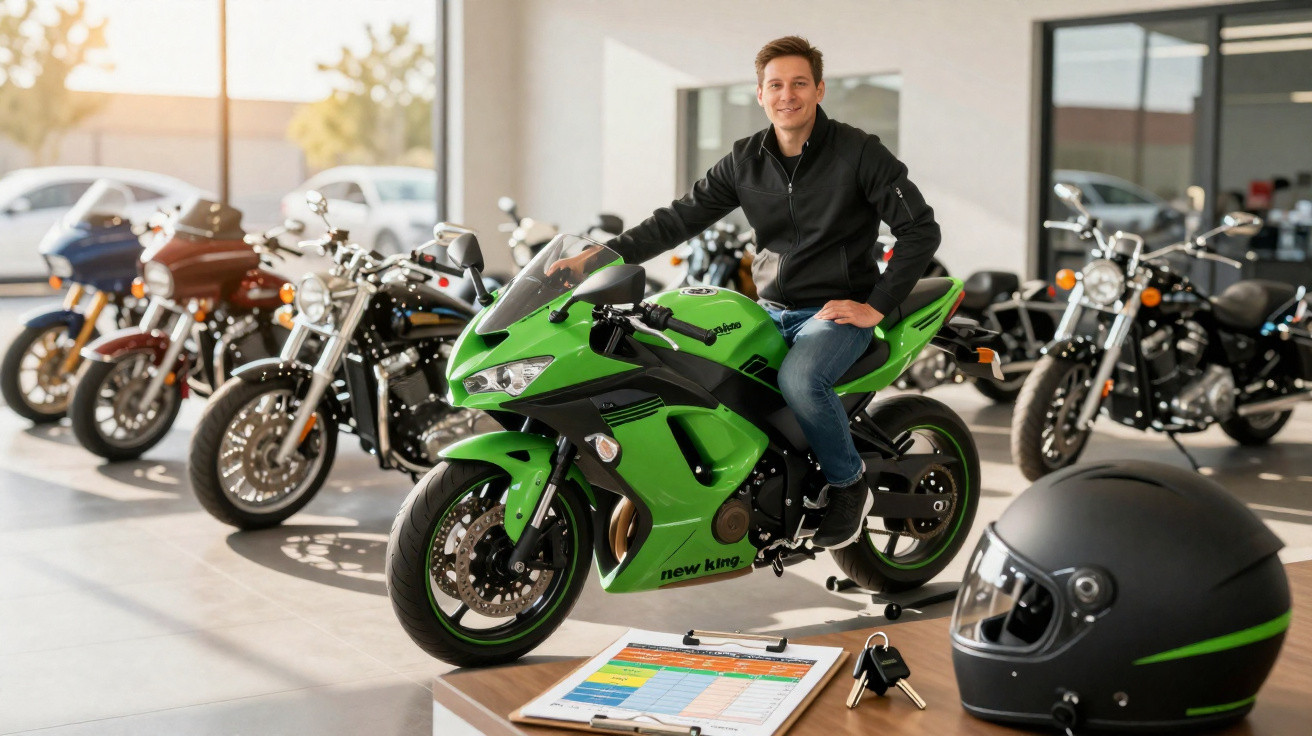
Step into almost any suburban powersports shop right now and watch what customers are actually putting their names to. There are dirt bikes, side-by-sides, ATVs-and, mixed in among them, rows of road bikes and adventure machines that are shifting in greater numbers than the old chrome staples. The sales tables are blunt: Kawasaki has become the top-selling motorcycle brand in the United States, nudging ahead of the household names most people mention first.
A name that once sounded like it belonged only on green track replicas has turned into a default option for a huge slice of riders. First-time commuters, experienced hands coming back to biking later in life-Kawasaki keeps appearing on registration paperwork.
Dealers tend to describe the pattern in near-identical terms. Someone walks in saying they’re “just looking”, with a used Harley in mind. They hop on a Kawasaki Ninja 400 “just to see how it feels.” Twenty minutes later they’re working through the figures, noticing the monthly repayments sit in the world of normal life rather than fantasy-garage spending.
Or it’s a mum in her 30s who hasn’t ridden since university. She intended to pick up a used Honda, but gets pointed towards a Versys-X or Z400 instead. Light weight, approachable performance, ABS, up-to-date electronics. By the time she clocks that this isn’t one of the “big two” she grew up hearing about, she’s already grinning under her helmet on the test ride.
That signature green machine that used to scream “boy racer” is now, quietly, becoming the family’s first motorbike.
The appeal isn’t flashy, but it works. Kawasaki has landed right in the overlap between price, performance and everyday usefulness. There are friendly small-capacity bikes priced below many used cruisers, mid-range models that deliver far more than you’d expect for the money, and big adventure bikes that feel like full-size touring kit-without the ego tax.
This isn’t driven by mythology or barstool status. It’s about spreadsheets, insurance quotes and the relief of sitting on something that doesn’t frighten you-financially or physically. In truth, hardly anyone buys a motorcycle in 2026 without at least opening their budget app.
In that quiet, slightly awkward moment, Kawasaki tends to come out on top.
Why riders are quietly drifting from Harley and Honda to Kawasaki
Spend an hour in a showroom and you’ll hear the same line repeatedly: “I want something I can actually live with.” That’s where the armour starts to crack for Harley-Davidson and even Honda. The aspirational cruiser and the bulletproof touring sofa still have loyal buyers, but plenty of people now want bikes that feel light, straightforward, and not intimidating at the petrol station or the workshop.
Kawasaki’s case is almost deliberately plain. Sensible fuel economy. Seat heights that don’t demand gymnastics. Usable power that’s as happy doing a supermarket run as it is carving a mountain road. And overall ownership costs that feel closer to running a second-hand Corolla than funding a midlife-crisis statement.
A salesman in Texas put it neatly with one example. A customer in his late 40s arrived determined to buy his first Harley-he’d even settled on the colour. Then they brought up the quote and his expression dropped-not because it was impossible, but because the dream suddenly looked like a long-term obligation with a monthly reminder.
Almost accidentally, he drifted over to a Kawasaki Z900. Similar territory for power, far less weight, and much cheaper insurance. Different attitude, sure-but when they compared a three-year loan, the gap left money for kit, weekend trips and, frankly, day-to-day life.
He still liked the Harley badge. He just wanted to ride more than he wanted to polish.
Underneath the chrome and nostalgia, the market shift is uncomplicated. Riders are prioritising flexibility over heritage. A Ninja 400 can cover the commute, do a track day, and serve as a first “real” bike for someone stepping up from a scooter. A KLR650 can cross a continent at a price that doesn’t feel like a second mortgage.
Harley remains a lifestyle. Honda remains a yardstick for reliability. Kawasaki has quietly become the default for people who just want to ride. Younger riders don’t carry the same emotional pull towards classic cruiser culture; their references are sportbikes in video games and adventure bikes in YouTube travel series.
When it comes time to sign, the question shifts from “What’s cool?” to “What fits my whole life?”
How Kawasaki built a practical empire - and what riders can learn from it
There’s a quietly effective, slightly unglamorous intelligence in Kawasaki’s range planning. Rather than chasing a single image, they’ve filled the middle with bikes that can do three or four roles competently. Small-capacity Ninjas and Z models for new riders and commuters. Middleweight Versys and adventure options for people balancing weekday streets with weekend getaways. The old-school KLR for anyone who wants to vanish onto gravel for weeks at a time.
The playbook is simple: put a “good enough for everything” choice in nearly every cc category, then set the price just below the point where it starts to hurt emotionally. Many people don’t daydream about a Kawasaki poster bike; they simply end up with one because the overall deal makes sense.
A lot of riders privately berate themselves for not going “all in” on the classic fantasy: the huge Harley bagger, the Gold Wing with every extra. In the background sits the worry that they’ve compromised. But check in half a year later and the mood is different. They’re adding miles, rather than staring at a repayment they resent.
The trap is buying for the imaginary version of you, instead of the one with children, a mortgage, and maybe a slightly grumpy lower back. Kawasaki’s climb is basically a reflection of that truth: loads of us want bikes that fit into the gaps of real life.
Most of us recognise the moment-your heart wants the poster bike, and your head mutters, “You’re the one paying the maintenance.”
Somewhere between the American cruiser dream and the Japanese touring legend, riders created a new category without naming it: the affordable, usable, no-drama motorcycle you can actually ride every week.
- Broad lineup from 300cc to 1000cc and above
Works for beginners, returning riders and long-term owners without forcing a brand change. - Value-focused pricing and running costs
Lower purchase prices, sensible insurance and dependable reliability keep riding within reach. - Real-world ergonomics and power
Set up for traffic, back roads and weekend trips-not just for showroom posing. - Strong dealer and parts network
Straightforward servicing and parts supply matter for people who ride all year. - Modern tech where it counts
ABS, ride modes and traction control on key models, without turning every bike into an iPad on wheels.
What this quiet revolution says about how Americans ride now
Kawasaki outselling giants such as Harley-Davidson and Honda on US soil doesn’t erase those brands. It simply highlights how diverse today’s riders really are. There will always be people who want the boom of a big V-twin, or the regal comfort of a Gold Wing armchair. But there’s a growing crowd whose ideal looks more like a green, middleweight bike that handles Tuesday traffic and Saturday switchbacks.
The old narrative insisted there were “real” bikes and everything else. The sales figures are telling a new story-one where the best-selling name is the one that quietly respects your time, your money, and your aching lower back.
| Key point | Detail | Value for the reader |
|---|---|---|
| Kawasaki now leads US sales | Recent market data shows Kawasaki edging past Harley and Honda in unit volume | Helps riders understand why so many green bikes are appearing on the road |
| Practical, versatile lineup | From Ninja 400 to KLR650 and Z-series, most models cover multiple use cases | Makes it easier to pick one bike that suits daily life and weekend fun |
| Cost and usability win | Lower prices, manageable power, and realistic running costs | Reassures buyers they can start-or keep-riding without wrecking their budget |
FAQ:
Question 1 Is Kawasaki really the top-selling motorcycle brand in the U.S. now?
Recent industry sales reports show Kawasaki out in front on total motorcycle units sold in the American market, particularly once you include the high-volume small- and mid-capacity models. Harley and Honda still lead in certain segments, but Kawasaki takes it on pure unit count.Question 2 Does this mean Harley-Davidson and Honda are “dying”?
No. Harley and Honda remain highly influential and profitable, backed by strong loyalty and high-margin models. Kawasaki’s growth mainly reflects how the volume market has moved towards lighter, cheaper, more versatile bikes.Question 3 Are Kawasaki bikes good for beginners?
Yes. The Ninja 400, Z400 and Versys-X 300 are commonly recommended as starter bikes thanks to friendly power delivery, reasonable seat heights and modern safety kit such as ABS on many versions.Question 4 Why are so many riders switching from cruisers to Kawasaki models?
Many riders are after something lighter, cheaper to own and easier to manage in city traffic. Kawasaki offers upright riding positions, useful wind protection on some models and pricing that feels plausible for everyday riders rather than special-occasion purchases.Question 5 Should I buy Kawasaki over Harley or Honda?
It depends on what you care about most. If heritage, sound and style are top of your list, Harley may still be the one. If you want long-distance comfort and proven durability, Honda remains a strong choice. If price, versatility and real-world usability are your priorities, Kawasaki is well worth a proper test ride.

Comments
No comments yet. Be the first to comment!
Leave a Comment