
5 February 2026, 12:31
Photo credit: A. Krivonosov
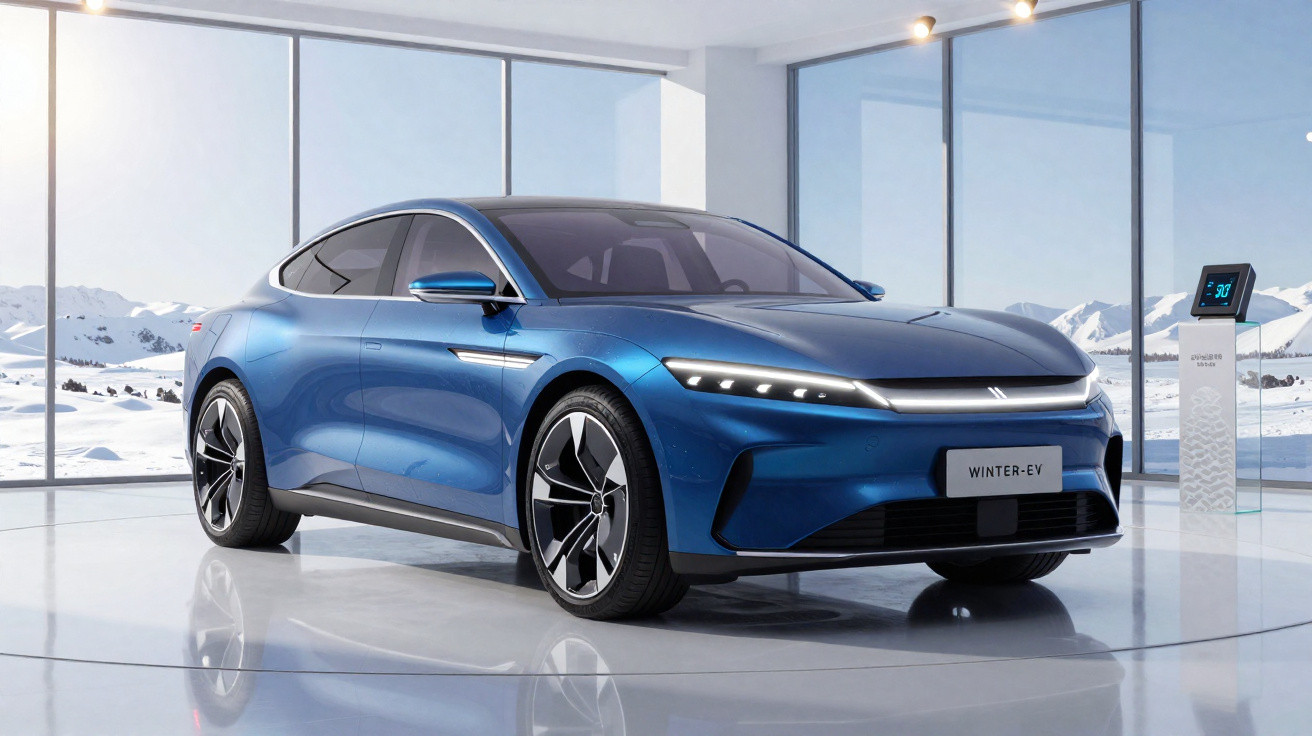
Changan has introduced a sodium-ion battery for electric cars that can operate at −50 °C.
What Changan and CATL showcased in Yakeshi
Chinese car maker Changan, working alongside battery heavyweight CATL, has taken a notable step towards making electric vehicles better suited to cold climates. In the city of Yakeshi in Inner Mongolia, the companies presented the first CATL Naxtra sodium-ion battery, designed to function reliably in temperatures down to −50 °C.
The development is aimed at tackling one of the most familiar winter drawbacks for EVs: a sharp reduction in driving range, as reported by "Izvestia".
Cold-weather performance figures for the CATL Naxtra sodium-ion battery
Compared with conventional lithium-ion packs-which can lose a substantial portion of their capacity as early as −20 °C-the Naxtra sodium-ion battery is said to cope with low temperatures far more effectively. According to the developers:
- at −30 °C it discharges three times less;
- at −40 °C it retains around 90% of its capacity;
- and it continues to supply energy even at −50 °C.
This level of cold tolerance could make complex thermal management systems unnecessary, reducing energy consumption and simplifying vehicle design.
Safety benefits and the technology’s current limits
Another key advantage highlighted for the new approach is improved safety. The sodium-ion battery is described as resistant to mechanical damage: it does not ignite or explode when drilled, sawn or crushed. That makes it particularly appealing for large-scale use, including in harsh operating conditions.
However, the technology is not without drawbacks. The CATL Naxtra’s energy density is 175 Wh/kg, which is lower than that of lithium-ion batteries. Even so, a 45 kWh pack is claimed to deliver a driving range of more than 400 km.
Looking ahead, the developers expect to raise this to 500–600 km for electric cars and 300–400 km for hybrid models. The first Changan model set to use the sodium-ion battery will be the Nevo Q05.
Testing plans and parallel development with lithium-ion
Changan stresses that the technology will initially be trialled on China’s domestic market. There are currently no plans to equip Deepal range models-being prepared for launch in Russia-with this battery.
CATL is also not moving away from lithium-ion packs; instead, both technologies are expected to progress side by side. A battery that can operate at −50 °C could prove to be a turning point for electric vehicles in countries with cold climates.
If the technology delivers on its stated real-world performance and makes economic sense, EVs may stop being seen as “seasonal” transport and could compete on equal terms with internal combustion engine vehicles even in northern regions.
Earlier, 32CARS.RU reported that electric car owners are more satisfied with their vehicles than everyone else.


Comments
No comments yet. Be the first to comment!
Leave a Comment