
[node:field_carousel-themed]
Laurent, thank you for joining us. What’s your first year at the helm of Alpine been like?
It’s been thrilling, and it’s flown by. I’m energised and genuinely excited. There’s plenty of work to do to strengthen things from within.
You started out in engineering - how are you finding life as the business lead?
That’s exactly why I chose to leave my previous role and take an MBA. I enjoy bringing the two worlds together. There’s nothing quite like drawing on the fundamentals of my engineering background and then applying them in a commercial setting.
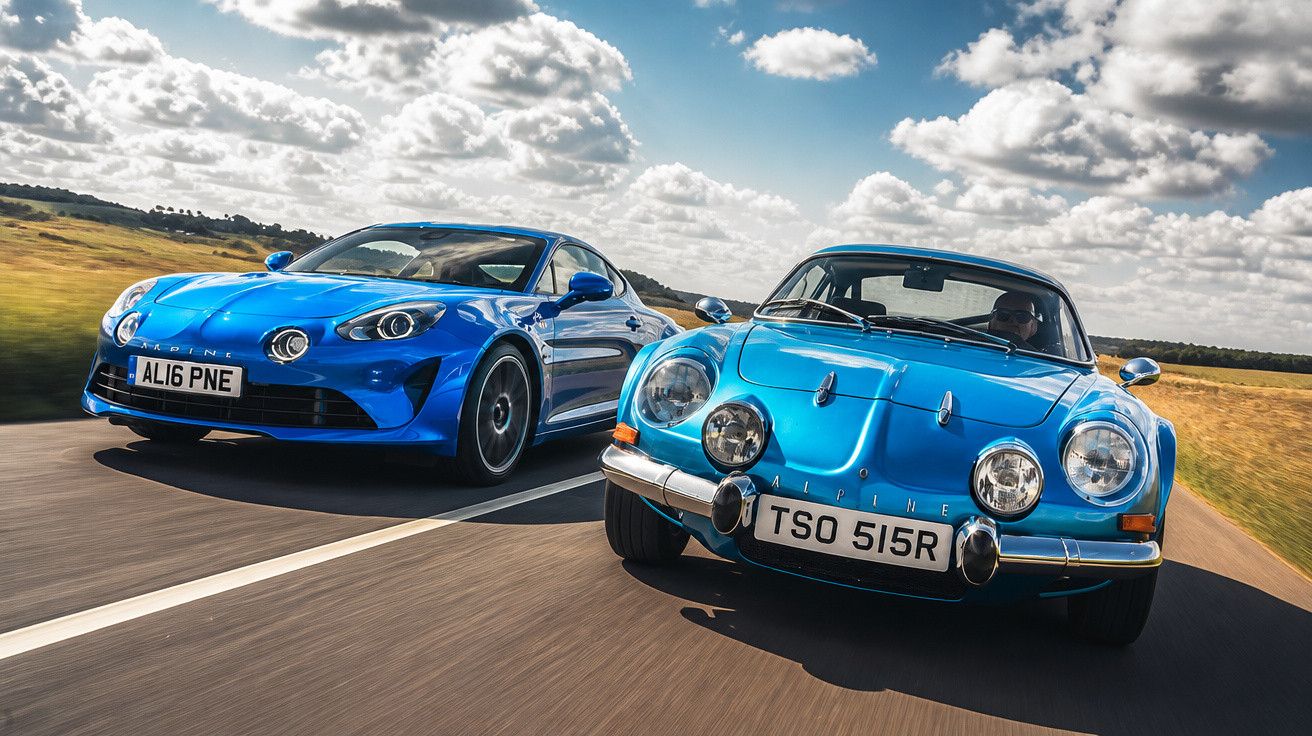
Are you satisfied with the A110? What comes next for that model?
We’re rolling out major updates - not in outright performance, but in equipment and functionality. Going further isn’t realistic because the car’s remaining lifecycle is short, and the investment required for the improvements we’re capable of delivering wouldn’t generate a good return on investment. In fact, it would be a negative ROI. So instead we’re focused on upgrading everything we can that genuinely adds value for the customer.
[node:fieldbigreadimageright-themed-delta:1]
The Legende GT sold out at roughly 300 cars in five weeks, and the latest A110 generation is receiving outstanding customer feedback for its new screen and the reworked chassis. Those sorts of changes cost far less than, say, engineering a convertible. We believed we’d cracked the A110 when it launched, but we’re continuing to refine it.
From a sales perspective, I’m pleased with the trajectory. Volumes are rising, and the car merits a bigger slice of the market. Germany and the UK are crucial territories. UK sales doubled last year, from 100 to 200 - modest numbers, but meaningful in the sports car segment. Our goal is to double again this year. In the UK, we’ll expand from nine [showroom dealers] to 16 by the end of 2022.
Have you noticed journalists comparing the new £190,000 Maserati MC20 to a ‘600bhp Alpine A110?’
No, I hadn’t - but thank you! I did read an article calling Porsche’s new electric Macan “a rival for the Alpine GT X-Over EV” - and I thought, “that’s interesting…”
[node:fieldbigreadimageright-themed-delta:0]
What’s the reaction been to your forthcoming electric crossover? For a young brand built around lightweight sports cars, that’s a tough PR challenge…
[Customers] have been very positive because they recognise it will broaden our playing field. The A110 is relatively niche - it’s a two-seater with limited luggage room - so it takes a particular kind of buyer, and it won’t suit everyone. Expanding the line-up makes sense, because a five-seater with more of an SUV shape will clearly meet more people’s day-to-day needs.
Yes, it will be heavy because it’s electric, but we’re going to integrate a lot of state-of-the-art technology - starting with active torque vectoring. Trust me, I’ve driven the new car. With the system switched off, it behaves like many EVs on sale today. If you turn in too sharply, you start wondering whether it might tip over. Switch the ATV on and it simply stays flat through corners. It’s striking - the car feels as though it weighs 1,000kg less.
Whatever category we build in, an Alpine must be agile and sharp. Don’t worry - this will still be an Alpine.
Tell us about the partnership with Lotus. Is the updated A110 a response to the Emira?
Lotus and us quickly saw that we face similar constraints and similar opportunities. We have to deal with a future in which cars will be electrified and, as a result, heavier. As Colin Chapman said, if you want speed, add lightness - and Alpine follows the same thinking. From a technology standpoint, you can offset mass, and with electricity you benefit from instant torque. We’ve come together to study that challenge.
By pooling our volumes, the investment becomes worthwhile, while still avoiding cannibalising one another. We sit at slightly different price points, with different customer expectations, and we’re confident our sales volumes won’t be taken from each other.
There’s no chance the Alpine SportsX ‘safari’ concept will reach production… is there?
[Laughs] That was pure fantasy - all it does is add weight! But thanks to future collaboration with Lotus, we’ll be able to develop more derivatives and broader model variety over time. And before the A110 reaches the end of its life, we won’t be short of surprises…
Could you share the Evija platform with Lotus and build an Alpine electric hypercar - like the shared Rimac Nevera / Pininfarina Battista?
For now, no, because it sits well outside the needs of our customers. But I’m not shutting the door on more Lotus collaborations. Under the larger Geely-Renault collaboration umbrella, there are promising opportunities that could be explored further down the line - not only for Alpine. It’s still early days for us to be talking seriously about a hypercar, but I never rule it out.
The Alpine take on the Renault 5 EV: is your approach about reducing weight, chasing power and speed, or prioritising handling?
It must feel like an Alpine from behind the wheel. We want as much power as possible to achieve an optimal power-to-weight ratio. We’re constrained by the vehicle’s mass and by what motors and batteries we can package - it’s a balancing act. But I can tell you that, on paper, the performance surpasses the competition in many respects.
[node:fieldbigreadimageleft-themed-delta:0]
Finally, let’s discuss F1. Rebranding Renault and Alpine F1 landed perfectly as F1’s visibility surged last year. How will you use that and connect your compact sports cars with the fastest cars on the planet?
F1 gathered real momentum after 2020, when people were stuck at home; it was one of the few sports able to keep going. And people “completed” Netflix by watching things they wouldn’t usually choose, like Drive To Survive. We could see the popularity spike approaching.
At the same time, Alpine needed attention. We were asking ourselves whether Renault should remain in F1, because Renault had invested for so long without getting “bang for its buck”. It was drifting a long way from the kinds of products Renault sells.
Formula One gives us a media stage that sparks curiosity - we recorded twice as many online configurations and sales. It helps us attract interest, but we still have to convert that interest with strong products. We do have them, and more are on the way. However, we also need a narrative.
So where’s the connection between a hybrid 1,000bhp F1 car and a 250bhp sports car?
F1, like every other form of motorsport, is living through the same electrification pressures as the wider car industry. We need cleaner solutions - that’s undeniable. Right now, an EV appears to be the only route. People constantly ask, “what’s the link with Alpine and F1?”. In F1, combustion engines are as efficient as possible, and the heart of the sport is optimising the battery and electric energy. That’s also true for road cars, so what we learn in one carries into the other: how to recover energy, how to charge, and how to turn electricity into performance.
The challenges that shape a car for an F1 race are the same ones you face when trying to take an EV from London to Manchester - range. You could also argue that even ten years ago, a Renault Megane RS had little in common with an F1 car, but now there’s at least genuine powertrain synergy.
Beyond that, performance gains come from lighter materials and better aerodynamics - and we’re applying the same tools to our Alpines. On the GT X-Over, for example, we’re using the F1 aerodynamicists from Enstone to improve range by adding aerodynamic features developed by the team. That will allow us to exceed 500km of range by quite a margin.
We may even feed road-car data into the next MGU-K in the Alpine F1…
Comments
No comments yet. Be the first to comment!
Leave a Comment