
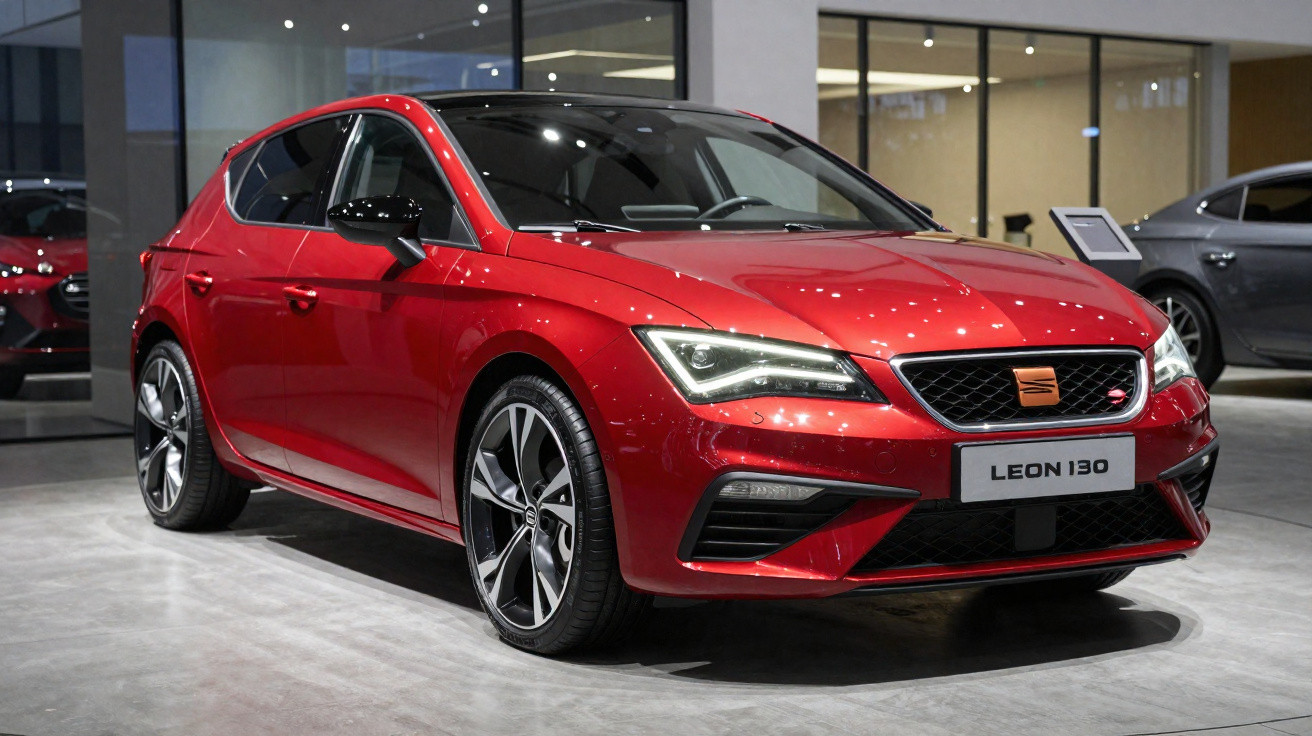
Fresh from being crowned 2021 Car of the Year in Portugal, the SEAT Leon comes with plenty of solid reasons for that recognition. One of the strongest is arguably the breadth of its engine line-up. From petrol and CNG to plug-in hybrids and mild-hybrid (MHEV) options, there’s genuinely something to suit most buyers.
The version featured here is the 1.5 TSI with 130 hp, a set-up that looks, on paper, like one of the Spanish hatchback’s most well-judged choices. But does it deliver out on the road? That’s exactly what we’re about to answer.
We spent four days with a Leon 1.5 TSI 130 hp in Xcellence trim and put it through a broad mix of driving: the usual city runs, plus more demanding stretches on the motorway and dual carriageways. It was enough time to get a clear sense of what this Leon can do - and without giving the game away too early, it did manage to surprise us.
The Xcellence equipment level sits alongside the sportier FR, yet it positions itself as the more upmarket take on the Leon: softer-touch, more elegant finishes and more comfortable seats (without electric adjustment as standard). It also skips the FR’s specific (and firmer) suspension, which might lead you to expect a less engaging drive.
However, our test car came fitted with the optional Dynamic and Comfort Pack (€783). This adds progressive steering (standard on the FR) and adaptive chassis control - and the difference is significant.
With adaptive chassis control - which SEAT calls DCC - you can pick from 14 distinct settings. That means you can lean the car towards comfort, or sharpen it up for a more focused, sporty drive. As a result, versatility becomes the defining theme here: this Leon consistently feels balanced and sensible.
The chassis leaves no doubts
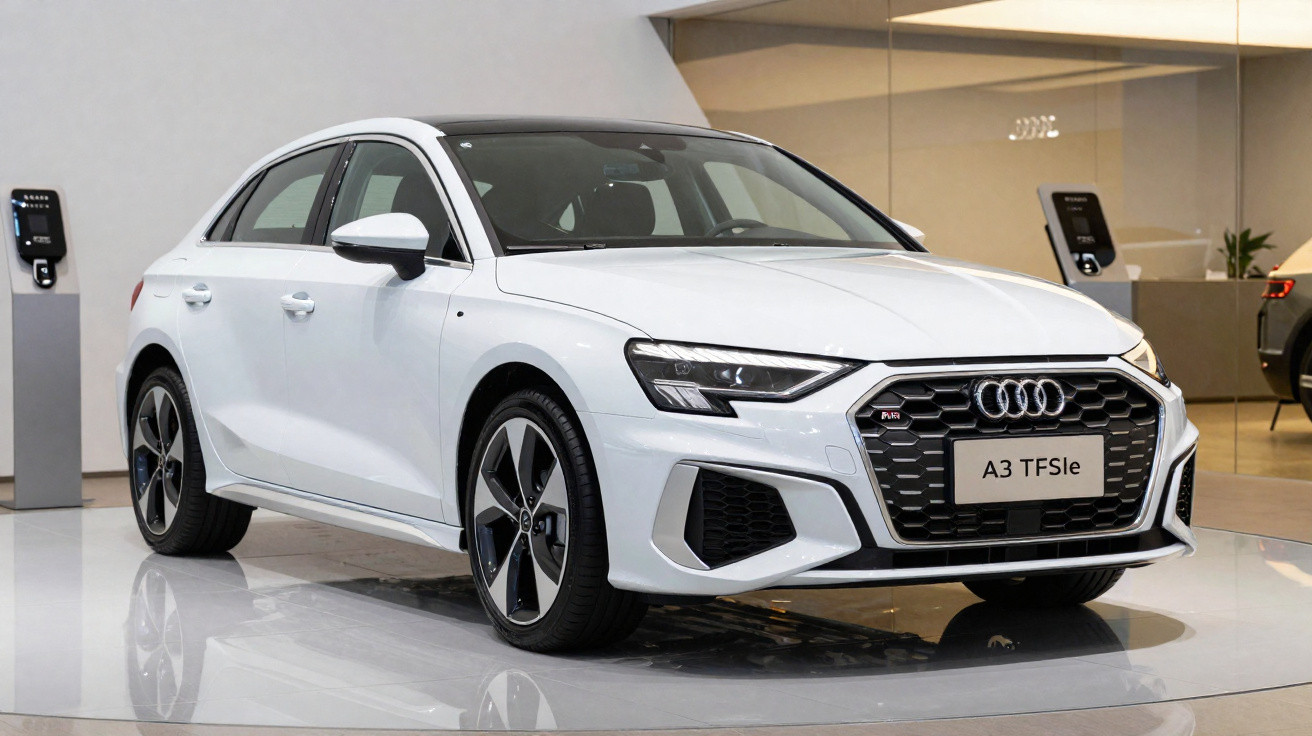
Here at Razão Automóvel, we’ve driven the fourth-generation SEAT Leon in several different configurations, and one point keeps standing out: the chassis. The MQB Evo underpinnings are the same as those used by its “cousins”, the Volkswagen Golf and Audi A3, but the new Leon is tuned in a way that helps it claim a character of its own.
On the road it’s predictable and very capable. It offers a notably high level of comfort on longer journeys, yet it never shies away from more challenging routes. When the road tightens up, the steering weight feels well judged and the engine/gearbox pairing becomes far more engaging.
So what is this 1.5 TSI 130 hp really worth?
The 1.5 TSI petrol unit is a four-cylinder engine producing 130 hp and 200 Nm of peak torque. In the wider range it sits in the middle, which is why it looks like one of the most rounded options available. The question is whether that middle ground is where the sweet spot truly lies.
Matched to a six-speed manual gearbox, it takes the Leon from 0 to 100 km/h in 9.4s and on to a top speed of 208 km/h. Those numbers aren’t exactly headline-grabbing, but the way SEAT has calibrated this powertrain makes it feel eager on the road, pleasant to drive, and convincing enough to suggest there’s more performance than the figures imply.
Even so, it’s an engine with two distinct personalities. Below 3,000 rpm, it remains smooth and quiet, but it doesn’t feel especially punchy. Push beyond that point and the story changes: it stays refined, yet it finds a different energy and willingness.
Part of that comes down to the six-speed manual. While it’s accurate and satisfying to operate, the ratios are on the long side - ideal for keeping the engine under 3,000 rpm and prioritising fuel economy. The trade-off is that, if you want to extract more from the engine (and from the chassis), you’ll find yourself working the gearbox more than you might expect.
And what about fuel consumption?
Over many kilometres split between city driving, dual carriageways and the motorway, the average shown when we returned the car to SEAT Portugal was 7.0 litres per 100 kilometres.
That’s higher than the official 5.7 l/100 km (combined cycle) quoted by the Spanish brand for this version (with 18-inch wheels). Still, it’s worth noting that on the motorway and on open roads we were able, without much effort, to achieve averages below 6.5 l/100 km. Urban driving ultimately pushed the overall figure upwards.
Even so, considering what this SEAT Leon 1.5 TSI Xcellence with 130 hp offers, the 7.0 l/100 km we recorded is far from a deal-breaker - particularly as we weren’t actively “driving for economy”. It’s also worth remembering that this engine includes a system that can deactivate two of its four cylinders when the throttle isn’t under load.
Bold styling
As the months go by, it becomes increasingly clear that the Spanish brand got the looks of the fourth-generation Leon spot on. Sharper lines, a longer bonnet and a more upright windscreen all contribute to a stronger sense of dynamism. But it’s the updated lighting signature - a theme already seen on the SEAT Tarraco - that gives it a more distinctive and striking profile, a point previously explored in detail by Diogo Teixeira during his first drive of the model.
Space is not an issue…
Inside, the Volkswagen Group’s MQB platform helps the Leon deliver strong cabin space. And because its wheelbase is 5 cm longer than the Golf and A3, it offers more rear legroom than those two “cousins”.
The rear seats are practical and genuinely comfortable, while knee room, shoulder room and headroom all sit above the segment average - again putting this Leon in a very strong position.
Boot capacity is 380 litres, and with the rear seats folded it increases to 1301 litres. Both the Golf and the A3 offer the same 380 litres of luggage space.
Technology and interior quality
Material choice and build quality are also at a very good level, and that impression is strengthened further in Xcellence trim, which brings more supportive, comfortable seats with a particularly inviting upholstery. On this front, there’s little to criticise.
The same can’t be said for the touch-sensitive strip used to adjust audio volume and the climate control - as found across other Volkswagen Group models using the new MIB3 electronic architecture. It looks clean and modern, because it removes the need for most physical buttons, but it could be more intuitive and more accurate, especially at night, as it isn’t illuminated.
Is it the right car for you?
Every road test ends with this question and, as always, there isn’t a single definitive answer. If you’re someone who covers a lot of motorway miles every month, it may be worth considering the diesel options in the Leon range - such as the Leon TDI FR with 150 hp that João Tomé tested recently.
If, on the other hand, your routine is mostly made up of mixed journeys, then we can say with confidence that this 1.5 TSI 130 hp engine (with the six-speed manual) will do the job.
This SEAT Leon 1.5 TSI 130 hp Xcellence is particularly rewarding to drive, especially when paired with the progressive steering and adaptive chassis control fitted to our test car. It has the rare ability to feel just as competent on the motorway - where it majors on smoothness and comfort - as it does on an open road with more demanding corners, even if, in that scenario, you’ll need to use the gearbox frequently to make the most of what this excellent chassis can deliver.

Comments
No comments yet. Be the first to comment!
Leave a Comment