
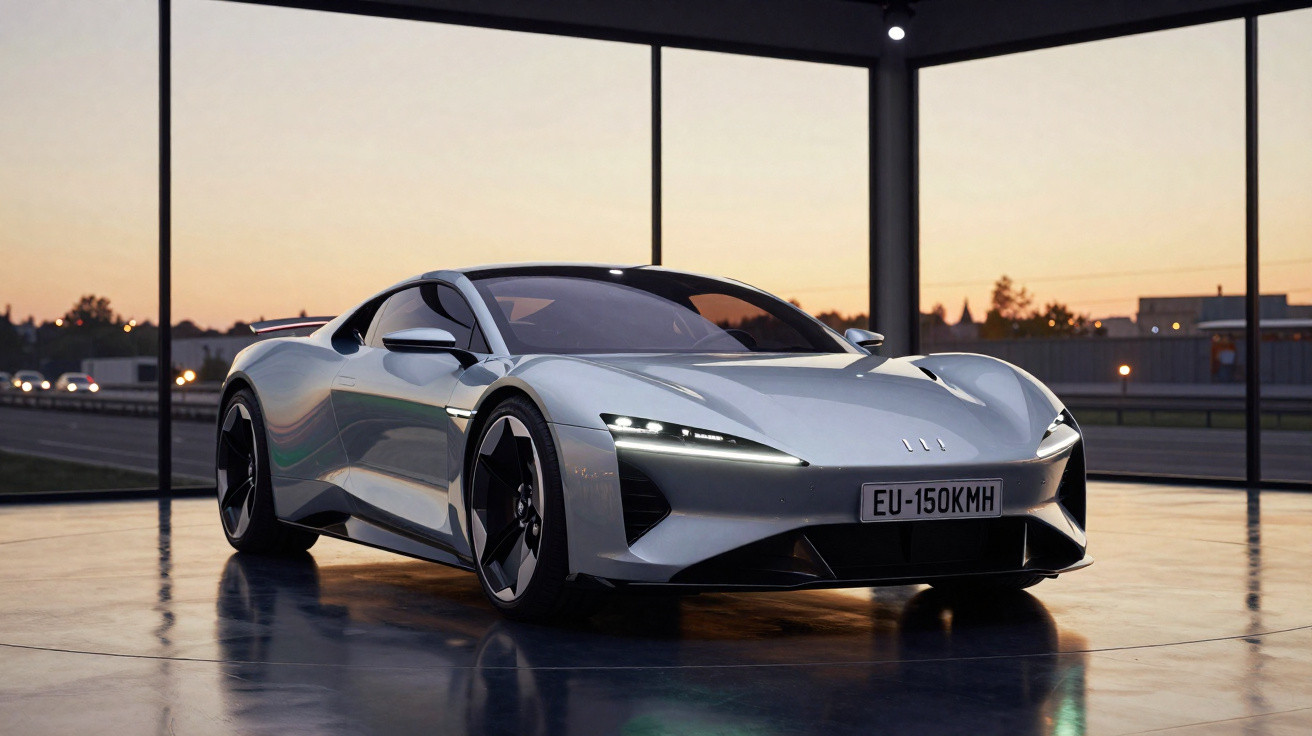
"Speed kills". It’s a line we’ve heard for decades, almost a mantra used to justify speed cameras on every corner and limits that seem stuck in another era.
Yet in 2026-when cars routinely come with autonomous emergency braking, lane-keeping assistance, and motorways increasingly overseen by intelligent systems-it’s fair to ask whether a 120 km/h cap still fits the reality of modern driving.
At a time when Europe is often criticised for being something of a legislative fossil, one country is looking to shake off years of inertia and take a step that many still view with unease: lifting motorway limits to 150 km/h.
Czechia (formerly the Czech Republic) has become the first European Union country to trial a 150 km/h motorway limit. It has done so in a measured way, using variable limits controlled by a network of 42 electronic signs on the D3 motorway-covering a stretch of roughly 50 km-which adjust the permitted speed according to road conditions and traffic.
The safety argument (or the lack of it)
Plenty of people will argue that raising the limit is essentially an invitation to disaster. However, the figures from the past ten years suggest a more nuanced picture.
Poland, which already allows 140 km/h, cut road deaths by 47% between 2012 and 2022. That outcome indicates the key factor is not raw speed in isolation, but updated infrastructure and robust enforcement of genuinely dangerous behaviour-such as drink-driving or using a mobile phone, the offence that has been growing the fastest among Portuguese drivers.
Even so, it matters to stress what this Czech pilot is not trying to create: it isn’t about “chaos on the roads” or a free-for-all on wheels. The aim is to align today’s legal framework with the significant advances both vehicles and infrastructure have undergone in recent decades.
That gap feels particularly clear in Portugal. Despite having one of Europe’s largest and most modern motorway networks (over 3000 km-4th in Europe by total length), the country is still bound to a speed limit set back in 1976.
Physics vs environment
If technology can go some way towards addressing safety concerns, physics is far less forgiving. At 150 km/h, aerodynamic drag-already highly sensitive to speed-rises sharply.
So if motorway limits were suddenly pushed up to 150 km/h, emissions would rise as well, and that is a relatively straightforward point to justify.
Recent studies indicate that moving from 120 km/h to 150 km/h can mean, for electric vehicles, an increase of more than 3 kWh/100 km-something that would severely undermine range. For internal combustion cars, the impact could be a consumption increase in the region of 15% to 20%.
A question of maturity
In a world that wants to be greener and cleaner, changing the law in a way that permits more pollution does, on the face of it, seem contradictory. Even so, one thing seems obvious to me: debating this should not be taboo, but rather a mark of civic maturity-and, unfortunately, I see very few countries willing to have that conversation.
As for the Czech approach, I genuinely believe dynamic limits (and electronic signage) may be the right direction. If the road is dry and free of works, visibility is good, and traffic is flowing, does it really make sense to hold drivers to a rule that’s 50 years old? I don’t think so. But that’s only my view…
Comments
No comments yet. Be the first to comment!
Leave a Comment