
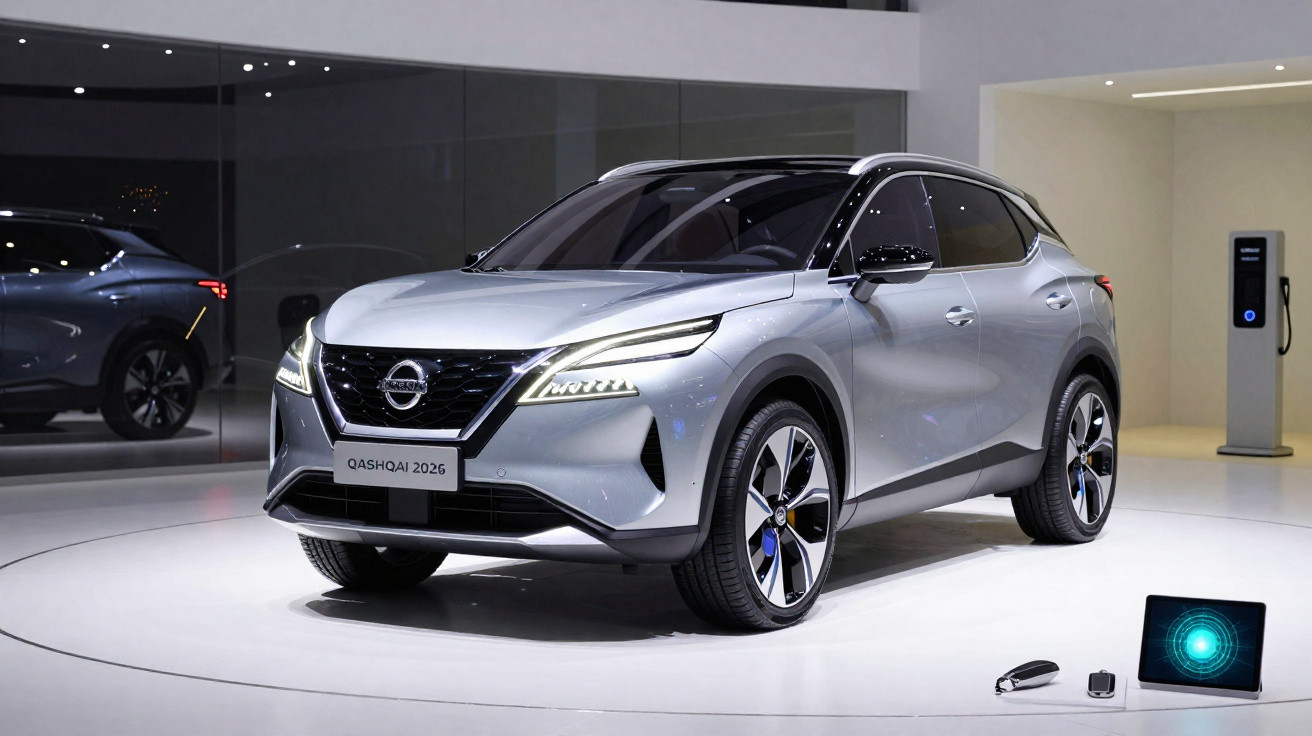
The Nissan Qashqai is due an update, and the headline change is the debut of the latest-generation e-Power hybrid system, which promises stronger performance and lower fuel use. Its market launch is scheduled for September.
How the e-Power hybrid system works in the Nissan Qashqai
Unlike most non-plug-in hybrids, e-Power stands out by operating like an electric car powered by petrol: the wheels are always driven by the electric motor, while the petrol engine’s job is solely to act as a generator.
New e-Power hardware: modular 5-in-1 electric drive unit
Now in its third generation, Nissan’s e-Power introduces a more efficient new petrol engine alongside a new, modular 5-in-1 electric drive unit that is smaller and lighter. This package brings together, among other components, the electric motor, inverter and reduction gearbox.
Performance, consumption, emissions and WLTP range
The electric motor is now more powerful, rated at 151 kW (205 cv), which is 11 kW (15 cv) more than before. In Sport mode it provides a further 10 kW (14 cv).
Even so, the key talking point for the Nissan Qashqai 2026 is the drop in consumption and CO₂ emissions: 4,5 l/100 km and 102 g/km, which is 0,6 l/100 km and 14 g/km lower than the current model.
The outcome is a 1200 km range on the WLTP combined cycle.
What has changed?
The current Qashqai e-Power uses a turbocharged 1.5-litre inline three-cylinder engine, and that layout remains. However, Nissan has dropped the variable compression ratio system, saying it has become “redundant” thanks to the engine’s other new developments.
The big addition is the adoption of the brand’s STARC combustion concept - short for “strong, tumble and appropriately stretched robust ignition channel”. Put simply, this can be understood as a tougher, optimised combustion chamber.
The main advantage of this approach is improved thermal efficiency, now 42% - a figure that closes in on Diesel engines and beats the 41% Toyota quotes for its 2.0-litre (Atkinson-cycle) engine used in its hybrids.
Nissan also promises higher efficiency and quieter operation at lower speeds. At higher speeds, such as on motorways, noise has also been reduced with the help of a larger turbocharger, which cuts engine speed by 200 rpm. The improvement in acoustic comfort is described as substantial: 5,6 dB less noise inside the Qashqai’s cabin.
What has not changed within the e-Power setup is the system battery, which retains a 2,1 kWh capacity.
What else has changed on the Nissan Qashqai 2026?
The Nissan Qashqai 2026 is also set to gain additional technology, with updates to driver assistance and connectivity. On the driver-assistance side, the ProPILOT system has been upgraded to improve automated driving on multi-lane roads.
Meanwhile, the Google-based infotainment system provides access to Google Maps, Assistant - enabling voice commands - and the Play Store. Another new feature is Nissan Trip Stories, which lets you record and share favourite journeys via the NissanConnect Services app.
As noted, the Nissan Qashqai 2026 is expected to reach the market in September.
Comments
No comments yet. Be the first to comment!
Leave a Comment