
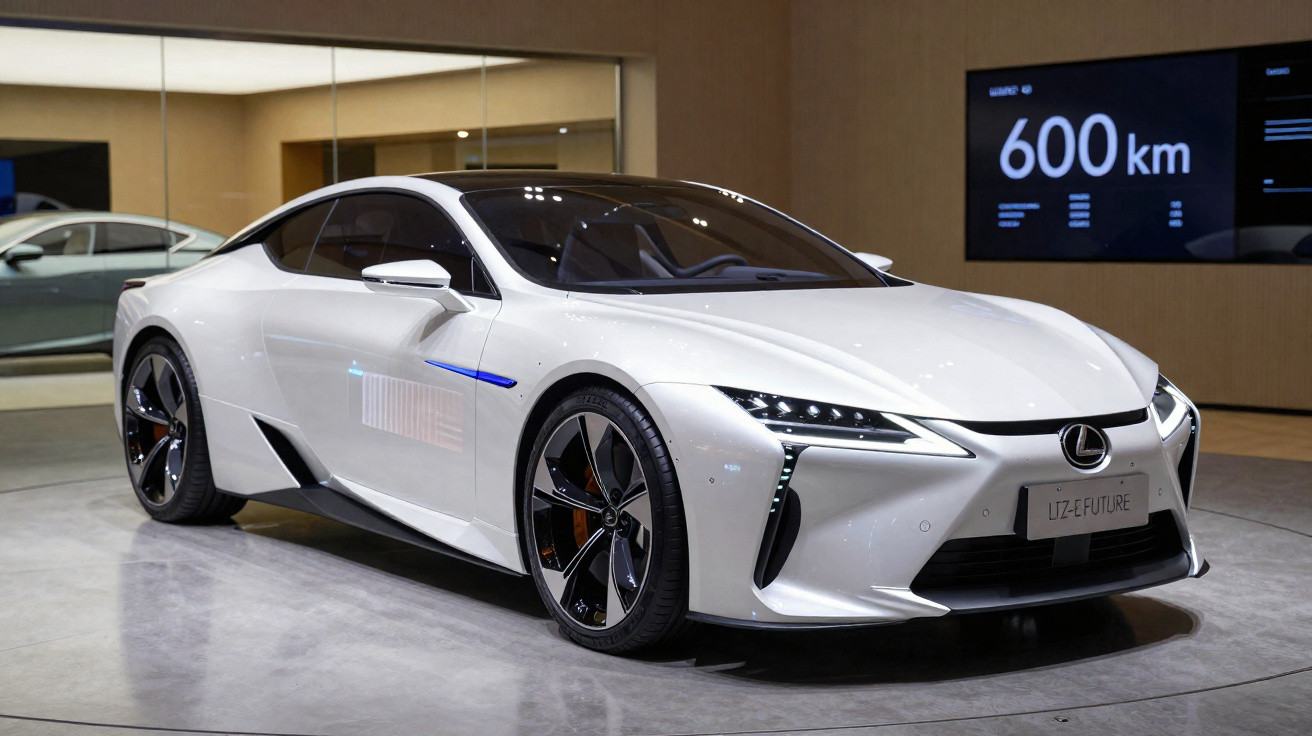
The Lexus LF-Z Electrified is a rolling statement of intent, showing what the brand expects to deliver in the years ahead. And, as the name makes clear, that future will be increasingly electric - so it is no surprise that this concept car is fully electric too.
Lexus is hardly new to vehicle electrification, having been among the early adopters with hybrid technology. Since launching its first hybrid - the RX 400h - the company has sold around two million electrified vehicles. The next phase is not only to stay committed to hybrids, but to strengthen that line-up with plug-in hybrids and make a decisive push into 100% electric models.
By 2025, Lexus plans to introduce 20 models, both new and updated, with more than half of them being 100% electric, hybrid, or plug-in hybrid. Many of the technologies showcased in the LF-Z Electrified are expected to find their way into those cars.
Dedicated platform
The LF-Z Electrified is built on an all-new platform designed specifically for electric vehicles. That sets it apart from the UX 300e - currently Lexus’s only 100% electric production model - which is based on a platform originally developed for internal-combustion vehicles and later adapted for EV use.
Using a dedicated EV architecture also helps explain this electric crossover’s proportions: a coupé-like profile, short overhangs, and a stance made even more dramatic by the large-diameter wheels.
This is not a small vehicle. Its length, width and height measure 4.88 m, 1.96 m and 1.60 m respectively, while the wheelbase is a notably generous 2.95 m. In other words, if the Lexus LF-Z Electrified is also a fairly direct preview of a future production car, it would sit well above the UX 300e in the range.
Visually, the LF-Z Electrified develops Lexus’s current styling language while retaining bold, sculpted surfacing. The centrepiece is a reinterpretation of the “Spindle” grille: it keeps the familiar outline, but is now largely closed off and finished in body colour - an immediate cue to the car’s electric identity.
Also noticeable are the slim headlamps and tail-lamps. At the rear, the lights form a full-width horizontal element made up of small vertical segments. Within that illuminated bar sits Lexus’s new logo and updated lettering. There is also a roof-mounted “fin” that incorporates an additional light.
“Tazuna”
If the exterior of the Lexus LF-Z Electrified leans into dynamic, expressive lines and forms, the cabin takes a different approach: minimalist, airy and architectural. Lexus refers to it as the Tazuna cockpit, a concept inspired by the relationship between horse and rider - where have we heard that before? - and made explicit through a “half” steering wheel, similar to the one seen on the updated Tesla Model S and Model X.
Where a rider guides a horse using reins, this concept translates that idea into the “tight coordination of switches on the steering wheel and a head-up display (with augmented reality), allowing the driver to access functions and vehicle information intuitively, without needing to change their line of sight, keeping attention on the road”.
According to Lexus, upcoming interiors will take cues from the LF-Z Electrified - particularly in how the key elements are arranged. Information sources (head-up display, instrument panel and multimedia touchscreen) are consolidated into a single module, while driving-system controls are grouped around the steering wheel. Also worth noting is the use of artificial intelligence as a way to interact with the car: it will “learn” our behaviour and preferences, turning that knowledge into useful suggestions in the future.
600 km range
Even though it is a concept car, Lexus has released a number of technical details covering the powertrain and battery.
The battery pack is located between the axles in the floor of the platform and has a capacity of 90 kWh, which should deliver an electric range of 600 km on the WLTP cycle. Cooling is liquid-based, and charging is possible at up to 150 kW. The battery is also the main reason behind the quoted 2100 kg kerb weight for this concept.
The published performance figures are equally striking. It reaches 100 km/h in just 3.0s and tops out at 200 km/h (electronically limited), thanks to a single electric motor mounted on the rear axle producing 544 cv (400 kW) and 700 Nm.
To help put that output down effectively, the Lexus LF-Z Electrified features DIRECT4, a highly flexible four-wheel traction control system. It can operate as rear-wheel drive, front-wheel drive, or all-wheel drive, adjusting to suit the situation.
Another notable point is the steering system, which is by-wire - meaning there is no mechanical connection between the steering wheel and the steering axle. Despite Lexus highlighting benefits such as greater precision and better filtering of unwanted vibrations, questions remain over steering “feel” and how well it communicates with the driver - one of the known shortcomings of a similar system used by Infiniti on the Q50. Will Lexus bring this technology to one of its future production models?
Comments
No comments yet. Be the first to comment!
Leave a Comment