
- Add Zona Militar on Google
Why add us? Get the latest from Zona Militar directly in your Google feed.
- Join the WhatsApp channel
Join our official WhatsApp channel and receive breaking news instantly.
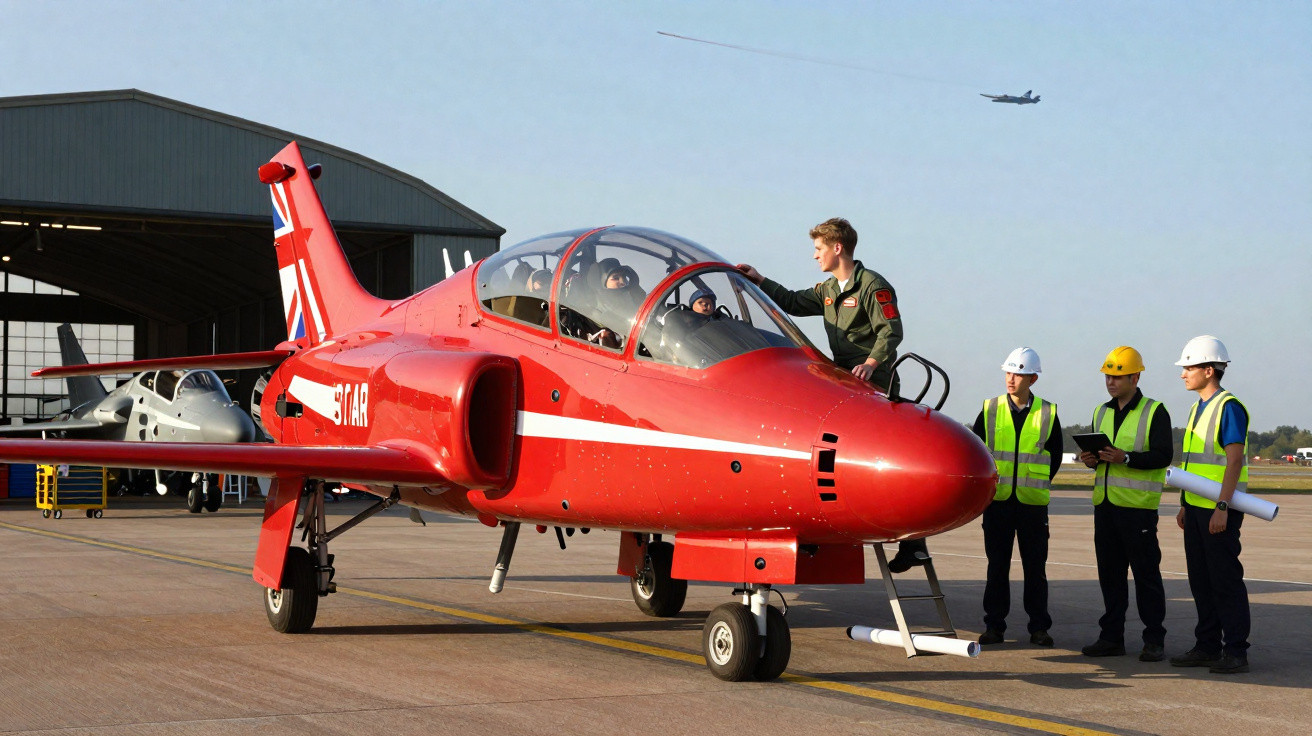
BAE Systems, Boeing and Saab formalise a UK T-7A Red Hawk proposal for the RAF
After months of talks and progress on shaping a shared offer, BAE Systems, Boeing and Saab have officially confirmed a partnership to promote a British variant of the T-7A Red Hawk for the Royal Air Force (RAF). The deal marks another step in the effort to replace the BAE Hawk T2 training fleet, while adding a major industrial element through the creation of a final assembly and integration line in the United Kingdom.
Read also: USAF gives the green light to production of a new glide bomb with a range of more than 550 kilometres
The collaboration builds on the Letter of Intent the three firms signed in November 2025, which laid the groundwork for a joint bid for the RAF’s future advanced training system. Since that point, the companies have focused on selecting a site for the planned assembly facility and on developing a UK supply chain, aiming to secure sovereign industrial capacity and guarantee programme support throughout the entire life cycle.
Training system: aircraft, simulators and future UK requirements (T-7A Red Hawk)
At the centre of the proposal is Boeing’s T-7 training system, originally developed with Saab for the United States Air Force (USAF). Beyond the aircraft itself, the offer covers a complete ecosystem that blends live flying with advanced simulators, designed to prepare future RAF pilots to operate the Eurofighter Typhoon and the F-35 Lightning II.
The system’s architecture is also intended to be flexible enough to meet future UK operational needs, including the introduction of sixth-generation aircraft associated with the GCAP programme.
You may be interested
- The United Kingdom accelerates the development of technologies for its future sixth-generation fighter with an investment of nearly £1,000 million
- Soldiers, ballistic missiles and millions of rounds: the figures behind North Korea’s military support to Russia in the war against Ukraine
Industrial impact and UK sovereign capability
A key feature of the agreement is its industrial footprint. The companies argue the programme could generate hundreds of highly skilled jobs, while strengthening a domestic supply chain with participation across the fleet’s full service life. In practical terms, this would allow the United Kingdom to retain sovereign control over combat pilot training, aligning the initiative with goals set out in the Defence Investment Plan and further supporting the UK aerospace industry.
The project responds to a requirement highlighted by the UK Ministry of Defence and by the Strategic Defence Review, both of which point to the value of progressively replacing the BAE Hawk T2 trainers. These aircraft are currently used for advanced fast-jet training, while the Red Arrows aerobatic team operates the Hawk T1 variant. However, the platforms have begun to show limitations when it comes to preparing aircrew for fifth-generation and future sixth-generation aircraft, prompting the search for a next-generation training system.
At the same time, the T-7A Red Hawk comes with recognised challenges. In the United States, the programme has fallen well behind its original schedule due to issues uncovered during development testing, additional engineering work, delays in software development, and constraints linked to the availability of aircraft, maintenance personnel and spare parts. As a result, the Government Accountability Office (GAO) recently estimated that approval to begin full-rate production may not occur until 2029-two years later than initially planned-while critical integration testing between the aircraft and the training system continues.
Even so, the USAF continues to back the effort and has recently authorised the start of low-rate initial production following Milestone C approval, awarding the first manufacturing contract for production aircraft. Against that backdrop, Boeing, Saab and BAE Systems believe the programme’s gradual maturation will enable them to offer the United Kingdom a modern, adaptable solution for the decades ahead. Should the proposal move forward, the T-7A Red Hawk is positioned as the leading contender to replace the Hawk in the RAF, pairing advanced training capabilities with strong UK industrial participation and a locally based production model.
Images used for illustrative purposes.



Comments
No comments yet. Be the first to comment!
Leave a Comment