
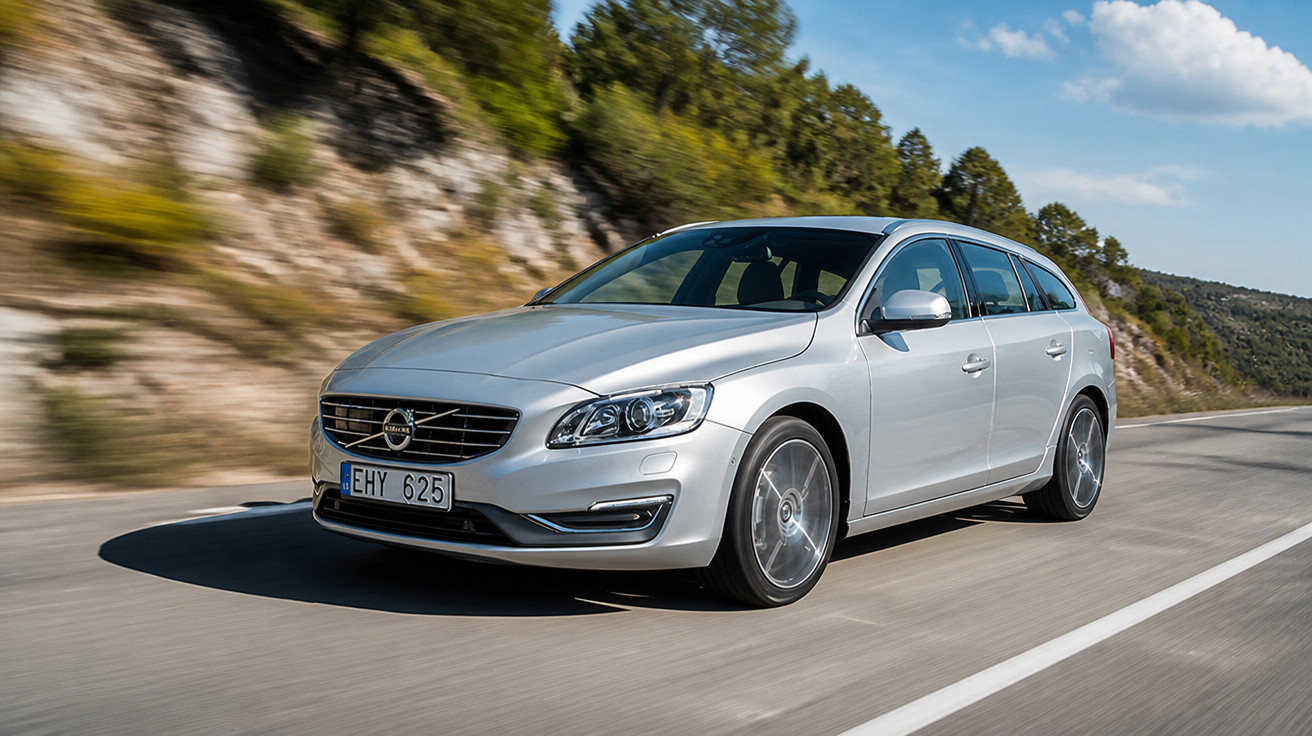
These are times when the biggest players dominate. It’s not a friendly climate for smaller independent manufacturers - or even the medium-sized ones with a bit of spirit. Saab’s fate is a reminder of that. Volvo, though, has mapped out a way to endure: slash a massive chunk of engineering and manufacturing spend by standardising around a single engine family.
Volvo’s one-engine survival plan
Not literally one identical unit, but one basic architecture that can be adapted into many variants. The foundation is an aluminium-block, four-cylinder 2.0-litre engine. Swap the cylinder head, pistons and exhaust set-up and it can serve as either diesel or petrol. Add in various levels of turbocharging - including twin turbos for the range-topping diesel - and, for the top petrol version, the trouser-tremblingly exciting label ‘Superturbo’. On top of that comes electric assistance via hybrids and electric rear axle drive. Power outputs are planned to span from 120bhp to over 300bhp.
Because the whole family was engineered as a unified programme, every version shares key hard points: identical mounting locations, matching inlet and exhaust positions, and the same transmission interfaces (with just one manual and one automatic gearbox).
For Volvo, the financial logic is obvious. Right now it’s carrying an astonishingly tangled set of eight completely separate engine families. Totted up, that includes: a V8 in the US-market XC90; a transverse turbo six inherited from Land Rover years back; Volvo’s own five-cylinder engines in both diesel and petrol forms; two distinct Ford-PSA diesel families; a Ford 2.0 petrol; and the old Fiesta 1.6 Sigma petrol. Each demands different packaging under the bonnet and its own crash-test work. It’s a wildly complex inheritance - and complexity is expensive.
What this 2.0-litre four-cylinder promises for drivers
That’s the upside for Volvo; the question is what it means for customers. Even in larger cars, committing to four cylinders cuts weight, which helps both economy and handling. Extra space under the bonnet can be used for more sophisticated front suspension designs, and it can allow sleeker exterior styling. Above all, a four is naturally more fuel-efficient than a five, six or eight.
Still, the real test is whether it feels right on the road. The first model designed from the outset around this new engine is the new XC90, and that’s still a year away. Before then, the early arrivals using the engine as a retrofit are the V60, S60 and XC60.
On the road: V60 D4 with 180bhp twin-turbo diesel
I drove the V60 fitted with the twin-turbo 180bhp diesel. Paired with a new eight-speed automatic, this version emits just 111g/km. The manual S60 saloon using the same engine drops to below 100g/km. That’s an outstanding, class-leading blend of performance and efficiency.
High-output diesels are often loud, and lightweight aluminium-block diesels are often loud too. Yet, largely thanks to a smart new injector design, this one stays fairly refined. It isn’t the quietest of the lot, but I’d rate it ahead of the equivalent BMW.
Boost builds in a measured way, with minimal lag and a pull that stays strong well across the rev range. The automatic gearbox changes smoothly and does a convincing job of second-guessing what you want next. Even so, automatic diesels can feel a touch lethargic, and this one is no exception. The official figure - 7.6 seconds 0-62 - looks punchy, but in real driving the auto could do with a little more sparkle.
The chassis in my test car also left me wanting a bit more. There are four set-ups available: three passive suspension tunes with different stiffness levels, plus one option with adaptive dampers. Mine was the middle passive setting. The steering places the car accurately but doesn’t communicate much. Ride comfort is acceptable - though it can fidget over high-frequency ripples - and for high-mileage use this is likely the most sensible choice.
One final note: the boot badge reads D4. Previously, D4 meant a five-cylinder rather than a four; it was two seconds slower to 62, returned 129g/km and 57.6mpg, rather than 111 and 67.3. That’s genuine progress.



Comments
No comments yet. Be the first to comment!
Leave a Comment