
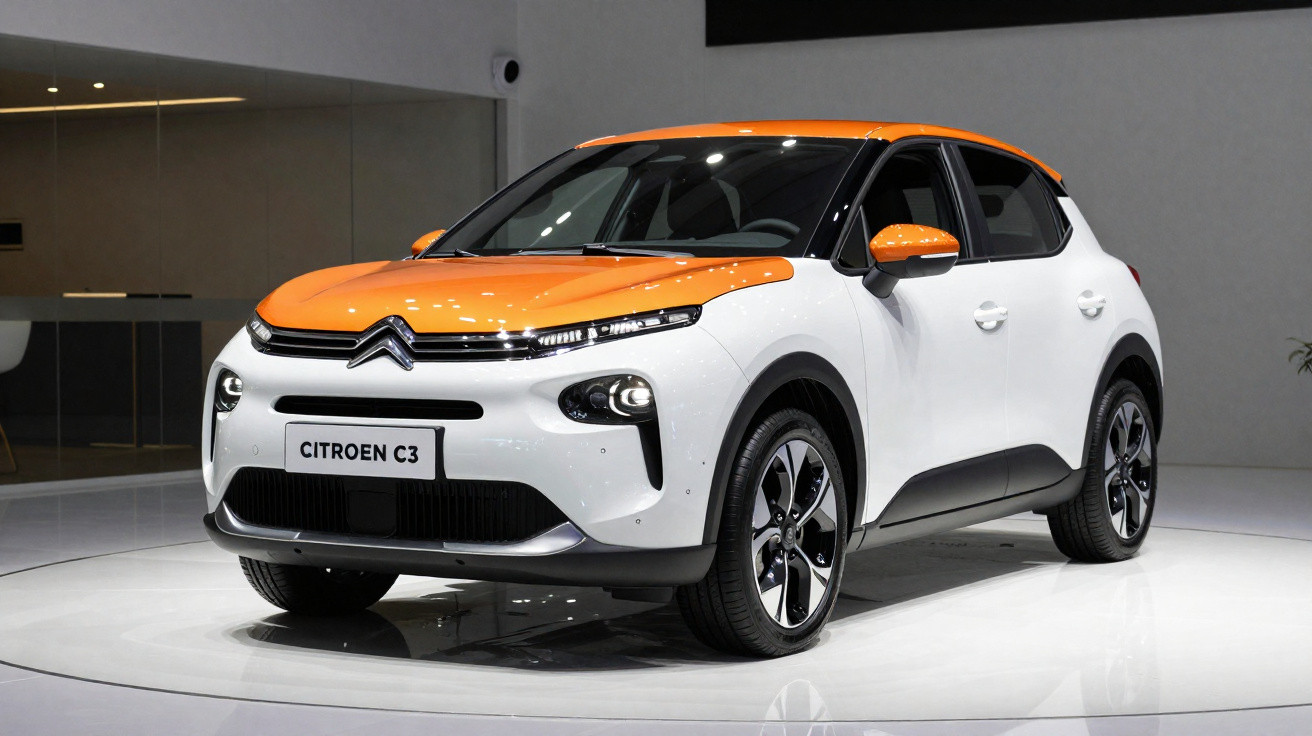
Citroën has a long track record of building affordable, practical cars, and the new C3 is a clear example of that approach. With a line-up that includes both petrol engines and a 100% electric variant, the C3 is one of the cheapest cars on the market.
The new C3 range starts at 15 240 euros for the 1.2 PureTech version with 100 hp, and at 23 300 euros for the 100% electric variant, called the ë-C3. This model can already be configured on Citroën’s website.
Price is, without question, one of this French compact’s strongest selling points. For that very reason, it’s expected to be a realistic choice for a wide range of drivers. But does it actually fit everyday life? And are the space and equipment it offers enough?
In another Razão Automóvel buying guide, we set out to answer those questions and, above all, to work out which version makes the most sense to buy.
A touch of colour
Even though it’s compact (4.02 m long and 1.58 m tall), the Citroën C3 has a sturdy look that gives it real presence on the road. The bumper design and the plastic protection around the wheel arches are good examples of this.
That isn’t the only reason the new C3 stands out visually. This model introduces the French brand’s new design language, featuring a new “C” light signature and Citroën’s latest logo.
The two-tone bodywork and the small coloured clips dotted around the exterior also make it easier to tailor a C3 to each customer’s taste.
On the top equipment level (MAX), for instance, it’s possible to add even more distinctive items, such as 17-inch diamond-cut alloy wheels, dark-tinted rear windows and 3D-effect rear lights.
The king of comfort
Citroën has always been closely associated with comfort, and this C3 is no exception. As standard, every C3 comes with suspension featuring double hydraulic stops, a technology that markedly improves how bumps and potholes are absorbed and is not something you typically find in this segment.
But the suspension is only part of the story. Inside the cabin, from the mid-spec PLUS version onwards, you can also count on the special Advanced Comfort seats, which add an extra layer of cushioning and support, helping to reduce fatigue on longer journeys.
Even so, it’s in town where the C3 feels most “at home”. Light steering makes it easy to manoeuvre in tighter spaces, and even the cobbled streets found in some areas of Lisbon aren’t enough to dent onboard comfort. It’s an uncomplicated car and very easy to drive.
Two powertrains to choose from
Built on Stellantis’ new global Smart Car platform, which can accommodate either electric or combustion powertrains, the new C3 has the credentials to appeal to a broad audience.
The range opens at 15 240 euros for the You version fitted with the 1.2 PureTech 100 hp engine, which has received mechanical updates designed to improve efficiency and durability. It claims an average fuel consumption of 5.6 l/100 km and completes 0–100 km/h in 10.6s.
For those who want a 100% electric option, the ë-C3 starts at 23 300 euros and offers a claimed driving range of up to 320 km, thanks to a battery with 43.8 kWh of capacity.
The battery can be charged at speeds of up to 100 kW on direct current (DC) and up to 11 kW on alternating current (AC): in this scenario, five hours is enough for a full charge.
However, the cost of the 100% electric version can be reduced through incentives for scrapping vehicles more than 10 years old (4000 euros), or through tax benefits for companies and sole traders, who may deduct the full VAT amount and be exempt from paying autonomous taxation.
Is it worth choosing the electric version?
The price gap between the combustion and electric versions is substantial, at roughly 8000 euros. Doing the maths, and assuming an average fuel price of 1.70 €/l alongside the claimed consumption figures, it’s only after 83 thousand kilometres that the electric version begins to pay off.
Even so, there are other points to weigh up. Maintenance costs for electric vehicles are considerably lower and, soon, Citroën will introduce an electric C3 with a smaller battery, a 200 km range and pricing from 19 990 euros. That could make this option more attractive.
Whichever powertrain you go for, one thing is clear: it’s worth paying an extra 2510 euros to step up to the mid-level PLUS equipment, which already adds plenty of kit, including Advanced Comfort seats, a 10.25-inch multimedia screen and wireless integration with Android Auto and Apple CarPlay.
For 1700 euros more, you can push comfort up another notch by choosing the MAX trim, which adds automatic air conditioning (manual in the other versions), a rear parking camera, wireless smartphone charging and a 3D navigation system.
All things considered…
The Citroën C3 remains one of the benchmarks among affordable compact cars, and in this new generation it blends a modern, robust design with various personalisation options and a high level of comfort.
As for deciding between combustion and electric, it will come down to your usage and the incentives you can access. Anyone covering lots of miles and able to take advantage of tax support will find the electric version an interesting alternative. Meanwhile, for those after an affordable model without range and charging concerns, the combustion versions remain the more sensible pick.
Whatever the choice, one thing is certain: the Citroën C3 is ready to deliver a comfortable, straightforward and practical driving experience, ideal for the daily hustle and bustle in the city.

Comments
No comments yet. Be the first to comment!
Leave a Comment