
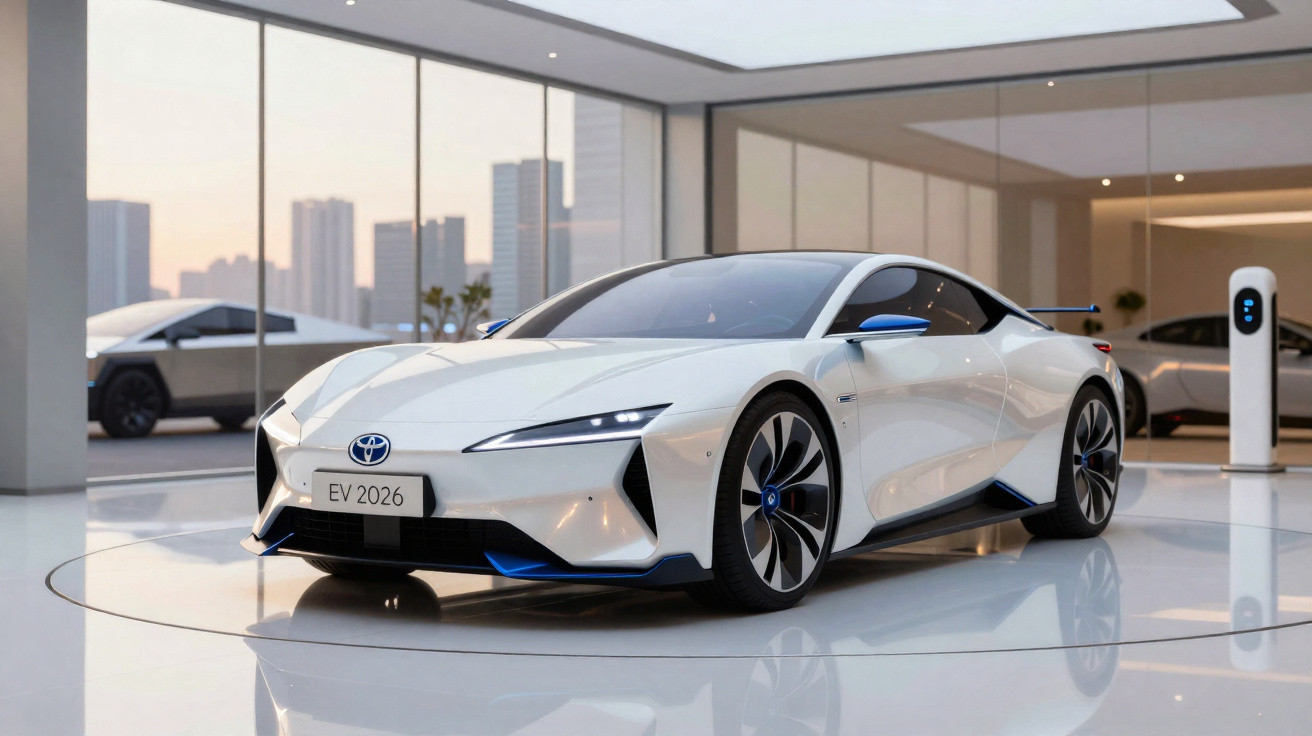
After years of insisting that electric cars could not be the sole focus, Toyota has reworked its electrification plans, speeding them up and making them one of the Japanese brand’s key pillars for the years ahead.
This shift in approach came alongside the appointment of Koji Sato as Toyota’s new chief executive, replacing Akio Toyoda, who moved into the role of chairman.
In his first address after taking the job, Sato made it clear that electric vehicles would carry far more weight at Toyota from this point on. Any lingering uncertainty was swept away at his first official press conference after assuming office.
“A current situation in the automotive industry is a matter of life or death and extremely competitive,” Sato said, quoted by Automotive News Europe, before setting out a new (and ambitious) target: to sell 1.5 million electric vehicles in 2026.
Boosting electric-car sales will be Sato’s number-one priority, as he underlined during the conference. Even so, reaching 1.5 million electric vehicles sold will not be straightforward. It is worth remembering that in 2022 Toyota sold only around 25 thousand electric vehicles worldwide.
Ten new electric vehicles on the way
As a brand, Toyota currently has just one fully electric model in its line-up: the bZ4X. If we widen the view to Toyota as a group, we also need to consider Lexus, which has two electric models: the UX 300e and the RZ 450e.
That will change over the next few years, with the Japanese giant preparing to launch 10 new fully electric models over the next three years, spread across Toyota and Lexus.
Some will be based on an evolution of the current e-TNGA platform, while others will sit on a completely new, purpose-built (fully electric) architecture, developed from scratch, designed to help deliver the 2026 goal set by Sato.
There is no doubt this is a highly ambitious plan. Yet for Yoichi Miyazaki, Toyota’s executive vice-president and chief financial officer, the only real constraint on that target is batteries.
“Regarding producing 1.5 million (electric vehicles), if there are no batteries we cannot produce. So, it will be the batteries that set the pace,” Miyazaki said, before adding that Toyota’s electric-vehicle strategy will be fine-tuned market by market. He also noted that, in future, the company could even operate manufacturing facilities dedicated exclusively to electric cars.
On whether Toyota may be behind its main rivals (with Tesla and the Volkswagen Group at the front) when it comes to electric vehicles, Miyazaki was equally clear:
It may look like we arrived late, but for us it was simply a matter of the most suitable timing.
Yoichi Miyazaki, executive vice-president and chief financial officer of Toyota
Lexus will lead the electric push
Beyond this medium-term 2026 objective, Toyota already has a longer-term roadmap. At the end of 2021, Akio Toyoda announced an aim to sell 3.5 million electric vehicles per year and to reach carbon neutrality in 2035.
Those plans remain in place, but they have been strengthened and accelerated now that Sato has taken the helm. It is also important to recall that, in addition to the 10 new electric vehicles by 2026, Toyota is preparing 30 new electric vehicles by the end of the decade.
This is a formidable electric offensive that will be led by Lexus, which intends to become a global 100% electric brand by 2035. Before that, by 2030, it will need to be selling one million electric vehicles a year.
Tesla in Toyota’s sights
To understand what that figure represents, it helps to highlight that in 2022 Tesla was the brand that sold the most electric vehicles worldwide: 1 314 330 million, according to CleanTechnica data.
China’s BYD sits below, in second place, after closing the year with 913 052 electric cars sold. The podium is completed by SAIC, which sold 671 725 electric vehicles in 2022.
The Top 5 also includes the Volkswagen Group, with 571 067 electric vehicles sold last year, and Geely (owner of Volvo), with 383 936.
Sources: Automotive News Europe and CleanTechnica

Comments
No comments yet. Be the first to comment!
Leave a Comment