
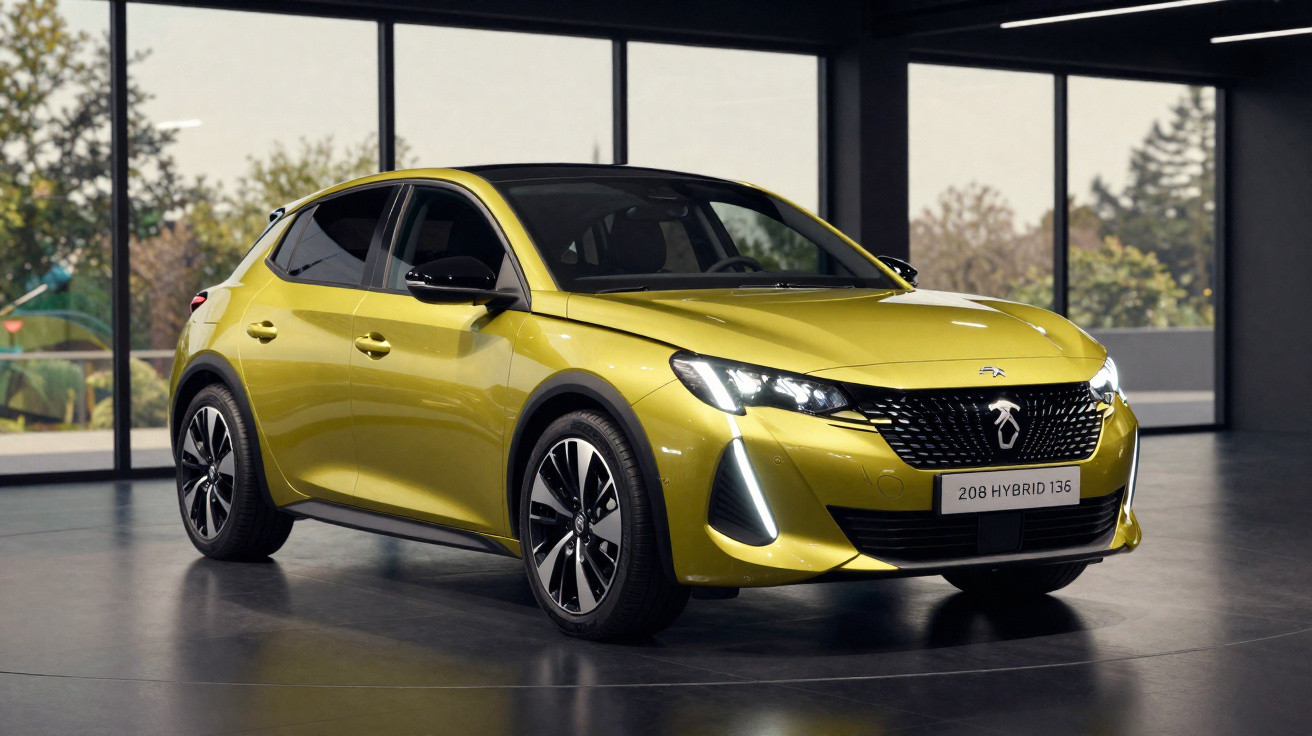
The case for the hybrid version of the Peugeot 208 versus the electric one is not limited to a lower price tag.
At first glance, setting the all-electric Peugeot e-208 against this new hybrid variant might seem like an odd comparison. But if you want performance and efficiency in a compact package-without spending more than you need to-this could be a genuinely appealing option.
What also invites the comparison is just how similar they are in the details. A few months ago I drove the e-208 in its most powerful electric specification (156 hp), and it looked exactly like this 208 Hybrid 136, the strongest hybrid version. Both are in GT trim (the highest level), both sit on the same 17-inch alloys, and even the body colour is identical: Águeda Yellow.
Without lifting the bonnet or getting behind the wheel, there’s really only one reliable way to tell them apart: look at the rear. Beyond the different badges, the 208 GT Hybrid 136 has a twin exhaust outlet, immediately giving away the presence of a combustion engine.
That means the biggest differences between these two Peugeots are the ones you can’t see from the outside.
In the Hybrid 136-technically a 48 V mild-hybrid-the bonnet hides a new-generation 1.2-litre turbocharged three-cylinder petrol engine (with a timing chain rather than a belt) and a new six-speed dual-clutch automatic gearbox, which incorporates an electric motor.
As with the electric 208, there’s also a battery to power the electric motor, but its capacity is described as “minimal”, so you barely notice it’s there. Instead, the main energy supply is the 44 litres of petrol the fuel tank can hold.
Yes, so what?
To keep this from dragging on, there’s one more major difference between the e-208 I tested and this 208 Hybrid, beyond the powertrains: weight. The electric model weighs 1530 kg, while the hybrid comes in at 1303 kg-almost 230 kg less.
Put them side by side in a real-world “tie-breaker”, and both reach 100 km/h at virtually the same time, separated by just one tenth. And, interestingly, it isn’t the electric car that comes out on top. You didn’t expect that, did you? I didn’t either, I’ll admit…
The lower kerb weight makes up for the deficit in power and torque, and given the 208’s size and mass, 136 hp genuinely feels like the sweet spot. Even so, this isn’t the hybrid’s biggest strength.
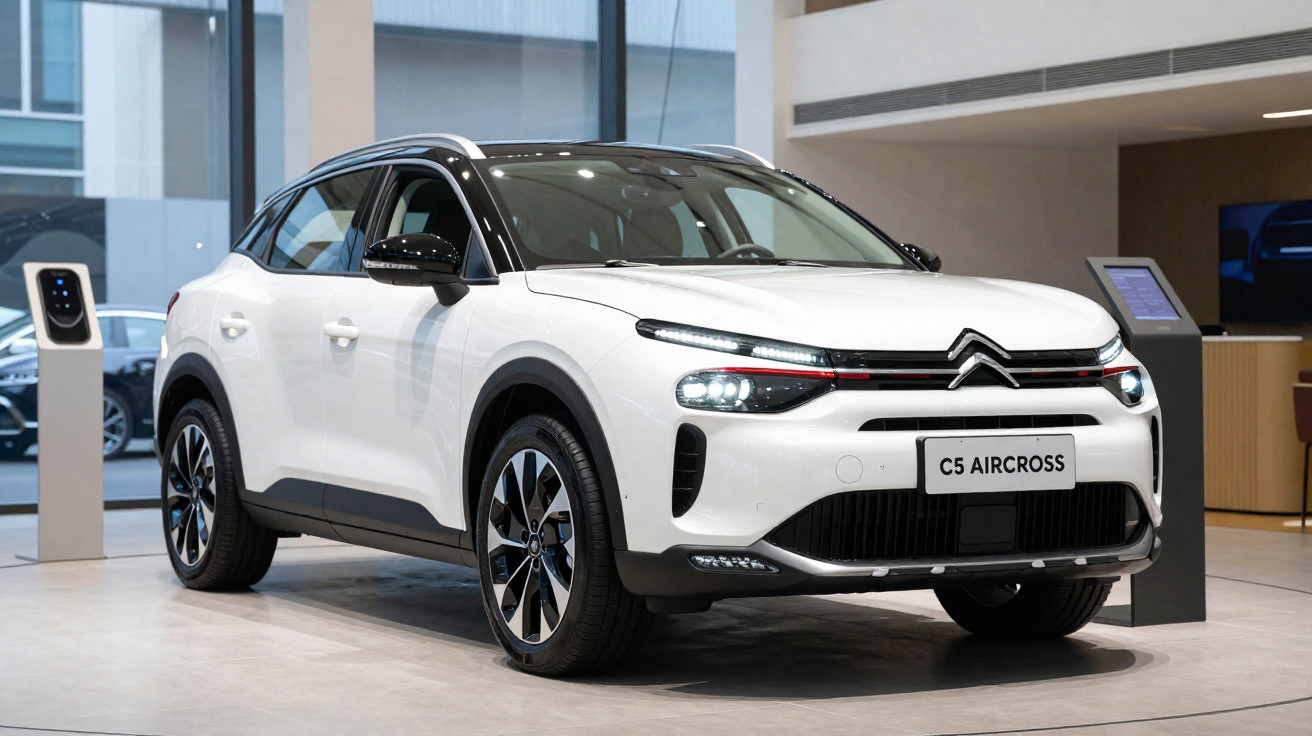
It’s been more than a year since we first got acquainted with Stellantis’ new hybrid system. The initial “guinea pig” was a Citroën C5 Aircross-larger and heavier than the 208-yet the early results were already very encouraging.
Now that this powertrain has spread across many models and brands within the group, its benefits are even clearer in smaller cars like the Peugeot 208.
On flat roads and with light throttle inputs, the petrol engine stays off for longer than I would have predicted. And whenever you glance at the battery charge gauge, it never looks “in trouble”, which points to smart energy management.
In town driving, consumption stays sensible, typically between five and six litres. Add a few motorway miles, though, and consumption rises, because there’s less opportunity for energy recuperation and the combustion engine spends more time running.
Even so, by the end of the test I recorded 6.4 l/100 km, which strikes me as very respectable given the entertaining driving-and the fact I wasn’t always trying to maximise efficiency-that the Peugeot 208 Hybrid delivered.
This test also began with the trip computer showing 760 km of range, which is a very welcome figure-well above the e-208’s official 400 km and, certainly, much quicker to restore once it’s time to refuel.
Sophisticated image
Inside the cabin, there truly aren’t any differences worth pointing out. Everything sits in exactly the same place and, in this GT specification, the equipment list is practically a match. The distinctive three-dimensional instrument display is still here as well.
Up front, the driving position continues to be shaped by the I-Cockpit’s unusual ergonomics. You still get the compact steering wheel, flattened at the top and bottom, which has to be set lower than ideal if you want a clear view of the instrument cluster.
As for space, the front seats pose few issues. For rear passengers, things become a bit more challenging, particularly when it comes to legroom.
Despite being the range-topping version, some materials could be improved, and the infotainment system’s operation could be slicker too. In this case, adding widgets brings clear benefits, but before setting off in the 208 I had to spend a few minutes configuring everything properly, so I wouldn’t need to do it while driving.
Affordable hybrid?
When it comes to price, the hybrid again has the upper hand over the all-electric model. The 208 Hybrid 136 is offered in two trim levels: Allure and GT.
In GT form-the highest level-the base price of the 208 Hybrid 136 is 29 115 euros, dropping to 27 915 euros for the Hybrid 100. By comparison, the Electric 156 starts at 40 310 euros, falling to 39 310 euros for the Electric 136.
Unsurprisingly, the hybrid option is far more competitively priced than the electric one, even with its closeness to the 30,000-euro mark.
The test car, however, included several options: Pack Drive Assist Plus (500 euros), Pack Vision & Navigation (600 euros), and the panoramic roof (1000 euros). That pushes the total price beyond that threshold, to 31 215 euros.
That said, Peugeot is currently running a promotion that brings it back under 30,000 euros. For the tested car, including all options, the promotional price is 29 015 euros.
Comments
No comments yet. Be the first to comment!
Leave a Comment