
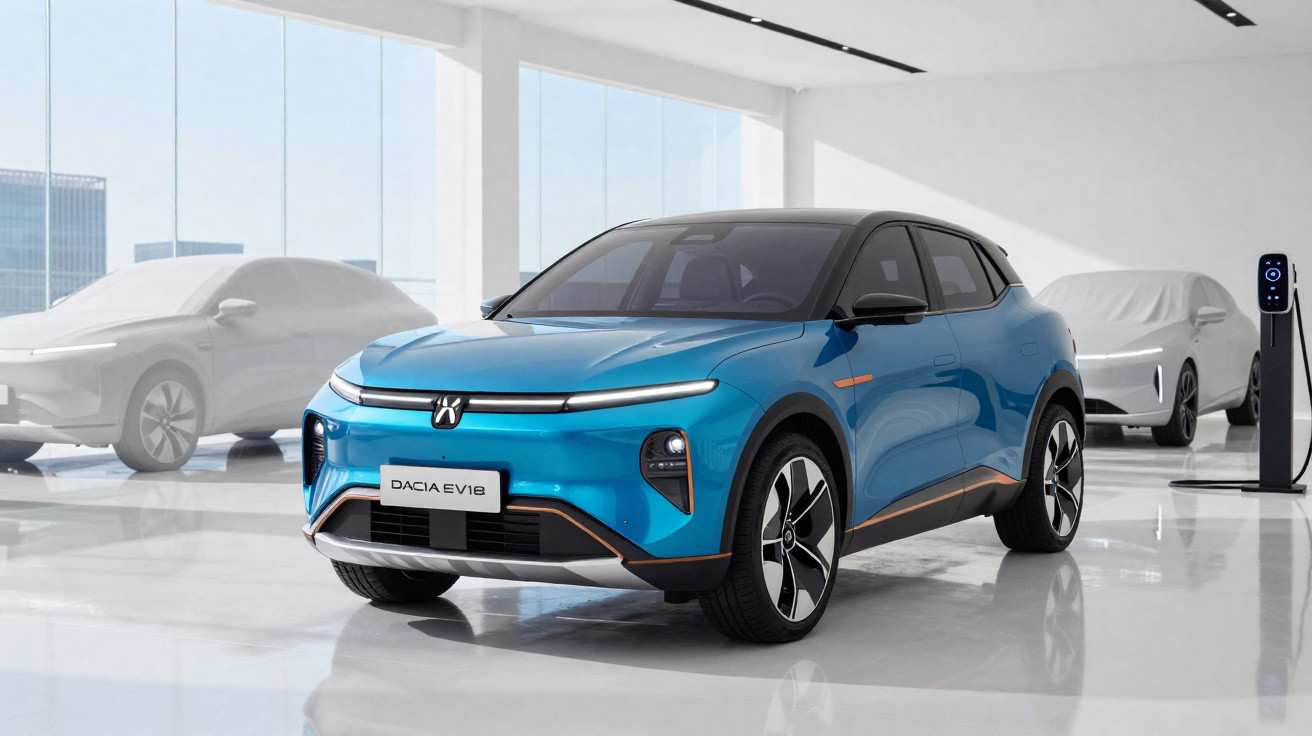
Dacia, the Romanian brand within the Renault Group, has set out a clear roadmap through to 2030. At the heart of it is a new wave of particularly affordable electric cars, led by a small city EV expected to start at under €18,000. With that, Dacia is taking direct aim at established rivals and pushing electric mobility into a price bracket that very few manufacturers have managed to reach.
Dacia steps up: four new electric cars by 2030
Up to now, Dacia’s line-up has included just one fully electric model: the Spring, a small urban runabout built in China. That is set to change markedly over the next few years. As part of Renault’s “futuREady” programme, the brand says it will significantly expand its electric offering.
“Dacia wants to have four pure electric models in its range by 2030 and increase the share of electric powertrains to around two thirds of sales.”
This approach has two aims. First, Dacia needs to meet Europe’s increasingly strict CO₂ rules. Second, it wants to carry its brand promise-straightforward cars at low prices-into the electric era. Affordable EVs are still a major gap in the market, and Dacia intends to move directly into that space.
New ultra-compact electric cars under €18,000
The first new arrival will be a small electric city hatchback, expected to be closely related under the skin to the next-generation Twingo. It is positioned as the flagship of the new approach-and as the key price statement for Dacia’s EV push.
“The targeted entry price: under €18,000 before incentives – for a fully electric city car from European production.”
The car will be built in Europe. That is more than a talking point about location: in some markets, such as France and potentially Germany as well, where a vehicle is made can affect eligibility for state purchase incentives. Models produced in China are excluded from many support schemes, which is one reason the current Spring is at a disadvantage there.
If the net price lands low enough and government bonuses are added, the on-the-road cost in countries with generous support could end up around €15,000 or even below. For a full battery-electric car, that would be a serious challenge to the competition.
What has already leaked about the technology
Dacia has not yet published official figures for battery capacity or driving range. However, based on internal group signals and comparable vehicles, a few likely points are already emerging:
- a compact battery sized for urban use to keep costs down
- a strict focus on essentials in equipment and comfort
- efficiency prioritised over outright performance
- possible use of simple infotainment with smartphone integration
That fits Dacia’s established formula: no tech extravagance, just solid basics delivered with the lowest possible production costs.
Spring, Sandero, Duster: how Dacia is reshaping the model range
For the time being, the Spring remains on sale, aimed mainly at drivers who want an extremely compact, no-frills car. Its Chinese production means it is excluded from environmental bonuses in some countries, but it still appeals with a low entry price.
At the same time, Dacia is developing further electric versions of familiar model lines:
- Electric Sandero variant: A battery-electric version of the popular supermini is widely seen as highly likely. Industry watchers expect cost-effective LFP batteries, which tend to be heavier but cheaper and more durable.
- Additional models: Beyond the city EV and a Sandero derivative, two further electric vehicles are due by 2030-most likely in the family-hatch and crossover space.
- Duster stays (for now) with combustion: The successful SUV is not expected to switch to a pure EV in the near term; Dacia will likely lean on hybrid or LPG options to prevent prices from rising sharply.
Comparison: status of the key projects
| Model / project | Status | targeted entry price | Production | Special notes |
|---|---|---|---|---|
| New ultra-compact electric car (Twingo base) | announced | under €18,000 | Europe | potentially eligible for incentives, city-focused |
| Dacia Spring | already on sale | not specified | China | often without environmental bonus, extremely compact |
| Sandero as a pure EV | in planning | still open | open | LFP battery very likely |
Electrification without changing course on price
Dacia insists that its core principle will not shift despite the EV offensive. The brand still intends to be the cheapest choice in each segment, even as more cars draw power from a socket rather than fuel from a tank.
“The core promise remains: the lowest possible price, lean technology, focus on what’s necessary – now for the electric car too.”
That stance shows up in several priorities:
- avoiding expensive high-tech extras many buyers do not strictly need
- simple cabins with hard-wearing materials
- cross-model use of Renault technology to reduce development costs
- a clear preference for cost advantages over prestige
Because the battery is the single most expensive component in an electric car, Dacia is expected to pursue cost optimisation aggressively. LFP packs for a future electric Sandero would be typical: less range than pricier nickel-manganese-cobalt batteries, but cheaper and longer-lasting.
What the plan means for customers in German-speaking countries
For buyers in Germany, Austria and Switzerland, Dacia’s strategy could establish a new price benchmark. Today, many small electric cars start well above €25,000, even after discounts.
In practical terms, several impacts are possible:
- A new entry level: A European-built EV priced under €18,000 before incentives would be among the cheapest options on the market.
- More competitive pressure: Other makers in the small-car segment would have to revisit their pricing if Dacia gains traction with aggressive entry prices.
- A wider gap to premium brands: The price difference to expensive EVs would grow further, positioning Dacia even more clearly as a “no-nonsense” alternative.
For many households still sticking with petrol or diesel, an affordable European-built EV could become the decisive nudge to switch-especially if lower electricity and servicing costs make the overall running costs attractive.
Challenges: range, charging infrastructure and expectations
A low sticker price comes with trade-offs. Dacia is deliberately keeping its electric cars simple. That likely means modest battery sizes and, therefore, ranges tailored to everyday use rather than long holiday drives. Anyone expecting 500 kilometres in one stint will realistically need to look elsewhere.
In the entry segment, another reality matters more: many people drive only 20 to 50 kilometres a day. For them, smaller batteries are entirely sufficient-provided home or workplace charging is available. In that scenario, a lower purchase price can outweigh the benefit of a large battery that carries capacity rarely used.
Charging specification also plays a part. Very high-power rapid charging pushes costs up. Dacia is therefore likely to aim for charging performance that is dependable rather than extreme-good enough for daily needs, without chasing premium expectations.
A quick look at terms and technology
If you are new to electric cars, the jargon can be a barrier. Two terms in particular come up in the Dacia conversation:
- LFP battery: Short for lithium iron phosphate. Compared with many other cell types, these packs are usually cheaper, more heat-resistant and especially robust, but often have slightly lower energy density. In practice that can mean a bit more weight and volume per kilometre of range-while bringing the price down.
- Bonus for environmentally friendly vehicles: Several countries offer financial incentives if a car meets certain criteria, such as being produced domestically or within the EU. That is exactly why moving production of the new city EV to Europe is so important.
This combination-budget battery chemistry, a pared-back equipment list and potential access to state incentives-makes Dacia one of the most intriguing players at the lower end of the EV market. Anyone with modest expectations for luxury who mainly wants inexpensive transport will have good reason to keep a close eye on the brand in the coming years.
Comments
No comments yet. Be the first to comment!
Leave a Comment