
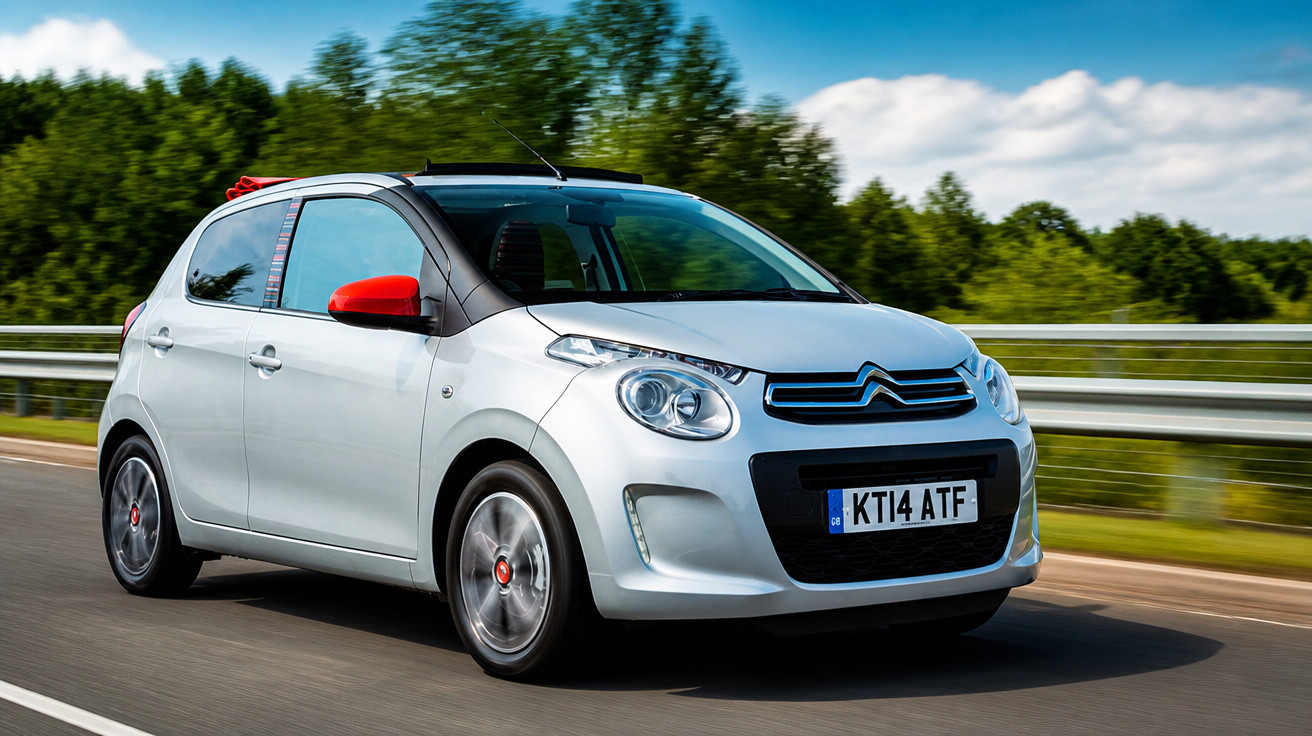
Nine years back, PSA joined forces with Toyota to create a compact car for Europe. All three were built in a single plant in the Czech Republic, then sold under three separate badges: Peugeot 108, Citroen C1 and Toyota Aygo. The formula worked, so the partners have returned with a new generation - and this time there’s a touch more separation.
They’ve been given distinct looks, PSA (Peugeot-Citroen) now offers a 1.2-litre three-cylinder alongside the 1.0-litre triple, and there’s an optional sunroof. Beyond that, the trio is essentially the same in every meaningful way - right down to the damper calibration. To find out what matters in practice, we sent three different drivers to take one each and report back.
Peugeot 108, Citroen C1 and Toyota Aygo: styling and brand fit
OM: I took the Peugeot 108. You’d have to admit it’s visually less objectionable than the Hello Kitty-cutesy Citroen and the Manga-inspired Aygo, wouldn’t you?
VP: Perhaps, but I respect Toyota for trying to escape its beige reputation. That’s why there’s a massive ‘X’ across the front - the Aygo looks like it wants to bite.
PH: More of a crossbite. Still, with any joint-venture car you start asking whether it feels like the rest of the marque. Citroen is aiming for a human-centred, value-led image, and the C1 probably aligns with that better than the 108 does with Peugeot’s move upmarket.
OM: I’m simply glad they’ve managed some real visual separation. The only exterior panels they all share are the windscreen and the front doors.
PH: There’s a clear benefit to partnering up. Engineering and tooling a small car costs almost as much as doing a big one, but the profit per car is thinner. PSA’s job here was to squeeze suppliers for the sharpest prices - and it’s very good at that.
VP: Even so, Toyota still sets the engineering direction and the quality targets. They take lessons from each other - and remember there’s a Toyota engine under the bonnet as well.
Engines, gearing, ride and handling
OM: Or a PSA engine. Their in-house 1.2 has a bit more shove, so it’s slightly less stressful when you’re sitting in the outside lane.
VP: Toyota was offered it, but declined and stayed with the 1.0 triple.
OM: I can understand the decision, to be honest. The 1.2 isn’t as sweet-sounding, and the gearchange feels too loose. The main reason it seems a bit more eager is that it runs shorter gearing. I tried both engines in the 108 and, the first time I reached for third in the 1.0, I genuinely thought I’d selected fifth by accident.
PH: I suspect that gearing is carried over from the previous model, probably for emissions. The floorpan used by all three has been altered, though: there’s a new beam axle at the rear, revised anti-roll bars, fresh springs and dampers at each corner, plus extra sound-deadening. The steering feels more accurate and the ride is improved. Even so, it still isn’t ‘Up’ to Volkswagen standards.
VP: Smart work. I’d hoped the Aygo’s extra visual attitude might come with its own dynamic tune, but it doesn’t. Still, it’s an entertaining little car, with pleasingly quick steering and a capable chassis.
Interior, space, options and pricing
OM: Oddly, I enjoyed it more in the lower trims. I drove a 108 Allure with leather and chrome inside and - largely because those supposed quality touches clashed with properly scratchy-cheap door panels - I liked it far less than the simpler Active.
PH: Exactly. If a car is basic, it should be basic. Adding tinsel looks out of place, and it pushes the price into proper supermini territory. We can surely agree these are built down to a cost - just look at the pop-out rear windows, the single-piece glass tailgate, and the tidy parcel shelf that flips out of the way as you open the boot.
VP: Built to a cost, and short on room. The back of the Aygo feels as cramped as a hobbit’s shed. Rear legroom is miserable.
OM: There’s a reason. Pascal Béziat, the PSA project director, told me the rear seats - even in the five-door - aren’t frequently used by owners. What buyers want is luggage space, and boot capacity has risen from 139 litres to 196 litres. Apparently German customers complained a standard beer crate wouldn’t go in; now it will.
PH: I’m sure the packaging engineers enjoyed the “research” behind that.
OM: Let’s move on. Pricing matters here. The 108 starts at £8,245, and I’d argue the sweet spot is the £10,145 1.0 Stop/Start 5dr Active: 88g/km CO2, plus DAB and Bluetooth as standard.
VP: The Aygo starts at under eight grand, and if you’ve got a few extra pennies you can show off your creativity - or lack of it - because it’s extremely customisable.
PH: The two French cars offer similar opportunities (some of the graphics are awful), and they also have that big £850 roll-back fabric roof. A city car with open-air appeal is a fairly unique idea.
OM: It is - although what impressed me most was the step forward in comfort and refinement. Interior design and material quality? Less so. It’s not in Volkswagen’s league.
VP: Aygo, for me. The 108 and C1 feel a bit too appealing to a particular age bracket.
PH: So the takeaway is: don’t overspend. The Toyota’s styling suits our tastes, so it’s our pick of the three - but I still wouldn’t call the Aygo the class benchmark. The Volkswagen Up is simply too good, and we’re also curious about the new rear-engined Twingo.

Comments
No comments yet. Be the first to comment!
Leave a Comment